
Decode your Hyundai VIN to find factory specifications, build options, and exact OEM part compatibility.









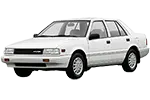









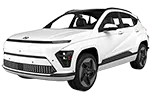












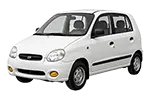
The Hyundai parts catalog on 7zap is a reference resource for identifying passenger-car assemblies, diagram positions, and OEM part numbers. It helps owners, repair professionals, and parts researchers move from a displayed Hyundai generation to the relevant component group without treating a visual resemblance as proof of compatibility.
This page is dedicated to Hyundai cars represented in the catalog. It should not be interpreted as coverage for Hyundai commercial vehicles, trucks, or special-purpose vehicles, which are separate catalog sections. 7zap is an independent reference catalog and is not affiliated with Hyundai.
After selecting a displayed model and generation, catalog navigation can lead to assembly groups appropriate to that vehicle configuration. Depending on the available catalog record, these may include engine-related components, transmission assemblies, steering, suspension, brakes, electrical equipment, body panels, interior fittings, climate-control components, and other vehicle systems.
Navigation may be presented through universal categories or manufacturer categories. Universal categories provide a familiar component-oriented route, while manufacturer categories retain the organization used for the displayed catalog material. Either route can help narrow a search, but the final part reference still needs to be checked against the vehicle and the accompanying catalog notes.
A search may begin with a system, such as front suspension or body hardware, rather than a known number. If a number is already available from an old component, label, invoice, or repair document, it can be compared with the numbers shown in the relevant parts list. Differences in spacing, punctuation, or number format should not be ignored.
Generation selection matters because the same model name can cover materially different catalog structures. The catalog includes historical and later examples such as the Pony — Pony 2nd Generation (1982–1986), Accent — Accent LC (1999–2006), and Elantra — Elantra MD/UD/JK (2010–2015). More recent displayed choices include Sonata — Sonata DN8 (2019–2024), Tucson — Tucson NX4 (2020–2024), and Kona — Kona SX2 (2023–2025).
Other vehicle families illustrate why the model name alone is insufficient. Santa Fe — Santa Fe DM/NC (2012–2017), Palisade — Palisade LX2 (2019–2025), and Ioniq 5 — Ioniq 5 (2021–2025) each have their own displayed catalog context. Choose the generation shown for the vehicle rather than entering through a similarly named family and assuming that its diagrams or numbers apply.
A Hyundai parts diagram presents components in their assembly context. An exploded view can clarify where a bracket, fastener, cover, seal, housing, or related item sits in relation to neighboring pieces. This is useful when the component name is unfamiliar or when several nearby parts look similar.
Numbers placed beside the illustration are callouts. A callout points to a row in the associated parts list; it is not necessarily an orderable OEM part number. The corresponding row may contain a part description, one or more reference numbers, quantity information, or qualifying remarks. Read the illustration and list together rather than copying the diagram label by itself.
Hyundai part numbers shown in the catalog are research references. They can support comparison with markings and other documentation, but a matching number does not by itself guarantee applicability. A component may vary with production details, powertrain, equipment, steering arrangement, or another factory distinction represented in the catalog.
Begin with the correct model family and displayed generation. Then review the available factory configuration choices without relying only on appearance or a broad registration year. Production dates and catalog date ranges can overlap, and vehicles sharing a model name may use different assemblies.
VIN lookup is an independent, vehicle-specific path. It is not a factory configuration and does not select one of the configurations used in manual browsing. If VIN functionality is available, enter the identifier through that separate route and review the resulting vehicle context.
Manual catalog navigation remains useful when researching an assembly or comparing generation structures. Whichever path is used, verify the resulting OEM reference before relying on it for repair or replacement decisions. A VIN result can narrow research, but it should not be described as a fitment guarantee or a substitute for checking catalog qualifications.
Record the full number and the description attached to its parts-list row. Check whether the line refers to an individual component, a grouped assembly, or an item that requires additional selection. Compare visible dimensions, connector form, mounting points, and markings where these can be inspected safely. Notes about side, position, quantity, or configuration can be as important as the main description.
A Hyundai OEM parts catalog is most useful as the beginning of a verification process. Do not infer interchangeability from a shared illustration, similar name, or adjacent callout. Final confirmation should account for the vehicle identification data, the installed component, and appropriate technical or parts expertise.
The diagram can help locate and distinguish a component, but its callout must be matched to the relevant parts-list row. The callout itself may not be an OEM number.
An assembly can contain variants or related pieces represented by separate list rows. Review descriptions and configuration notes rather than selecting the first visually similar entry.
No. An OEM number is a useful research reference, but applicability depends on the vehicle and relevant factory details. Verify it through vehicle records and component-specific checks.
They are separate research paths. Manual browsing starts with a displayed model, generation, and configuration; VIN lookup starts with a vehicle identifier. Results from either path still require careful verification.