
Decode your GMC VIN to find factory specifications, build options, and exact OEM part compatibility.


The GMC special vehicle parts catalog on 7zap provides a focused reference path for vehicles listed outside the separate GMC passenger-car, commercial-vehicle, and truck routes. This section is intended for identifying assemblies, diagram positions, and OEM references associated with the special-purpose vehicles displayed above.
Catalog navigation may lead through universal categories or manufacturer categories, depending on the available structure. These routes can help narrow research to areas such as body components, chassis-related assemblies, braking parts, steering, electrical equipment, or other groups shown for the selected vehicle. Coverage can vary between catalog entries, so the displayed sections should be treated as the factual guide.
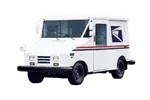
A key entry in this specialist section is the LLV — LLV Postal Vehicle (1987–1995). Select the displayed LLV generation before opening an assembly group. Keeping this route separate from other GMC catalogs matters because similar component descriptions do not establish that parts belong to the same vehicle family or factory configuration.
When more than one configuration is presented after generation selection, compare the available labels carefully. Relevant details may include the configuration wording, assembly grouping, and any qualifying notes shown within the catalog. Avoid choosing solely from a familiar component name or a visually similar illustration.
A GMC special vehicle diagram breaks an assembly into illustrated positions. Numbered or lettered callouts connect the drawing to corresponding rows in a parts list, helping users understand where a component sits and how nearby items are grouped. A callout is only a pointer to a list row; it is not necessarily an orderable OEM part number.
The linked row may show a GMC special vehicle part number, description, quantity context, or catalog note where supplied. Record the number exactly as displayed, including letters, spaces, or punctuation. OEM numbers are useful research references for cross-checking documentation and component markings, but a matching number alone does not guarantee applicability to a particular vehicle.
VIN lookup, where available, is an independent vehicle-specific research path. It is not a configuration within the manually browsed LLV catalog and does not select one of its displayed configurations. Results from VIN lookup and manual generation navigation should therefore be assessed separately rather than treated as interchangeable methods.
7zap is an independent reference catalog and is not affiliated with GMC. Final applicability should be verified for the individual vehicle before a part reference is used for maintenance or sourcing.
You can use the available assembly groups, exploded views, callouts, and parts-list rows to investigate components shown for the selected LLV catalog entry.
No. The callout identifies a position linked to a parts-list row. The row must be checked to determine whether an OEM reference is displayed.
No. It is a research reference. Generation selection, configuration details, catalog notes, component markings, and vehicle documentation should also be compared.
It keeps research focused on the supplied special-purpose vehicle family and reduces the risk of confusing LLV references with parts shown in other GMC verticals.