
Decode your GMC VIN to find factory specifications, build options, and exact OEM part compatibility.


This GMC commercial vehicle parts catalog is designed for researching assemblies and OEM part numbers shown for the commercial models available above. It provides a structured route from a displayed vehicle generation to component groups, exploded views, diagram callouts, and related parts-list entries. The catalog is an independent reference resource and is not affiliated with GMC.
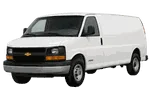
The supplied commercial coverage centers on the G-Series, including the G1500/2500/3500 3rd Generation 3rd Facelift (1985–1991) and the G1500/2500/3500 3rd Generation 4th Facelift (1985–1998). These similar-looking generation descriptions should be read carefully: a model name alone may not provide enough information to identify a suitable reference.
After choosing the relevant displayed generation, catalog navigation can help narrow the search to an assembly or component area. Depending on the available catalog structure, users may browse through universal categories or manufacturer categories. These are alternative ways to reach useful diagram and parts-list context rather than evidence that a component applies to a particular vehicle.
A GMC van parts diagram commonly presents an assembly as an exploded view. Numbered callouts connect illustrated components to rows in an accompanying list, where an OEM number, description, quantity note, or configuration distinction may be displayed. A callout is only a pointer to a parts-list row; it is not necessarily an orderable part number.
OEM numbers are useful research references for comparing labels, invoices, service records, and supplier listings. However, the presence of a GMC commercial OEM parts number does not by itself guarantee applicability. Similar components may differ according to factory configuration, production context, or details not obvious from the illustration.
Begin with the generation title shown on the page and compare it with reliable information about the vehicle. For the listed G-Series entries, pay attention to the facelift wording, generation designation, and displayed year span. Once inside the selected entry, review any available configuration choices before relying on a diagram or number.
VIN lookup is independent from manually browsing a generation and its factory configurations. It should not be treated as another configuration choice or as a way to select one of the manually displayed entries. When vehicle-specific VIN lookup is available, use its result separately and compare it with the information found through catalog navigation.
Check the full OEM number, description, diagram position, and any qualifying notes rather than relying on a visual resemblance. Differences in mounting points, dimensions, connectors, or associated hardware may not be clear in an exploded view. For higher-confidence identification, compare the catalog reference with markings on the original component and seek confirmation from a qualified parts specialist when necessary.
It identifies a position in the illustration and points to a related parts-list row. The callout itself may not be an OEM part number.
Use the G-Series generation entries displayed above when they correspond to the commercial vehicle being researched. Confirm the full generation and configuration context before recording a reference.
No. An OEM number is a valuable research reference, but applicability still depends on the vehicle and relevant factory details.
They are separate paths. Manual browsing starts with a displayed generation, while VIN lookup provides an independent vehicle-specific route when available.