
Decode your GMC VIN to find factory specifications, build options, and exact OEM part compatibility.
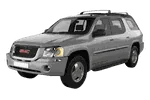

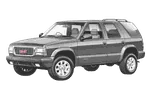
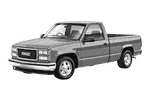
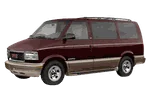
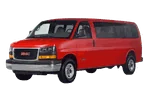
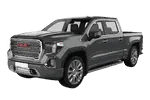
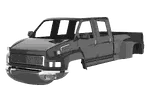
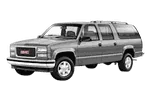
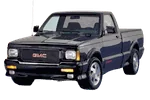

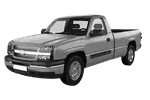

The GMC parts catalog on 7zap is a reference resource for identifying components, assemblies, diagram positions, and OEM part numbers. It helps owners, repair professionals, and parts researchers move from a displayed GMC vehicle generation to the relevant catalog groups and parts-list entries.
This page covers the GMC cars and SUV catalog scope represented by the vehicles and generations displayed above. Commercial vehicles, trucks, and special-purpose vehicles may have separate catalog pages, so those sections should be checked independently rather than assuming that information from one vertical applies to another. 7zap is an independent catalog resource and is not affiliated with GMC.
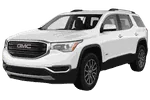
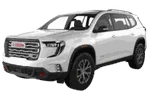
Begin by selecting the displayed vehicle family and generation that matches the vehicle being researched. The generation choice matters because similarly named vehicles can use different catalog structures and parts references. For example, the Acadia 1st Generation (2007–2017) and Acadia 3rd Generation (2024–2025) are separate entries. The same care is appropriate when comparing Sierra GMT800 (1999–2007) with Sierra GMT T1XX (2019–2021).
Once a vehicle entry is open, catalog navigation can help narrow the search from a broad vehicle record to a relevant assembly. Depending on the available path, components may be organized through universal categories or manufacturer categories. These are alternative ways to reach useful diagram groups and parts lists; their labels and grouping can differ.
Catalog sections may cover assemblies related to the vehicle area being investigated, but the presence of a vehicle or category should not be treated as proof that a particular component is documented for every factory configuration. Read the displayed descriptions and notes carefully before recording a number.
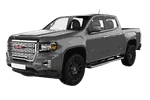
The production catalog includes vehicle families from different periods. Alongside the Acadia and Sierra examples, researchers may encounter Canyon 3rd Generation (2023–2025), Terrain 2nd Generation (2018–2025), and Yukon GMT1UC (2021). Other displayed entries include Hummer EV (2022–2025), Jimmy S-15 3rd Generation (1983–1994), and Safari 1st Generation (1985–2005).
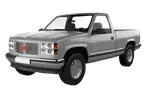
This variety makes generation-level selection more important than relying only on the GMC name or model-family name. For entries such as C/K 1500/2500/3500 3rd Generation (1973–1991) or Savana 2nd Generation Facelift (2008–2021), use the wording shown in the catalog as a starting point and compare it with reliable vehicle documentation. A date range is useful context, but it is not by itself a fitment decision.
A GMC parts diagram presents components in an exploded view so their relative positions within an assembly can be understood. Numbered or otherwise marked callouts connect illustrated items to rows in the accompanying parts list. This can clarify whether the researcher is looking at a major component, a bracket, a fastener, a seal, or another related item represented in that diagram.
A callout is a pointer to a parts-list row; it is not necessarily an orderable OEM number. The corresponding row may contain a part description, reference, quantity context, applicability note, or OEM part number. Nearby components can look similar, so both the illustration and the parts-list wording should be reviewed rather than using the picture alone.
GMC part numbers found in the catalog are useful research references. They can support comparison with markings on an existing component, service documentation, or information provided by a knowledgeable parts source. However, an OEM number does not independently guarantee compatibility with a particular vehicle.
VIN lookup is an independent, vehicle-specific route into catalog research. It is not a factory configuration and does not select one of the manually browsed configurations. When VIN functionality is available, use it separately from manual generation browsing and compare the resulting information with the physical vehicle and other reliable records. VIN-based results still require review and should not be treated as a fitment guarantee.
After finding a likely row in the GMC OEM parts catalog, compare the part description with the assembly shown in the exploded view. Check whether the row is tied to a particular note or configuration shown on the page. If an original component is accessible, compare its markings, connector form, mounting arrangement, and visible features without assuming that appearance alone confirms applicability.
Retain the diagram context when asking a parts specialist or repair professional to review the reference. Supplying the vehicle generation, factory-configuration wording, assembly name, callout, and candidate OEM number gives that person a clearer basis for verification.
A model name is a useful starting point, but it is usually not sufficient for reliable identification. Select the displayed generation and review any factory-configuration choices before consulting a diagram.
No. A callout identifies a position in an illustration and points to a parts-list row. The row must be reviewed to determine whether an OEM number or another type of reference is shown.
No. It is a research reference, not a compatibility guarantee. Verify it against the vehicle, catalog notes, existing part, and trusted documentation or professional guidance.
They are separate research paths. Manual browsing starts with the displayed family, generation, and configuration, while VIN lookup uses a vehicle-specific identifier. Comparing relevant findings can support verification.
Those details preserve the context in which a number appeared. They help distinguish neighboring components and make later review with a repair or parts professional more informative.