

Decode your Chevrolet VIN to find factory specifications, build options, and exact OEM part compatibility.


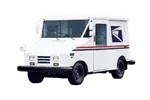
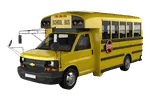
This Chevrolet special vehicle parts catalog is designed for identifying components used on the specific postal vehicle and chassis families displayed above. It provides a focused reference path for users researching Chevrolet special-purpose vehicle parts, assembly locations, and OEM part numbers without mixing this specialist catalog with passenger-car or general truck pages.
The listed choices include the LLV Postal Vehicle (1987–1995) and School Bus Chassis (1988–2002). Select the displayed generation that matches the vehicle being researched before opening its catalog sections. The dates and names shown in the catalog help distinguish these entries, but additional vehicle details may still be needed when checking a particular component.
Catalog navigation can lead to illustrated groups for chassis, body, electrical, steering, braking, and other assemblies where those groups are shown for the selected vehicle. Universal categories provide a consistent way to approach common component areas, while manufacturer categories preserve the organization used for the relevant Chevrolet entry. The available sections can differ between the LLV Postal Vehicle and School Bus Chassis.
A Chevrolet exploded view presents related components in their assembly context. Numbered callouts connect items in the illustration to rows in an accompanying parts list. A callout is a visual pointer rather than necessarily an orderable part number. The corresponding row may contain an OEM number, description, quantity note, or other identifying information useful for further research.
Chevrolet special vehicle part numbers can help compare an existing component, workshop documentation, or another parts reference. An OEM number is a research identifier; by itself, it does not establish that a component applies to a particular vehicle. Similar descriptions may refer to parts that differ according to factory configuration, assembly details, or production changes.
Start with the correct displayed vehicle family and generation, then narrow the catalog manually using the available configuration information. Review the diagram position, part description, surrounding assembly, and any notes presented with the parts-list row. When possible, compare visible markings and dimensions from the removed component and confirm the reference through a knowledgeable parts source before relying on it.
VIN lookup is an independent vehicle-specific path. It is not a configuration, trim choice, or method for selecting one of the manually browsed catalog configurations. If VIN lookup is available for the vehicle, use it separately and compare its results with the physical vehicle and supporting documentation. Manual browsing remains useful when a VIN is unavailable or when researching an assembly from the known catalog entry.
The supplied catalog entries are the LLV Postal Vehicle (1987–1995) and School Bus Chassis (1988–2002). Choose between the generations displayed above rather than using a passenger-car or general truck catalog.
Not necessarily. The callout normally points to a parts-list row. Check that row for the description and any OEM reference associated with the illustrated position.
Where body assemblies are illustrated, the diagram can help establish component position and relationships. Confirm the linked parts-list information and compare it with the vehicle before using the number as a reference.
Match the displayed generation, inspect the relevant assembly, compare the listed description with the existing part, and review markings or measurements where practical. Independent professional confirmation is advisable when configuration differences are unclear.