

Decode your Chevrolet VIN to find factory specifications, build options, and exact OEM part compatibility.







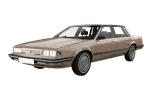


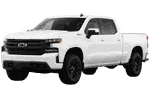
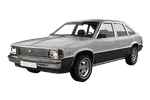

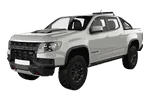











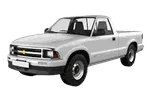
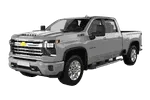


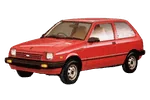


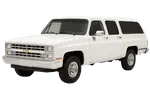







The Chevrolet parts catalog is a reference resource for identifying vehicle assemblies, diagram positions, and OEM part numbers. It supports research across a varied passenger-vehicle range, from performance cars and sedans to crossovers, utility vehicles, and pickups displayed within this car catalog. Rather than beginning with a generic component name, you can first choose the relevant Chevrolet family and displayed generation, then move through assembly groups to narrow the search.
Generation context matters because vehicles sharing a model name may use different components, mounting arrangements, or catalog references. Examples shown on the page include Camaro 5th Generation (2010–2015), Corvette C5 (1997–2004), Impala 12th Generation (2014–2020), and Malibu V400 (2016–2025). The catalog also presents entries such as Cruze J300 (2009–2018), Equinox 3rd Generation (2018–2024), and Bolt EV (2017–2023). These names and ranges help distinguish the displayed catalog branches; they should not be treated as proof that a particular part applies to a specific vehicle.
After selecting a vehicle generation, catalog navigation can help locate relevant systems and assemblies. Depending on the chosen entry, the available groups may lead toward engine-related components, cooling, electrical equipment, body hardware, braking, steering, suspension, interior fittings, or other vehicle-specific areas. Coverage and group wording can differ between displayed configurations.
Navigation may be organized through universal categories or manufacturer categories. Universal categories provide a consistent way to approach common component types, while manufacturer categories retain the organization associated with the vehicle catalog data. Both routes are intended to assist identification; neither replaces verification against the vehicle and the part already fitted.
This approach is useful for contrasting visually similar components or finding a small item within a larger assembly. A search for a seal, bracket, fastener, switch, or hose may be easier when approached through its parent assembly instead of by name alone. The Chevrolet electronic parts catalog structure can therefore provide useful context even when the initial description of a component is uncertain.
A Chevrolet parts diagram shows the relationship between components in an assembly. The illustration may indicate where a component sits, how nearby pieces are grouped, and which callout should be checked in the accompanying parts list. This is especially helpful when several pieces have similar descriptions or when a repair area contains multiple retainers, covers, seals, and supports.
A numbered callout is a pointer to a corresponding parts-list row. It is not necessarily an orderable part number. The row may contain an OEM reference, description, quantity context, notes, or configuration distinctions. Some illustrated items may be serviced only within a larger assembly, so the diagram and list should be read together.
Chevrolet part numbers found in the list are research references. They can help compare labels, documentation, and component records, but a number alone does not guarantee applicability. Terms such as Chevrolet genuine parts or Chevy parts catalog are often used during research; the practical task remains matching the reference to the correct vehicle identity and factory configuration.
Begin with the model family, generation wording, and production range displayed on the page. For example, Spark M300 (2010–2023) is a different catalog branch from Tahoe 5th Generation (2021–2025). Likewise, Silverado GMT T1XX (2019–2025), Colorado 3rd Generation (2023–2025), and C/K 1500/2500/3500 3rd Generation (1973–1991) must be approached through their own displayed entries.
Once inside the appropriate branch, review any available factory-configuration distinctions before relying on a diagram or number. Production year is useful, but it may not resolve differences involving equipment, engine-related choices, drivetrain, option content, or production changes. Use only the details presented for the selected catalog entry, and avoid assuming that two vehicles with similar exterior appearance use the same component.
VIN lookup provides an independent, vehicle-specific route into parts research. It is separate from manually choosing a model generation and factory configuration. A VIN should not be treated as another configuration option or as a selector inside the manually browsed branch.
When VIN-based results are available, compare their vehicle context and part references with the information physically present on the car. VIN identification can reduce uncertainty, but it does not replace inspection, catalog notes, or professional confirmation where component variations remain possible.
7zap is an independent reference catalog and is not affiliated with Chevrolet. Its diagrams and number references are intended to support identification and comparison, not to promise fitment, condition, supply, or installation suitability.
Yes. Start with a model and one of the displayed generations, then browse the relevant assembly groups. Camaro, Corvette, Cruze, Malibu, Equinox, and other supplied entries each have their own generation context.
No. The callout connects an illustrated position to a parts-list row. Check that row for the description and any OEM reference or qualifying information.
No. An OEM number is a valuable research reference, but applicability can depend on the vehicle identity, factory configuration, production details, and catalog notes.
They are separate paths. Manual browsing starts with the displayed model generation and configuration, while VIN lookup starts with a specific vehicle identity. Results from either path should still be verified against the vehicle.
Components can vary with generation, equipment, assembly design, or production details. Compare the diagram, parts-list notes, vehicle information, and the component already fitted before relying on a reference.