
Decode your Mazda VIN to find factory specifications, build options, and exact OEM part compatibility.


The Mazda truck parts catalog on 7zap is designed for component identification and OEM number research within the truck catalog vertical. It provides a structured way to move from a displayed vehicle generation to assembly illustrations and associated parts-list entries. This is distinct from Mazda passenger-car catalog browsing and keeps the research focused on the truck families presented on the page.
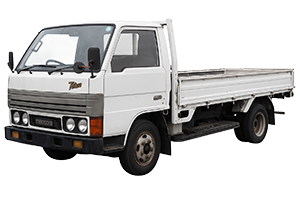
The available generation list includes the T-Series — T2000/2500/2600/3000/3500/4100 WE (1984). Start by reading the full displayed designation rather than relying only on the Mazda name or the broad T-Series label. Differences within a listed family can affect which illustration, assembly group, or parts row is relevant.
After choosing the appropriate displayed truck entry, catalog navigation can help narrow the search from broader vehicle sections to the assemblies and component groups shown for that configuration. Where category navigation is available, universal categories provide a familiar component-oriented route, while manufacturer categories preserve the organization used for the displayed Mazda catalog data. The paths may organize the same research task differently, so wording and grouping should be checked carefully.
A Mazda truck parts diagram presents components in an exploded view so their position and relationship within an assembly can be understood. Numbered callouts connect the illustration to rows in the accompanying parts list. A callout is only a diagram pointer; it is not necessarily an orderable OEM part number.
Parts-list rows may provide Mazda truck part numbers together with descriptions or other catalog notes. Treat an OEM number as a research reference rather than proof of compatibility. Similar-looking components can have different references, and one illustration may contain alternatives that depend on the factory configuration represented by the selected entry.
Manual browsing should begin with the generation and configuration information displayed by the catalog. Compare the complete designation with reliable vehicle records and inspect any available qualifiers before opening a Mazda exploded view. Do not assume that a shared family name makes parts interchangeable across the listed T-Series variants.
Within an illustration, verify the assembly context, callout, row description, quantity notation, and any qualifying text presented beside the part reference. For Mazda chassis parts or other truck components, comparison with a number on the removed component, prior service documentation, or another dependable vehicle-specific source can reduce identification errors. Final applicability should be confirmed independently before a part is sourced or fitted.
VIN lookup, when offered, is an independent vehicle-specific path. It is not a configuration, modification, or selector within the manually browsed generation list. A user may either investigate through the displayed Mazda truck hierarchy or begin through VIN-based identification, but information from either route still requires careful verification against the vehicle and the relevant catalog notes.
It links a position in the exploded diagram to a corresponding parts-list row. The row must be opened or read to determine whether an OEM reference is shown.
No. It is a useful identification reference, but applicability may depend on the selected vehicle entry, factory configuration, and qualifiers included in the catalog.
Compare the complete catalog designation with dependable vehicle documentation. Avoid selecting an entry solely because one part of the family name appears familiar.
No. An exploded view supports component identification and assembly context; it does not replace repair procedures, technical specifications, or qualified installation guidance.
7zap is an independent reference catalog and is not affiliated with Mazda. Its diagrams and Mazda truck OEM parts references are intended to support research. Catalog information should be checked against vehicle-specific evidence before compatibility decisions are made.