
Decode your Mazda VIN to find factory specifications, build options, and exact OEM part compatibility.


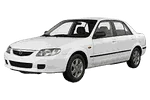



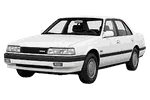
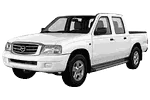









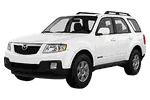

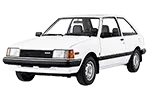
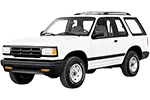
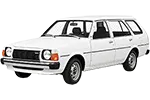
The Mazda parts catalog on 7zap provides a structured reference path for identifying passenger-car assemblies, diagram positions, and associated OEM part numbers. It is intended for owners, repair professionals, restorers, and parts researchers who need to compare catalog information with a particular vehicle or removed component.
Start with the Mazda model and generation displayed above, then follow the available configuration and assembly navigation. Depending on the selected vehicle, the catalog may organize components through universal categories or manufacturer categories. These two navigation systems provide different ways to reach relevant component groups without changing the underlying need to verify the vehicle carefully.
7zap is an independent reference catalog and is not affiliated with Mazda. Catalog entries, diagrams, and Mazda part numbers should be treated as research information rather than proof that a component applies to a specific car.
Mazda catalog research often spans vehicles from different design periods. The displayed selections may include earlier entries such as the GLC BD Hatchback/Sedan (1980–1985), 323 BG (1990–1995), and 626 GF (1997–2002), as well as later generations such as the 3 BM (2013–2018), 6 GJ (2012–2015), and CX-5 KE (2011–2017).
Other recognizable examples include the MX-5 NA (1989–1997), RX-7 FD (1991–1995), MPV LW (1999–2006), and CX-9 TC (2017–2018). These names and codes are not interchangeable. A familiar model name alone is insufficient because generation, production context, and factory configuration can affect the assemblies and references shown.
Choose the displayed generation that corresponds to the vehicle being researched. After that, review the available configuration details rather than selecting an entry only because its model label or year range appears close. When the vehicle identity remains uncertain, preserve any numbers, labels, and dimensions found on the original component for later comparison.
A Mazda parts diagram presents an assembly as an exploded view, showing how cataloged components relate within a larger system. The numbered callouts help connect visible items in the illustration to rows in the accompanying parts list. This can be useful when the name of a bracket, cover, seal, fastener, or subassembly is unknown.
A callout is only a pointer to a parts-list row. It is not necessarily an orderable OEM number, and several callouts may lead to related entries or configuration-dependent references. Read the description and any qualifying information beside the row before recording a number.
The Mazda OEM parts catalog may show one or more OEM references for a listed component. A Mazda part number is valuable for cross-checking labels, invoices, repair records, and third-party listings, but the number by itself does not establish applicability. Similar-looking components may differ in attachment points, connectors, dimensions, side, or other configuration details that are not apparent from the illustration.
Manual catalog browsing begins with a displayed Mazda generation and proceeds through the available factory configuration choices. A VIN lookup is an independent, vehicle-specific route. The VIN is not another configuration, trim choice, or selector inside the manually browsed path.
When VIN-based information is available, use it as a separate research result and compare it with the vehicle, the existing component, and relevant documentation. Do not assume that a manually selected generation and a VIN result are interchangeable merely because they lead to similarly named assemblies.
This process is particularly important when researching Mazda genuine parts references for vehicles that have been repaired, modified, or fitted with replacement assemblies in the past. The component currently on a car may not reflect its original catalog context.
You can browse displayed passenger-car generations, navigate relevant assembly groups, inspect exploded diagrams, and review parts-list rows with OEM references where present. The available detail depends on the selected catalog entry.
No. A callout connects an illustrated component to a row in the parts list. The row may contain an OEM number, descriptive entry, or configuration-dependent information, so it must be read in context.
A year is useful context, but it should not be the sole criterion. Confirm the displayed generation, review the available configuration, and compare the catalog result with the original component and vehicle records.
No. An OEM number is a research reference. Applicability can depend on vehicle identity, factory configuration, component variation, and prior repairs, so further verification is necessary.
Use VIN lookup as an independent vehicle-specific research path. Keep its results separate from manual generation and configuration browsing, then compare the resulting references with physical evidence and dependable documentation.