

Decode your Cadillac VIN to find factory specifications, build options, and exact OEM part compatibility.


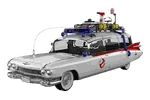
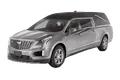
This Cadillac special vehicle parts catalog is dedicated to the special-purpose families represented here: Commercial Chassis — Commercial Chassis (1976–1985) and Funeral Coach — Funeral Coach (1985–1993). It is separate from the passenger-car catalog and should be used according to the vehicle family and generation displayed above.
The catalog provides a structured reference for researching Cadillac special-purpose vehicle parts, including relevant chassis, body, electrical, and mechanical assembly groups where shown. Its purpose is to help identify components and record OEM part numbers for further verification. Because vehicles from these families may require careful configuration checking, the model name or apparent component shape should not be treated as sufficient evidence of compatibility.
Begin by selecting the displayed generation that corresponds to the vehicle being researched. Within that entry, catalog navigation may lead through assembly groups and subgroups to a Cadillac exploded view. These illustrations show how cataloged components are arranged in relation to nearby parts, which can be useful when terminology is uncertain or several similar items appear in one area.
A number beside a component in a Cadillac special vehicle diagram is a callout. It points to a related row in the accompanying parts list. The callout itself is not necessarily an orderable OEM number. The parts-list row may provide a description, reference number, quantity note, or configuration qualification that must be read together with the illustration.
When a Cadillac special vehicle part number is displayed, use it as a research reference. An OEM number can help compare documentation, labels, existing components, and specialist records, but it does not independently confirm applicability to a particular vehicle.
Distinguish carefully between Commercial Chassis (1976–1985) and Funeral Coach (1985–1993). Choose the family and generation supported by the vehicle’s own documentation rather than selecting an entry solely because an illustration looks familiar. After opening the chosen generation, review any displayed configuration details before moving to an assembly.
VIN lookup is an independent, vehicle-specific research route. It is not a manual catalog configuration and does not select one of the displayed generations on the user’s behalf. Manual browsing starts with the listed Cadillac family and generation, while VIN research begins with the vehicle identifier. Results from either path should still be checked against the vehicle and supporting documentation.
For Cadillac chassis parts or OEM body parts, compare the catalog description with the removed component, visible identification marks, attachment pattern, and relevant vehicle records. Similar-looking items can carry different references or qualifications. If evidence conflicts, consult a knowledgeable parts specialist before treating the number as applicable. 7zap is an independent reference catalog and does not guarantee fitment.
The supplied catalog entries are Commercial Chassis (1976–1985) and Funeral Coach (1985–1993). No other Cadillac family is implied by this special-vehicle page.
Not necessarily. A callout connects an illustrated component to a parts-list row. Read that row to find the available description and part-number reference.
No. It is a valuable research identifier, but applicability depends on the vehicle, generation, displayed qualifications, and physical component details.
Appearance can assist orientation, but it should not be the sole basis for selection. Use reliable vehicle documentation and verify the resulting parts-list information.