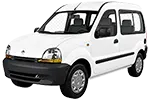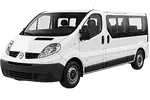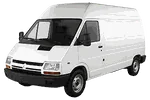

Decode your Renault VIN to find factory specifications, build options, and exact OEM part compatibility.


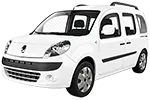
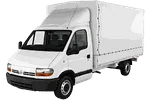
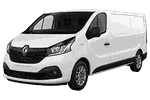
This Renault van parts catalog is a reference resource for identifying components and researching OEM part numbers across selected Renault commercial vehicle generations. It is designed for workshop planning, maintenance research, and comparison of parts information rather than passenger-car browsing. Start with the displayed vehicle family and generation, then move through the relevant assembly groups.
The catalog includes selected entries from long-running commercial families. Examples range from Master I (1980–1994) and Trafic I (1980–1989) to Master III 2nd Facelift (2019–2024) and Trafic III Facelift (2019–2024). Kangoo coverage shown on the page includes Kangoo I (1997–2003), Kangoo I Facelift (2003–2008), and Kangoo II Facelift (2013–2021). Dokker (2013–2017) is another available generation.
After selecting a generation, catalog navigation can help narrow the search to relevant vehicle systems and component groups. Depending on the displayed configuration, these may include engine-related assemblies, transmission components, braking and steering groups, electrical equipment, body hardware, interior fittings, or other commercial-vehicle parts.
Where category navigation is provided, universal categories organize components under broadly recognizable system names, while manufacturer categories preserve the catalog structure associated with the vehicle data. Either route can help locate a Renault van parts diagram without relying on a component name alone.
An exploded view shows how parts are positioned within an assembly. Numbered callouts connect the illustration to rows in the accompanying parts list, where descriptions and OEM references may appear. A callout is only a pointer to a list row; it is not necessarily an orderable part number. Likewise, a Renault commercial OEM part number is a research reference and does not by itself establish applicability to a particular van.
Similar-looking Renault commercial vehicles can use different components because of generation, production details, engine, transmission, equipment, or other factory configuration factors. First confirm the model family, then select the displayed generation that corresponds to the vehicle. For example, Trafic II Facelift (2006–2014) should not be treated as interchangeable catalog data for Trafic III Facelift (2019–2024).
Within the chosen entry, review the configuration wording before opening an assembly. Compare the diagram position, part description, quantity information where shown, and any notes attached to the list row. Retain the full OEM number, including letters or suffixes, because visually similar references may identify different components.
VIN lookup is an independent, vehicle-specific way to research catalog information. It is not a configuration and does not select one of the manually browsed configurations. If VIN-based results are available, use them separately from model-and-generation navigation and still verify the resulting references against the vehicle and supporting documentation.
When an OEM number is known, it can be used as a research reference. Check its formatting and confirm that the associated assembly and vehicle details match your application.
It is generally a callout leading to a parts-list row. The row may contain a description and OEM number, but the callout itself should not be treated as the part number.
Manual browsing begins with the displayed family and generation. VIN lookup is a separate vehicle-specific path; use the route suited to the information available.
No. Applicability can depend on factory configuration and production details. Confirm the reference using multiple vehicle-specific sources before repair or procurement decisions.