
VIN Decoder

Renault VIN Decoder

Free • 3 sec • No signup
Enter your 17-character Renault VIN to identify the exact model, confirm factory specifications, and match compatible parts for service or repair.
✓ Decode Renault model, engine, and configuration
✓ Verify VIN authenticity and key build details
✓ Reduce parts-order errors with VIN-based lookup
No registration required. Results in ~3 seconds.
Every Renault has a 17-character identifier that works like a vehicle fingerprint. A Renault VIN decoder translates that code into practical details—helping owners, workshops, and parts teams confirm the correct vehicle, avoid mismatched components, and document the car accurately. Use our renault vin decoder free lookup to get fast, VIN-specific results.
Overview

Renault VIN Decoder: Decode Your Renault VIN Online

A Vehicle Identification Number (VIN) is a standardized 17-character code defined by ISO 3779/3780 (and 49 CFR Part 565 for North America). A Renault VIN decoder reads the VIN blocks—WMI (manufacturer), VDS (vehicle descriptors), and VIS (serial/plant identifiers)—and converts them into usable information for owners, buyers, and technicians.

With a renault vin decoder online, you can run a renault vin lookup to confirm the exact model family (for example, Master, Clio, Captur), engine code, and key configuration details that matter for servicing and ordering parts. This is especially useful for vans and LCVs (like a renault master vin decoder) where equipment and drivetrain variants are common. Start with our VIN decoder to decode your Renault VIN in seconds and reduce guesswork.

Help

Where is the VIN number on a Renault?

Common VIN locations on Renault vehicles include:
Dashboard plate on the driver’s side, visible through the windshield
Driver’s door jamb / B-pillar label (often near tire-pressure information)
Stamped VIN in the engine bay (firewall, strut tower area, or inner wing depending on model)
Under the front passenger seat area (common on some Renault vans/LCVs, varies by generation)
Front chassis rail or floor crossmember stamping (model-dependent)
Spare wheel well or luggage compartment floor area label (some hatchbacks/MPVs)
Vehicle registration documents (V5C/registration certificate) and title paperwork
Insurance documents and service/maintenance booklet
Manufacturer plate in the engine bay showing VIN and weight ratings (common in Europe)
i
For a clean Renault VIN decode, enter all 17 characters with no spaces. VINs never use the letters I, O, or Q to avoid confusion with 1 and 0.
Capabilities

Renault VIN lookup: what you can learn

A good VIN lookup can help confirm:
Basic vehicle identity
Manufacturer and region (WMI) Model family and body type (e.g., Clio, Megane, Captur, Master) Year/series information when available Serial number for unique identification
Factory specifications (configuration)
Engine family/code and fuel type (e.g., M9T diesel on many Master applications) Transmission type and drivetrain where supported by the dataset Market/variant details (equipment level can vary by country) Weights and category details for many LCVs
Service, repairs, and parts matching
VIN-based compatibility checks to reduce wrong parts Faster filtering of parts catalog results for the exact build Support for workshop estimates and maintenance planning Improved recordkeeping for fleets and service history
A Renault VIN lookup is most useful when two vehicles look the same but have different engines, gearboxes, or equipment. Decoding the VIN helps confirm what was built, not what a listing claims. It’s a practical step before ordering parts, booking diagnostics, or verifying authenticity during purchase.
VIN anatomy

How the Renault VIN number is structured

Renault VINs follow the global 17-character layout, split into three blocks that identify the maker, describe the vehicle, and serialize production.
WMI (positions 1–3)
The WMI identifies the manufacturer and region. Many Renault vehicles built for European markets begin with VF1, which is associated with Renault in France. Renault Group also produces vehicles in other countries, so you may see different WMIs (for example, MEE for India or 93Y for Brazil). The WMI is the first checkpoint in any Renault VIN decoder because it confirms who built the vehicle and where the VIN was assigned.
VDS (positions 4–9)
The Vehicle Descriptor Section contains information used by the manufacturer to describe the platform or vehicle family, body type, restraint system (where applicable), and other configuration markers. On Renault, this area often encodes internal model/variant information that helps distinguish similar-looking trims, engines, and commercial variants. Position 9 may be used as a check digit depending on market rules. A VIN decoder Renault tool interprets these characters using Renault-specific tables.
VIS (positions 10–17)
The Vehicle Identifier Section is used for production identification, including model year or internal year/series codes (varies by market), assembly plant coding, and the vehicle’s sequential production number. In North American practice, position 10 is the model year code, but many European VINs use the field differently. Renault VIN decoder results may also show a production date when it can be derived from manufacturer data tied to the serial range.
Manufacturing

Major Renault production plants

Renault manufactures globally. Depending on your VIN and market, the vehicle may be assembled in France, Spain, Turkey, Morocco, South America, India, or South Korea.
Douai Plant
Douai, Hauts-de-France, France (1974–present)
Flins Plant (Flins-sur-Seine)
Flins-sur-Seine, Île-de-France, France (1952–2024; site transitioning to circular economy activities)
Sandouville Plant
Sandouville, Normandy, France (1964–present)
Maubeuge Plant (MCA)
Maubeuge, Hauts-de-France, France (1971–present)
Batilly Plant (SOVAB)
Batilly, Grand Est, France (1980–present)
Dieppe Plant (Alpine)
Dieppe, Normandy, France (1969–present)
Valladolid Plant
Valladolid, Castile and León, Spain (1951–present)
Palencia Plant
Palencia, Castile and León, Spain (1978–present)
Oyak Renault Plant
Bursa, Turkey (1971–present)
Revoz Plant
Novo Mesto, Slovenia (1973–present)
Renault–Nissan Alliance Plant
Oragadam (near Chennai), Tamil Nadu, India (2010–present)
SOMACA Plant
Casablanca, Morocco (1959–present)
Tangier Plant
Tangier, Morocco (2012–present)
Ayrton Senna Complex
São José dos Pinhais (Curitiba area), Paraná, Brazil (1998–present)
Santa Isabel Plant
Córdoba (Santa Isabel), Argentina (1955–present)
i
Many Renault VINs include an assembly plant identifier within the VIS block (often around position 11), but the exact meaning depends on market and manufacturer rules. A Renault VIN decoder resolves the plant code using Renault-specific reference data and displays the likely factory and production context.
Value

Benefits of Using a Renault VIN Decoder

Practical, shop-friendly details that reduce mistakes and save time—especially on Renault models with many variants.
Accurate parts matching
Renault models can share names while using different engines, transmissions, or braking systems by year and market. A VIN-based decode helps confirm the exact configuration before ordering parts. This reduces returns, delays, and the risk of installing incompatible components.
Faster diagnostics and service planning
Knowing the correct engine family (for example, M9T on many Master applications) helps technicians choose the right procedures, fluids, and service intervals. VIN decoding supports quicker identification of the vehicle during intake. It also improves estimate accuracy for common Renault repairs.
Verification for buying and selling
A Renault VIN decode helps you compare the vehicle to the seller’s description by confirming key identifiers like model family and build details. It’s useful for spotting inconsistencies in listings and paperwork. For buyers, it adds confidence before committing to an inspection or purchase.
Cleaner records for fleets and compliance
Fleet teams often manage similar vehicles across multiple sites. VIN decoding standardizes vehicle records and reduces confusion between trims and variants. This improves maintenance scheduling, cost tracking, and communication with suppliers and service centers.
Social proof

Trusted by Renault Owners & Professionals

Real-world feedback from people who decode Renault VINs for maintenance, parts matching, and vehicle verification.
Amelie
5
5.0
Auto Parts SpecialistLyon
We use the Renault VIN decoder to confirm engine families and variants before ordering parts. It’s especially helpful on Clio and Captur models where the same trim name can hide different equipment. The lookup saves time and cuts returns in our parts department.
Marco
5
5.0
Independent MechanicMilan
Renault vans come in many configurations, so I run a Renault VIN lookup on every Master and Trafic that comes in. It helps confirm the correct engine code and build details before I quote a repair. The results are clear enough to use at the service counter.
Sophie
5
5.0
Used Car BuyerParis
I used the free Renault VIN decoder to verify a Megane before purchase. It quickly confirmed the model family and basic specifications, which helped me compare it to the seller’s listing. It’s a simple step that adds confidence when buying a second-hand car.
Tomasz
5
5.0
Garage OwnerWarsaw
For Renault servicing, decoding the VIN first prevents mistakes with filters, brakes, and electrical parts. The tool is fast and works well on mobile, so my technicians can check details right at the vehicle. It’s become part of our intake routine.
Nadia
5
5.0
Fleet CoordinatorBarcelona
Managing a mixed Renault fleet, we rely on VIN decoding to standardize records across vehicles. A good vin decoder Renault page helps us confirm exact variants and reduces confusion between similar trims. It also supports quicker communication with workshops and suppliers.
Why premium

Renault VIN Decoder vs Free Tools

Many basic tools only return generic information (make/model) and miss Renault-specific configuration details. A dedicated Renault VIN decoder is designed to interpret manufacturer patterns and present the data in a parts-and-service friendly format.

How to use the decoder to find parts

Enter your 17-character Renault VIN (no spaces) into the search field
Review the decoded results: model family, engine code, and key build identifiers
Open the linked catalog for your exact Renault configuration (when available)
Browse parts by system (engine, brakes, suspension, electrical) to avoid mismatches
Confirm part numbers and notes before ordering or quoting the repair

Free vs Premium Renault VIN Decoder

Compare plans feature-by-feature and choose the level of detail you need for checks, servicing, or parts work.
Free
View diagrams per day
View 1 diagrams per day
VIN identifications per month for month(s)
10 VIN identifications per month for 1 month(s)
Ad-free
Full part numbers in catalogs
Applicability Of Spare Parts
Maintenance Parts
Free
View diagrams per day
View 1 diagrams per day
VIN identifications per month for month(s)
10 VIN identifications per month for 1 month(s)
Ad-free
Full part numbers in catalogs
Applicability Of Spare Parts
Maintenance Parts
Reference

Renault WMI codes (real identifiers)

WMIs are the first three characters of the VIN and identify the manufacturer and region where the VIN was assigned. Renault and Renault Group vehicles commonly use these WMIs depending on country and subsidiary.
Examples

Real Renault VIN examples

These realistic examples show how a Renault VIN decoder reads WMIs, year/series codes, and plant identifiers across different markets and model years.
VF1BB0F0H2F234567
Clio II hatchback, petrol/diesel variants, FWD, manual/automatic depending on trim
WMIVF1 = Renault (France)
Check digitPosition 9: check digit (validated by decoder where applicable)
Model year (position 10)2 = 2002 (model year coding varies by market; decoder confirms)
Plant code (position 11)F = Flins-sur-Seine, France (common Renault assembly site)
A typical European Renault VIN starting with VF1; exact engine and trim are resolved by full VIN decoding tables.

Renault VIN preview

A quick look at decoded VIN details and how the catalog can display Renault parts groups for the exact vehicle configuration.
Renault VIN preview
Decoded preview
VIN
VF1VBU4Z651464950
Brand
Renault
Model
Master III
Year
2015 (decoded from VIN pattern; market-dependent)
Production date
2015 (exact date shown when available in full decode)
Engine
3.M9T
Transmission
6-speed manual (typical for Master III M9T; VIN-specific confirmation recommended)
Renault catalog preview
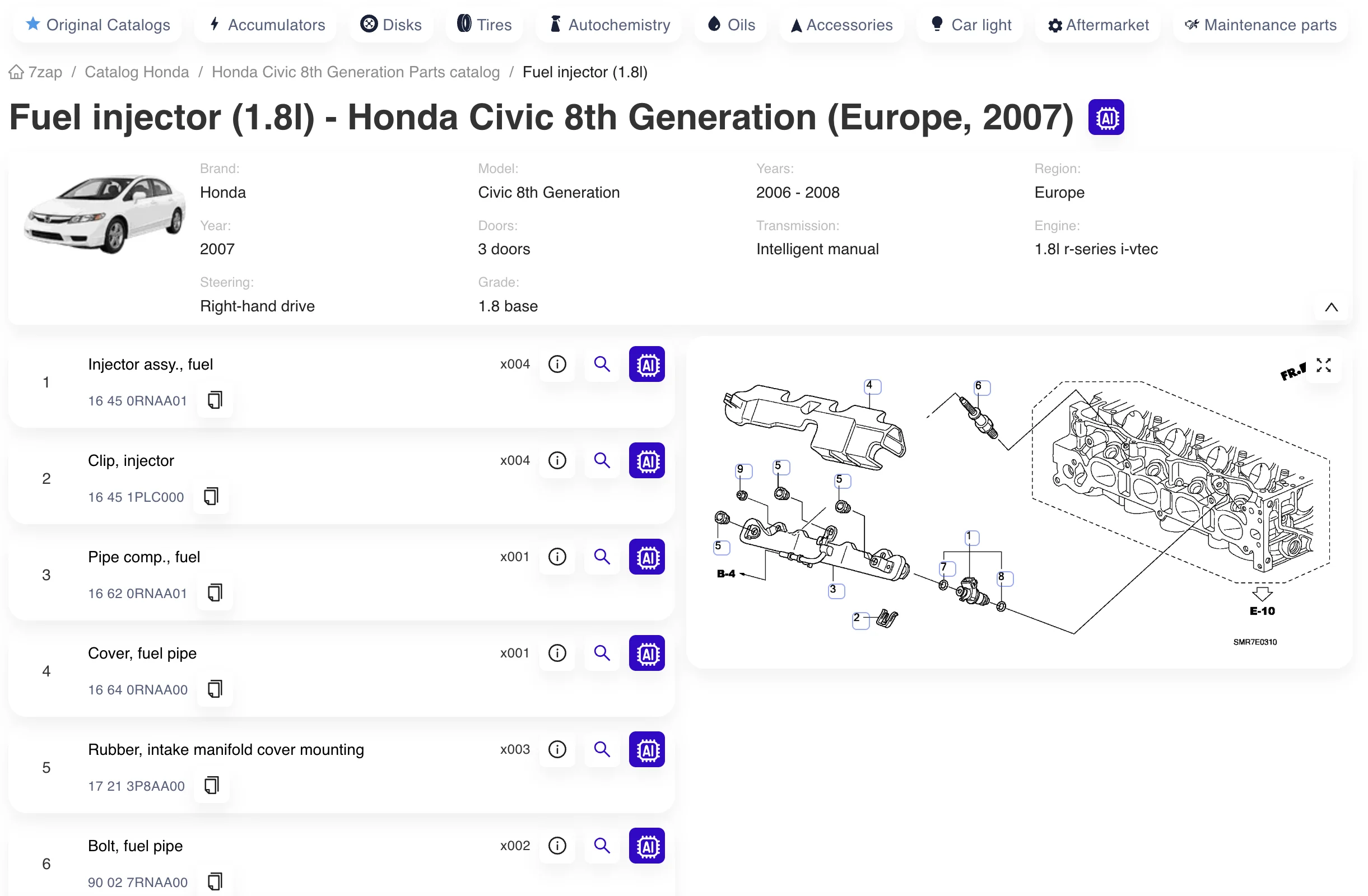
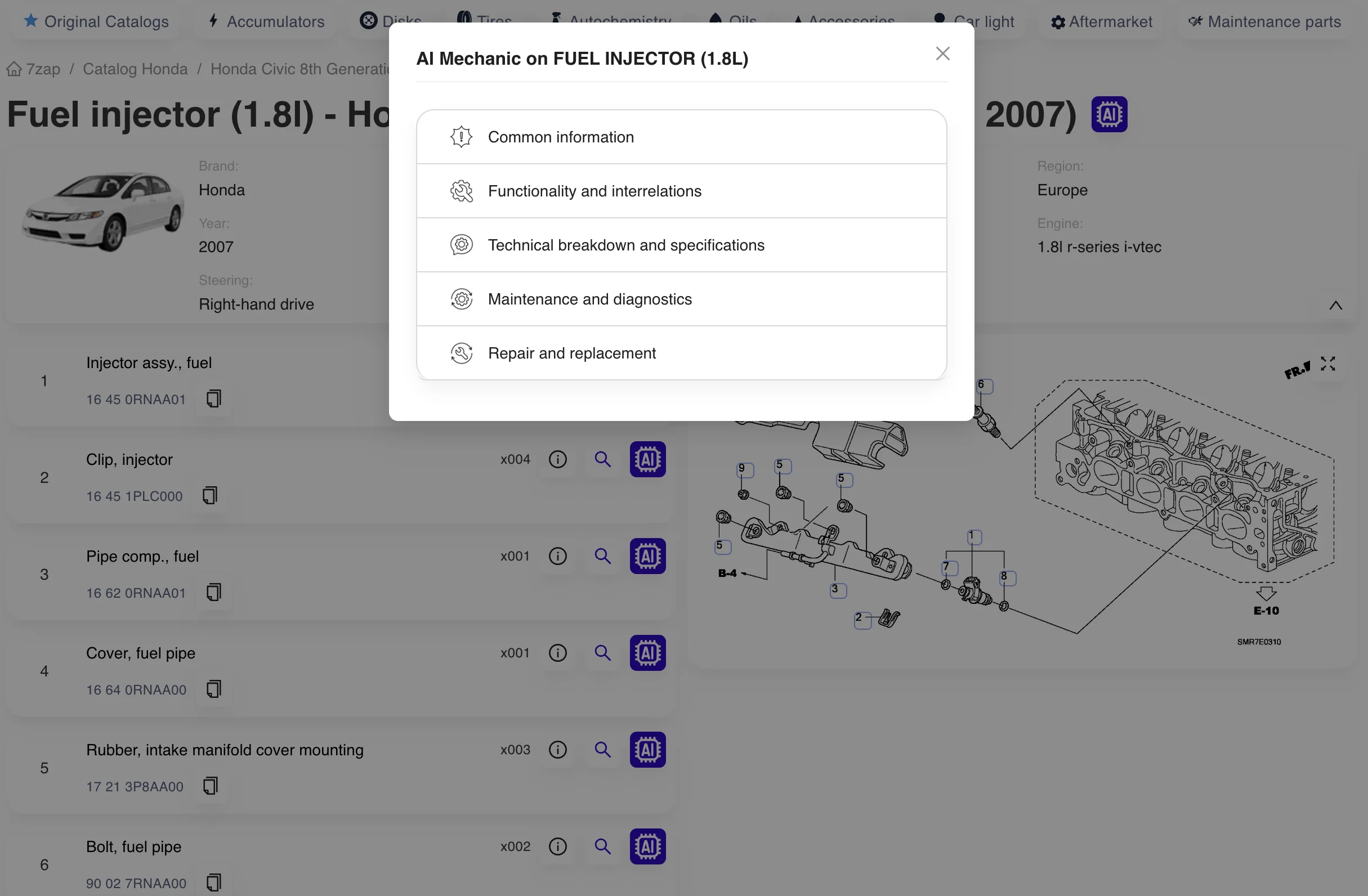
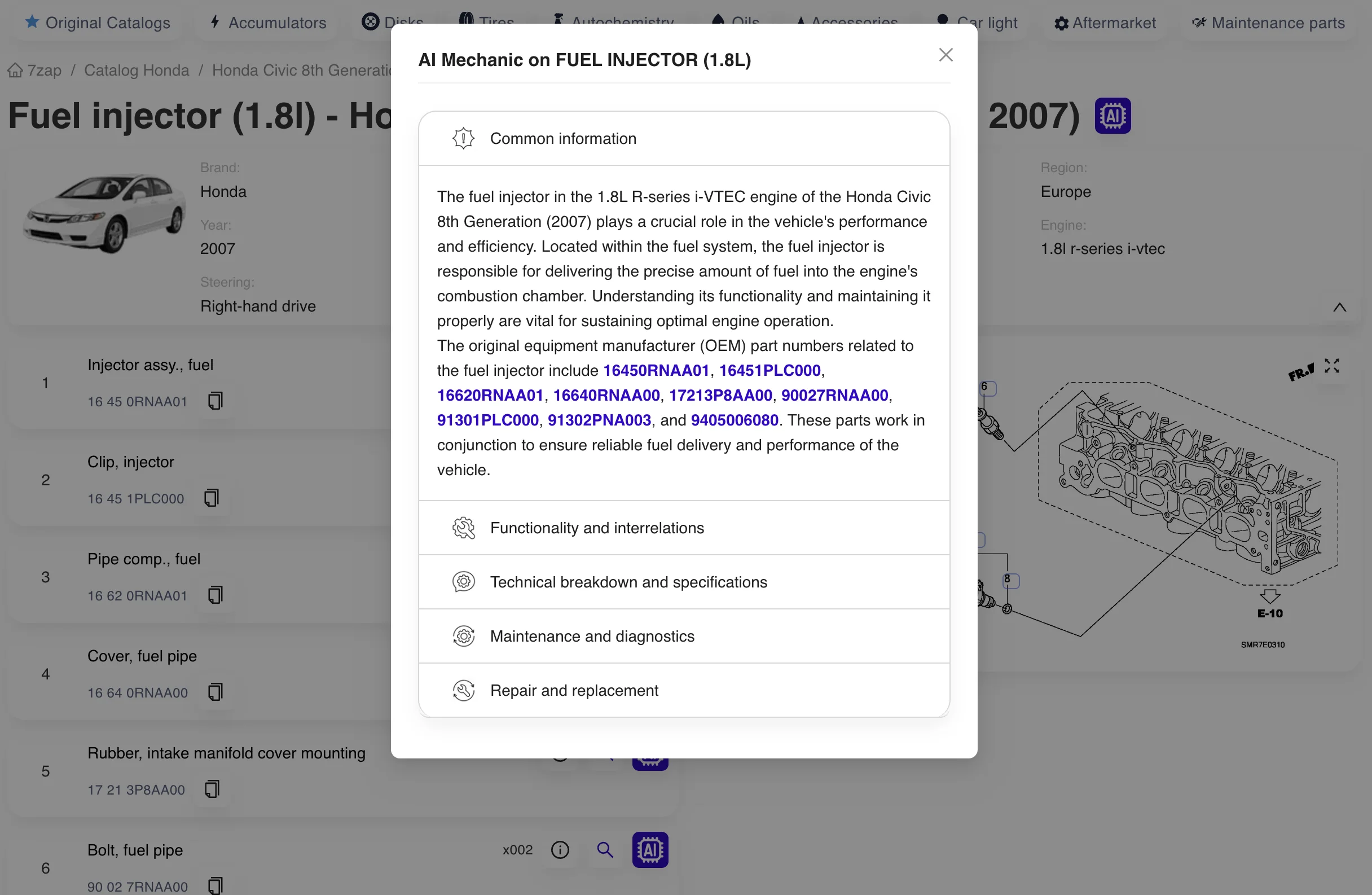
Example 7zap catalog interface
Example 7zap assembly interface
Example 7zap parts interface
Support

FAQ

Quick answers to common questions about Renault VIN decoding, VIN checks, and Renault VIN lookup results.

VIN decoders for other brands

Decode VINs for other manufacturers with the same level of accuracy and OEM-based data.