
Decode your Dodge VIN to find factory specifications, build options, and exact OEM part compatibility.


The Dodge commercial vehicle parts catalog is a practical starting point for identifying assemblies and researching OEM references for the commercial vehicles displayed on this page. Its focus is component identification: moving from a vehicle generation to an assembly diagram, locating a callout, and checking the associated parts-list information. 7zap is an independent reference catalog and is not affiliated with Dodge.
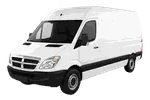
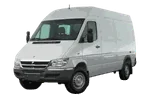
The supplied catalog selection includes the Sprinter 1st generation (2002–2006) and Sprinter 2nd generation (2007–2009). Choosing between these displayed generations before opening an assembly helps keep the research path aligned with the vehicle being examined.
Catalog navigation can help narrow a broad Dodge van parts search to a relevant system or assembly. Depending on the available view, components may be organized through universal categories or manufacturer categories. From there, users can inspect groups related to the area under investigation rather than relying only on a component name.
This approach is useful when terminology varies between a workshop description, an existing label, and a catalog parts list. It can also help distinguish a single service item from a larger assembly or identify nearby hardware shown in the same Dodge exploded view.
A Dodge van parts diagram shows the arrangement of components within an assembly. Numbered callouts connect illustrated items to corresponding rows in the parts list, where an OEM part number or additional description may appear. A callout is only a pointer to a row; it is not necessarily an orderable part number.
OEM numbers are valuable research references for comparing labels, documentation, and component records. However, a matching-looking diagram or number does not by itself confirm applicability. Variations in factory configuration can affect which row is relevant, even within the same displayed generation.
Start with the appropriate Sprinter generation, then review any displayed factory-configuration choices before entering the component groups. Compare the assembly context, part description, quantity information where shown, notes, and surrounding components. Avoid selecting solely by illustration, because diagrams may be representative and visually similar parts can have different references.
VIN lookup is an independent, vehicle-specific research path. It is not a factory configuration and does not select one of the manually browsed configurations. When VIN lookup is available, use its results separately from the generation-based catalog route and compare the resulting references with the vehicle and supporting documentation.
Record the full OEM reference, including letters, spacing, or suffixes shown in the catalog. Check it against the existing component label, vehicle documentation, dimensions, connector details, mounting points, and information from a qualified parts specialist. This verification is important when researching Dodge commercial OEM parts because a catalog reference supports identification but does not guarantee fitment.
The supplied generation list covers the Sprinter 1st generation (2002–2006) and Sprinter 2nd generation (2007–2009). Select the generation that corresponds to the vehicle you are researching.
It identifies a related parts-list row. Review that row carefully because the callout itself may not be an OEM number, and more than one listed reference may be associated with an illustration position.
No. A Dodge van part number is a useful research reference, but applicability should be checked against the vehicle, factory configuration, component markings, and relevant notes.
They are separate methods. Manual browsing begins with a displayed generation and configuration, while VIN lookup follows a vehicle-specific path. Compare the available evidence rather than treating one route as a setting within the other.