
Decode your Volkswagen VIN to find factory specifications, build options, and exact OEM part compatibility.


















The VW parts catalog on 7zap is a reference resource for identifying components shown in Volkswagen passenger-car diagrams and researching the associated OEM part numbers. It is designed for owners, repair professionals, restorers, and parts researchers who need to move from a known vehicle generation to an assembly illustration and its corresponding parts list.
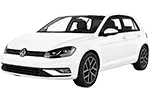
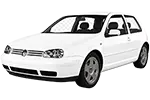
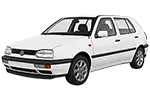
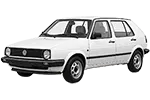
Volkswagen model names often span several generations, so the generation list above is an important starting point. A Golf A4 (1997–2007), for example, must be distinguished from other Golf generations before interpreting a diagram. The same care applies when navigating to Jetta A6 (2010–2014), Touareg 7L (2003–2007), or Touran (Typ 5T) (2016–2022). Names, type references, and displayed production periods help narrow the catalog context, but they should be checked against the vehicle being researched.
After choosing a displayed Volkswagen generation, catalog navigation can lead through the available assembly groups and component illustrations. Depending on the selected vehicle data, these may help with research into structural groups, mechanical systems, electrical equipment, interior components, exterior fittings, or other illustrated assemblies. Coverage varies with the generation and configuration presented in the catalog.
The catalog may be explored through universal categories or manufacturer categories. Universal categories provide a consistent way to approach common component groups, while manufacturer categories preserve the organization associated with the vehicle data. Either route can help locate a relevant diagram; the useful path depends on whether the researcher starts with a component type or already recognizes the Volkswagen assembly grouping.
The range represented above includes vehicles from different periods and design eras. Research for Beetle (Type 1) (1947–1999) may therefore follow a different catalog context from work on ID.4 (Type E2) (2021–2027). Likewise, a Tiguan AD/BW Facelift (2020–2024) should not be treated as interchangeable with another Tiguan generation merely because the family name is shared. Generation-specific navigation reduces the risk of carrying a reference from one catalog context into another.
A Volkswagen parts diagram shows how components are arranged within an illustrated assembly. Numbered callouts connect the drawing to rows in a nearby parts list. These rows may contain an OEM part number, description, quantity notation, applicability note, or other catalog information where supplied.
A callout is a pointer to a parts-list row; it is not necessarily an orderable part number. Several callouts can relate to associated items, and a single illustration may include alternatives that depend on the displayed vehicle configuration. Read the illustration and list together rather than relying on the visual position of a component alone.
The OEM number shown in a VW exploded view is valuable as a research reference. It can be used to compare markings, check documentation, or discuss a component with a parts specialist. However, an OEM number by itself is not proof that the item applies to a particular vehicle. Similar-looking components and closely related references may have different catalog conditions.
Searchers sometimes describe this process using terms such as VW ETKA, Volkswagen electronic parts catalog, or VW OEM parts catalog. On this page, 7zap provides an independent reference-catalog experience and is not affiliated with Volkswagen. The practical task remains the same: identify the appropriate vehicle context, open the relevant illustration, and verify the parts-list information carefully.
Begin with the model family, then compare the complete generation label shown in the catalog. Type identifiers can be especially useful: Passat/Santana B5.5 (Typ 3BG) (2001–2005), Polo/Derby/Vento (Typ 9N) (2002–2008), and Scirocco lll (Type 13) (2009–2014) each provide more context than the family name alone.
Next, review the factory configuration choices displayed for that generation. Do not select a configuration merely because its description appears similar to the vehicle. Compare reliable vehicle records, identification labels, existing component markings, and the characteristics visible on the vehicle. If the available evidence conflicts, pause before treating a diagram or Volkswagen part number as applicable.
VIN lookup is an independent, vehicle-specific route. It is not a factory configuration and does not select or modify one of the configurations used during manual browsing. Researchers can either navigate manually from a displayed Volkswagen generation or use the separate VIN path when supported. Information reached through either route should still be compared with the vehicle and the component being identified.
You can browse the displayed passenger-car generations, open available assembly groups, examine exploded illustrations, and review parts-list rows and Volkswagen part numbers where provided.
Not necessarily. The callout identifies a row in the parts list. That row may show an OEM reference, but it can also represent an item, alternative, or catalog note that requires further interpretation.
Yes. A shared family name does not establish component applicability across generations. Use the full generation label and displayed configuration rather than assuming that references transfer between catalog contexts.
Compare the catalog reference with the existing component, vehicle identification information, reliable documentation, and any notes attached to the parts-list row. For uncertain cases, consult a qualified parts specialist before making a repair decision.
No. 7zap is an independent reference catalog. Its diagrams and OEM references support parts research, but they do not replace vehicle-specific technical confirmation or professional assessment.