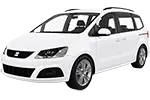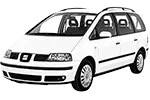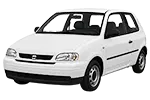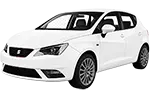

Decode your Seat VIN to find factory specifications, build options, and exact OEM part compatibility.


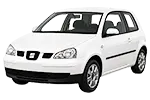




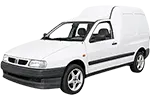

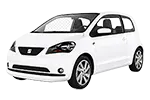



The SEAT parts catalog on 7zap is a reference resource for identifying components, understanding assembly relationships, and finding OEM part numbers. It is intended for owners, workshops, parts specialists, and researchers who need to move from a known vehicle generation to a relevant diagram and parts list. The catalog does not represent SEAT or replace vehicle-specific technical confirmation.
Begin by choosing the displayed model family and generation that corresponds to the vehicle being researched. The catalog includes distinct entries such as Toledo (Typ 1L) (1992–1996), Leon (Typ 1M) (2000–2006), Altea 5P (2004–2010), and Mii (Typ KF) (2012–2021). Later examples include Leon (Typ 5F) Facelift (2017–2020), Arona (Typ KJ) (2018–2020), and Tarraco (Typ KN) (2019–2024). These entries should be treated as separate catalog paths rather than interchangeable versions of a model name.
After selecting a displayed generation, navigation can lead through vehicle systems and component groups. Depending on the chosen catalog entry, these may help with research into engine-related assemblies, transmission components, cooling, braking, suspension, steering, electrical equipment, body fittings, or interior parts. Coverage and organization can differ between generations and configurations.
Two category systems may be available: universal categories, which organize common vehicle systems in a consistent way, and manufacturer categories, which follow the catalog structure associated with the selected vehicle. One route may be more convenient when the assembly name is known, while the other may help when tracing how components are grouped for that SEAT generation.
Searchers sometimes describe this type of resource as SEAT ETKA or a SEAT electronic parts catalog. On 7zap, the purpose is practical reference: follow the appropriate vehicle path, inspect the relevant SEAT parts diagram, and compare the listed information with the vehicle and component at hand.
A SEAT exploded view shows how related components are positioned within an assembly. Numbered callouts connect the illustration to rows in the accompanying parts list. This makes it possible to distinguish a main component from nearby fasteners, brackets, seals, covers, hoses, or other associated pieces where they are shown.
A diagram callout is only a pointer to a parts-list row. It is not necessarily an orderable OEM number. The connected row may contain a description, quantity information, notes, or one or more references that require further interpretation. Read the illustration and list together rather than copying the visible callout number as though it were a SEAT part number.
When an OEM number is displayed, use it as a research reference. It can support comparison with markings on a removed component, workshop documentation, or information from a knowledgeable parts source. A matching number alone does not establish applicability because configuration details, production timing, equipment, and catalog notes may affect the result. References associated with SEAT genuine parts should therefore be verified for the individual vehicle.
Model names can span more than one catalog entry, so generation details matter. For example, Ibiza (Typ 6K) Facelift (1997–2002) and Ibiza (Typ KJ7) Facelift (2021–2027) are clearly different paths. The same care is needed when distinguishing Exeo (Typ 3R) Facelift (2011–2014) or Alhambra (Typ 7M) Facelift (2001–2010) from other displayed vehicles.
Once the generation is chosen, review any factory configuration choices presented by the catalog. Compare the available information with reliable vehicle records, identification labels, engine or transmission markings, and the old component where accessible. Do not rely on visual similarity alone: closely related parts may differ in dimensions, connectors, mounting points, or catalog conditions even when their diagrams look alike.
VIN lookup is independent from manual browsing by model, generation, and factory configuration. It should not be treated as another configuration option or as a method of selecting one of the manually displayed variants. When VIN functionality is used, it creates a vehicle-specific route based on the identifier entered; manual catalog navigation remains a separate route.
Whichever path is used, final verification is still important. Check the full OEM reference, description, notes, physical component, and relevant vehicle data before relying on a result. The catalog supports identification research but does not replace inspection or qualified parts advice.
The catalog can help locate OEM references through generation, assembly, diagram, and parts-list navigation. If a number is already known, compare its full format and related description rather than relying on a partial sequence.
Not necessarily. The number printed beside a component in an illustration is usually a callout that points to a parts-list row. The row must be checked for the actual reference and any notes.
A shared model name may cover separate catalog paths with different type designations, periods, or configurations. Choosing the displayed generation carefully reduces the risk of researching an unrelated assembly.
No. An OEM reference is valuable for identification and comparison, but applicability may depend on vehicle-specific details and catalog conditions. Confirm it against reliable records and the component being replaced.
Compare the full part references, descriptions, diagram context, connection points, markings, and vehicle data. Appearance alone is not sufficient evidence that components are interchangeable.