
VIN Decoder

Porsche VIN Decoder - Free VIN Lookup

Free • 3 sec • No signup
Use our Porsche VIN decoder to decode any 17-character Porsche VIN number and confirm the exact model, year, engine, transmission, production details, and factory equipment before you buy parts or schedule service.
✓ Accurate Porsche VIN lookup for model, year, and drivetrain
✓ Factory specs, options (PR codes), and build-style details
✓ Faster parts matching with fewer ordering mistakes
No registration required. Results in ~3 seconds.
A Porsche VIN is your vehicle’s unique 17-character identifier. A Porsche VIN decoder turns that code into usable data—so a Porsche VIN lookup can verify the exact configuration, and a Porsche VIN check helps confirm what you’re working on before repairs, registration, or parts selection.
Overview

Decode Your Porsche VIN in Seconds

Every modern Porsche uses a 17-character Vehicle Identification Number (VIN) standardized under ISO 3779/3780 and the U.S. VIN requirements (49 CFR Part 565). The VIN is split into WMI (positions 1–3), VDS (4–9), and VIS (10–17). A Porsche VIN decoder reads these blocks to identify the manufacturer region, vehicle line, body/engine constraints, the check digit, model year, assembly plant code, and the unique serial number.

With 7zap you can run a Porsche VIN lookup to decode Porsche VIN details you actually use: model and generation hints (911/718/Panamera/Cayenne/Macan/Taycan), engine and transmission type, production period, and factory options commonly represented as PR codes (equipment codes). Use the free VIN decoder for quick identification, then upgrade your Porsche VIN number check workflow with deeper option/parts context when you need it.

Help

Where is the VIN number on a Porsche?

Common Porsche vehicle identification number locations include:
Dashboard at the base of the windshield (driver side, visible from outside)
Driver-side door jamb/door pillar label (certification sticker)
Front luggage compartment (frunk) area on a build/option sticker (varies by model/year)
Engine compartment area on a stamped plate or label (model-dependent)
Under the passenger seat or near seat rails (some models/years; check owner documentation)
Vehicle registration and title documents
Insurance documents and policy paperwork
Maintenance/service booklet or owner’s manual (VIN recorded on service pages)
Original window sticker / dealer paperwork (new vehicle documentation)
i
For a reliable Porsche VIN number check, enter all 17 characters exactly. VINs never use the letters I, O, or Q, and a single typo can change the decoded model year or plant.
Capabilities

Porsche VIN lookup: what you can learn

A Porsche VIN lookup can help confirm:
Basic vehicle identity
- Manufacturer and vehicle type (WMI) - Model family and body classification (VDS patterns) - Model year (position 10) - Assembly plant code (position 11) - Serial/production sequence (positions 12–17)
Factory specifications
- Engine displacement/family (where available) - Transmission type (automatic/PDK/manual where available) - Drivetrain layout (e.g., AWD vs RWD when supported) - Market/region indicators for certain configurations - Production date/period (when supported by data source)
Options, service, and parts context
- Factory equipment via PR codes (option codes) - Trim/feature dependencies that affect parts fitment - Notes that help confirm correct catalog groups - Better accuracy for parts ordering and repair planning - Cross-checking against labels and documentation
A Porsche VIN lookup is most useful when you need to match parts to the exact build—especially for Cayenne/Macan variations and 911 generation changes. Use a Porsche VIN decoder before ordering brakes, suspension, electronics, or body parts, and when verifying a used vehicle’s identity during purchase or registration.
VIN anatomy

How the Porsche VIN number is structured

Every modern Porsche VIN follows a 17-character format split into three blocks (WMI, VDS, VIS).
WMI (positions 1-3)
The WMI identifies the manufacturer and region. On Porsche vehicles you will commonly see WP0 or WP1. WP0 is typically used for Porsche passenger cars (such as 911 and 718), while WP1 is commonly used for Porsche multipurpose vehicles/SUVs (such as Cayenne and Macan). The WMI confirms you’re decoding a Porsche vehicle identification number from the correct manufacturer family.
VDS (positions 4-9)
The VDS describes the vehicle attributes defined by the manufacturer: series/model line, body type, restraint system, engine constraints, and other internal descriptors. Position 9 is the check digit for North American VINs, used to validate the VIN mathematically. A Porsche VIN decoder uses the VDS to narrow down configuration so the VIN lookup aligns with the correct parts and service information.
VIS (positions 10-17)
The VIS contains the model year (position 10), the assembly plant code (position 11), and the vehicle’s sequential production number (positions 12–17). For example, the year code follows standard VIN year mapping (A=2010, F=2015, K=2019, R=2024). The plant code helps identify where the vehicle was assembled or finalized, which can matter for catalog grouping and build details.
Manufacturing

Major production plants

Porsche manufactures and assembles vehicles in Germany and (for certain generations) through select contract or group production sites. Depending on your VIN, the plant code and supporting data can point to a primary assembly location.
Porsche Werk Zuffenhausen (Stuttgart) – Main Assembly
Stuttgart-Zuffenhausen, Germany (1950-present)
Porsche Werk Zuffenhausen – 911 Production Lines
Stuttgart-Zuffenhausen, Germany (1963-present)
Porsche Werk Zuffenhausen – Taycan Production
Stuttgart-Zuffenhausen, Germany (2019-present)
Porsche Exclusive Manufaktur (Factory personalization)
Stuttgart-Zuffenhausen, Germany (active; personalization programs expanded in the 2010s-present)
Porsche Leipzig Plant
Leipzig, Germany (2002-present)
Porsche Leipzig – Panamera Assembly
Leipzig, Germany (2009-present)
Porsche Leipzig – Macan Assembly
Leipzig, Germany (2014-present)
Volkswagen Slovakia Plant (Group production site for Cayenne platform generations)
Bratislava, Slovakia (2002-present; Porsche Cayenne production for various generations depending on year)
Valmet Automotive (Contract assembly for Boxster/Cayman generations)
Uusikaupunki, Finland (1997-2012; contract production for certain 986/987 and related runs)
Karmann (Contract body/assembly partner for specific historic Porsche models and limited runs)
Osnabrück, Germany (historic contract production; select Porsche models depending on era)
Porsche Motorsport Center
Flacht (near Weissach), Germany (2018-present; motorsport/customer racing operations)
Porsche Classic Factory Restoration (remanufacturing/restoration operations)
Stuttgart, Germany (active; Porsche Classic program expanded in the 2000s-present)
i
The assembly plant is typically indicated by the VIN’s 11th character (plant code) together with manufacturer decoding data. On some Porsche lines, group/contract production and final assembly steps can be split; the VIN and supporting factory data help clarify the most relevant plant for parts and service lookup.
Value

Benefits of Using a Porsche VIN Decoder

Practical details that help owners and shops confirm the exact Porsche configuration and avoid costly mistakes.
Accurate parts matching
Porsche parts often change by model year, drivetrain, and option package. A Porsche VIN decoder reduces guesswork by confirming the core vehicle identity before you shop. This is especially helpful for option-dependent items like brakes, suspension components, and electronics.
Option and PR-code clarity
Many Porsche builds include factory PR codes that describe equipment and packages. Decoding these options helps you understand what was installed from the factory and why certain parts differ. It’s the closest thing to a Porsche VIN decoder build sheet for many configurations.
Smarter used-car verification
A Porsche VIN check helps confirm the model year, plant, and basic build identifiers when shopping used. It supports safer buying decisions by making it easier to spot mismatched paperwork, incorrect listings, or vehicles with incomplete documentation.
Cleaner service documentation
Shops and owners rely on accurate records for maintenance planning and resale value. A consistent Porsche VIN lookup helps keep RO notes, invoices, and parts lists aligned to the correct vehicle identification number. That reduces comebacks and improves customer confidence.
Social proof

Trusted by Porsche Owners & Professionals

Real-world feedback from owners, technicians, and parts teams using VIN decoding for Porsche service and parts accuracy.
Ethan
5
5.0
Service TechnicianLos Angeles
We see a lot of 911 and Cayenne variations, and trim differences can be subtle. The Porsche VIN decoder helps me confirm year and drivetrain details fast before writing up work. It reduces back-and-forth with customers and prevents ordering the wrong parts.
Marta
5
5.0
Auto Parts ManagerChicago
A clean Porsche VIN lookup is essential when customers only know “Macan S” or “Panamera.” Decoding the VIN makes it easier to narrow down the correct fitment and option-dependent parts. The time savings are real, especially for brakes, cooling, and body hardware.
Jonas
5
5.0
Independent MechanicBerlin
I use it to decode Porsche VINs for import vehicles where paperwork is incomplete. The VIN check digit validation and model year decoding help confirm the car is what it claims to be. It’s also useful when a vehicle has had swaps or missing labels.
Aisha
5
5.0
Car EnthusiastToronto
Before buying a used Cayman, I ran a Porsche VIN check to confirm the build details and the production year. The decoded result made it easier to ask informed questions about options and maintenance. It’s a great starting point for a smart inspection.
Carlos
5
5.0
Garage OwnerBarcelona
For Porsche work, accuracy matters—especially with suspension and electrical parts. The Porsche VIN decoder helps my team document the vehicle correctly and avoid mistakes when ordering. It’s quick to use and consistent across different Porsche models and years.
Why premium

Porsche VIN Decoder vs Free Tools

Basic tools may only return generic data like make, model, and year. A Porsche-focused decoder aims to go deeper with configuration context, plant signals, and factory equipment details so your VIN results are more useful for repairs, parts, and verification.

How to use the decoder to find parts

Enter your 17-character Porsche VIN number in the decoder search field
Review decoded basics: model, year code, production/plant details, engine and transmission (when available)
Open the OEM catalog view to browse parts groups tied to your exact configuration
Use PR codes/option context to confirm parts that change by equipment level
Save or share the decoded result with your shop or parts supplier for confirmation

Free vs Premium Porsche VIN Decoder

Compare plans feature-by-feature to choose the level of Porsche VIN decoding detail you need.
Free
View diagrams per day
View 1 diagrams per day
VIN identifications per month for month(s)
10 VIN identifications per month for 1 month(s)
Ad-free
Full part numbers in catalogs
Applicability Of Spare Parts
Maintenance Parts
Free
View diagrams per day
View 1 diagrams per day
VIN identifications per month for month(s)
10 VIN identifications per month for 1 month(s)
Ad-free
Full part numbers in catalogs
Applicability Of Spare Parts
Maintenance Parts
Reference

Porsche WMI codes (real identifiers)

WMIs are the first three characters of the VIN and identify the manufacturer and vehicle type category. Porsche VINs most commonly begin with WP0 or WP1; the plant code and the rest of the VIN help refine where and how the vehicle was built.
Examples

Real Porsche VIN examples

These realistic examples show how a Porsche VIN decoder reads WMI, year code, and plant code to describe the vehicle. Always decode your exact VIN for precise specs and options.
WP0AA29971S621458
911 Carrera Coupe (996), gasoline flat-six, RWD, manual/automatic varies by build
WMIWP0 = Porsche passenger car (Germany)
Check digitPosition 9: 9 (check digit used for validation on many NA VINs)
Model year (position 10)1 = 2001
Plant code (position 11)S = Stuttgart-Zuffenhausen (commonly used for German assembly coding)
Use a Porsche VIN lookup to confirm the exact engine variant and transmission, which can differ by market and option package.

Porsche VIN preview

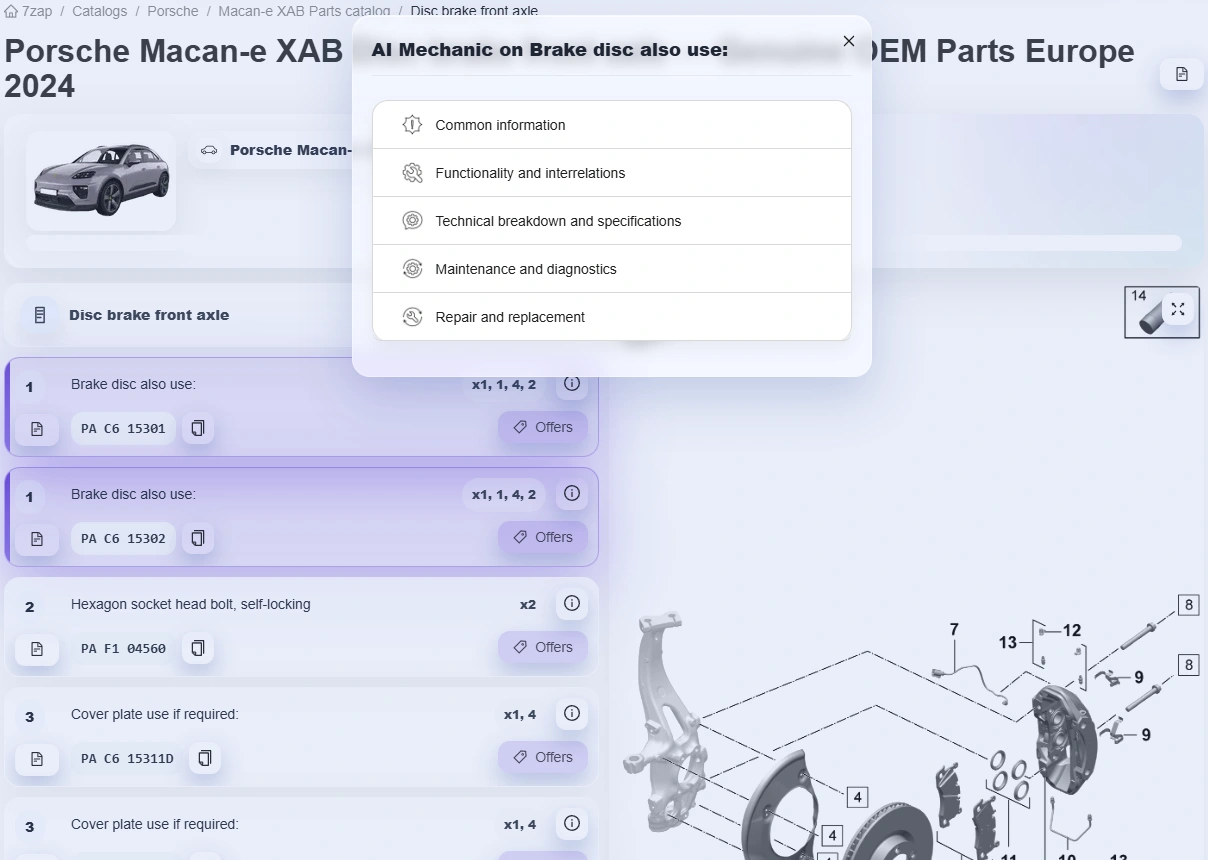
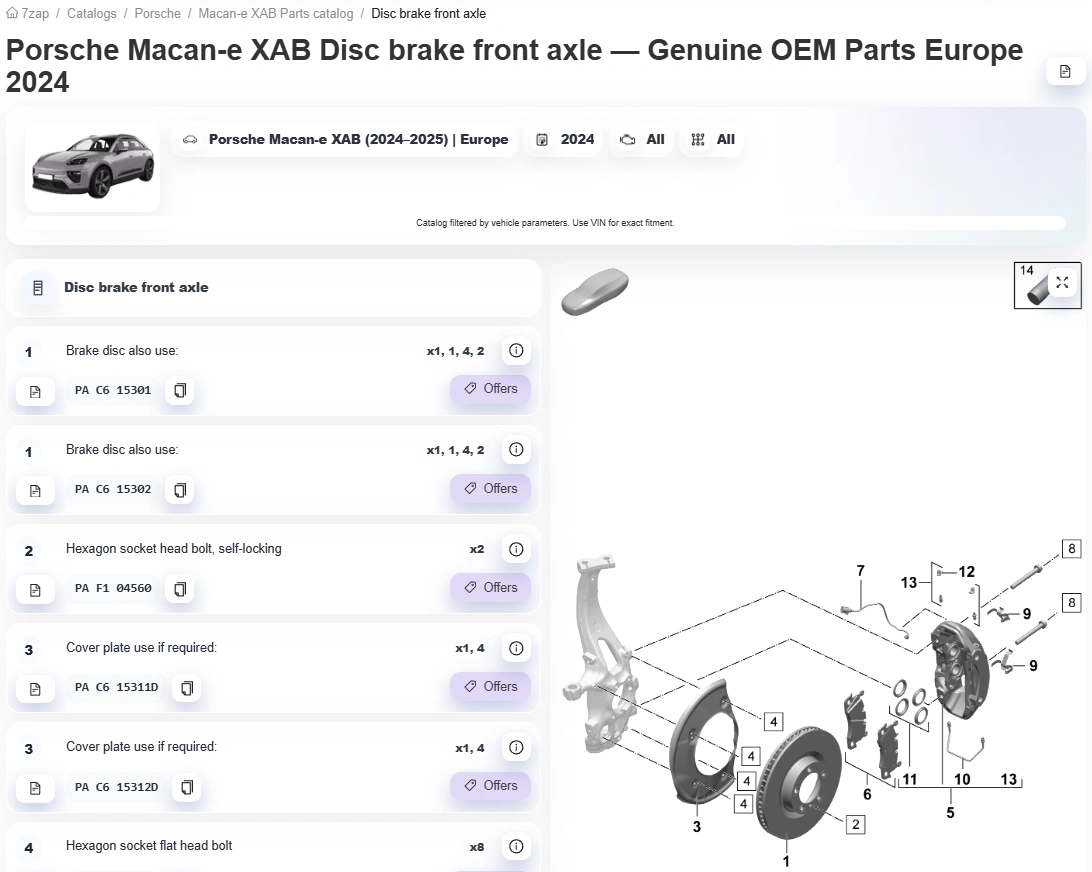
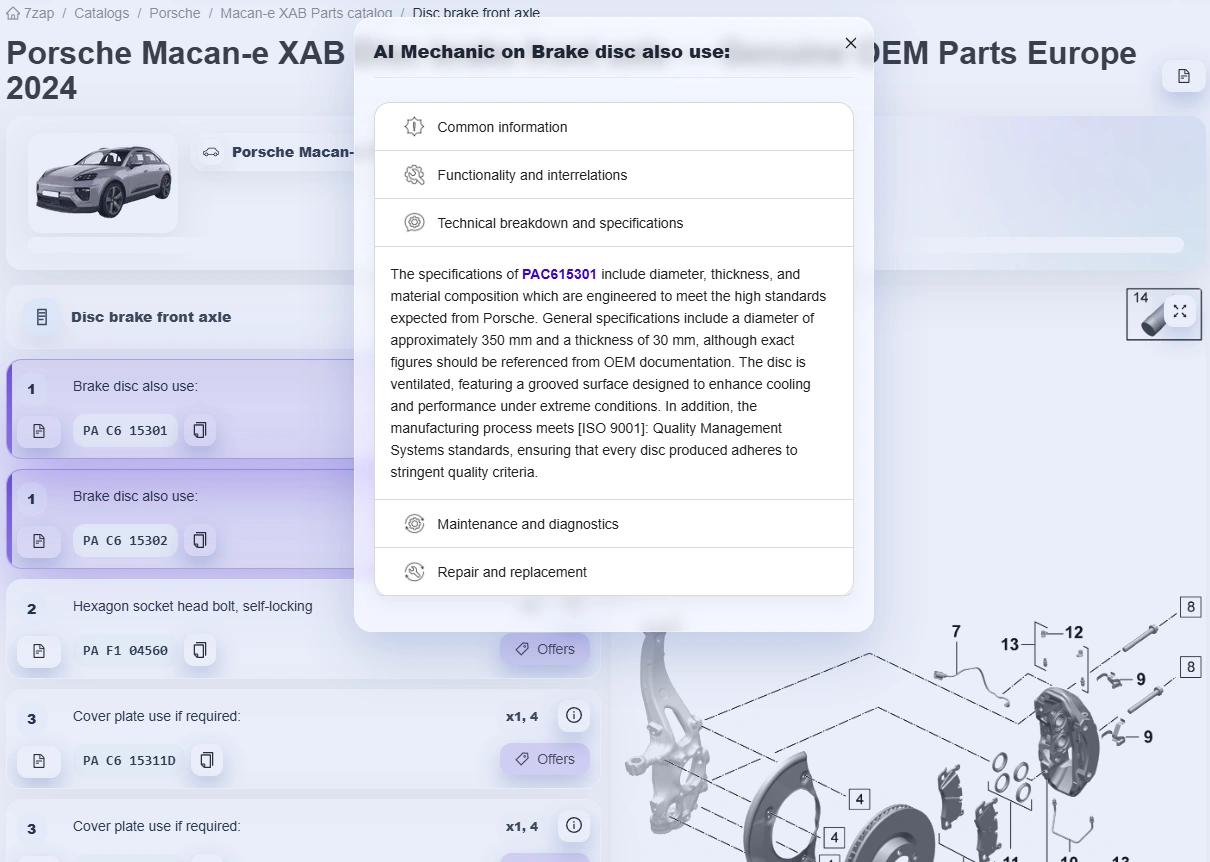
A quick look at decoded Porsche VIN details and how the OEM catalog can display configuration-relevant information for parts selection.
Porsche VIN preview
Decoded preview
VIN
WP1AB29P25LA63924
Brand
Porsche
Model
Porsche Cayenne
Year
2005
Production date
12.01.2005
Engine
4800 - 4.50L 8-cyl 340HP
Transmission
A4800 - 6-speed Automatic
Porsche catalog preview
Screenshot
Screenshot
Screenshot
Support

FAQ

Quick answers to common questions about Porsche VIN decoding, VIN lookup results, and how to use VIN data for parts and verification.

VIN decoders for other brands

Decode VINs for other manufacturers with the same level of accuracy and OEM-based data.