
VIN Decoder

GAZ VIN Decoder

Free • 3 sec • No signup
Enter your 17-character GAZ VIN to decode the exact model family, model year, powertrain basics, and production identifiers—then use the results to confirm specs and reduce parts-ordering mistakes.
✓ Identify GAZ model family and model year
✓ Confirm key specs for service and parts selection
✓ Spot mismatches in documents vs vehicle tags
No registration required. Results in ~3 seconds.
Every modern GAZ vehicle has a unique 17-character VIN. A GAZ VIN decoder turns that code into practical details you can use for maintenance, purchasing parts, and verifying identity. If you need a quick GAZ VIN lookup, paste the VIN exactly as it appears on the vehicle and documents.
Overview

Decode GAZ VIN in Seconds

A Vehicle Identification Number (VIN) is a standardized identifier defined by ISO 3779/3780 and used worldwide (and aligned with regulatory rules such as 49 CFR Part 565). A modern GAZ VIN is 17 characters and is split into three blocks: WMI (manufacturer/region), VDS (vehicle descriptor), and VIS (vehicle identifier/serial). Your GAZ VIN decoder reads these blocks to help you quickly confirm what the vehicle should be.

When you decode GAZ VIN data, you can verify the model year code, identify the manufacturer identifier (commonly X96 for GAZ), and capture identifiers that are useful in workshops and parts departments. For deeper results and a fast GAZ VIN lookup, use our free VIN decoder to extract structured data and then navigate directly to the OEM-style catalog view for compatible components and assemblies. To decode other vehicle brands with the same precision, use our VIN lookup.

Help

Where is the VIN number on a GAZ?

Common VIN locations on GAZ vehicles include:
Dashboard (driver’s side, visible through the windshield on some models/years)
Driver’s door jamb or door pillar (VIN plate or label)
Engine bay bulkhead/firewall (VIN plate or stamped number, model-dependent)
Frame rail or chassis member (common on commercial vehicles)
Under the hood on the inner fender (VIN plate on certain variants)
Floor panel near the front passenger seat or under trim (some commercial platforms)
Vehicle registration, title, and customs/import documents
Insurance documents and fleet maintenance records
Service book/owner’s manual (VIN recorded by dealer or owner)
i
For a clean lookup, enter the VIN exactly as shown (17 characters, no spaces). VINs never use the letters I, O, or Q—if you see them, re-check the stamping or plate.
Capabilities

GAZ VIN lookup: what you can learn

A good VIN lookup can help confirm:
Basic vehicle identity
- Manufacturer identifier (WMI) - Vehicle family/platform indicators - Model year code - Serial/sequence number used for identification
Factory-oriented specifications
- Engine family (where supported by data) - Transmission type (manual/automatic where available) - Body style category (van, minibus, chassis cab, etc.) - Market/production notes when present
Service & parts decision support
- Cross-check VIN on documents vs vehicle tags - Reduce parts mismatches by confirming the platform - Create cleaner service records tied to a specific VIN - Provide a reliable reference when vehicles have been modified
A GAZ VIN lookup is especially helpful for commercial vehicles that have been repurposed, upfitted, or repaired over many years. Decoding the VIN helps you confirm the vehicle identity before ordering components, planning maintenance, or comparing paperwork. It’s also a practical first step when evaluating a used GAZ vehicle for purchase or fleet intake.
VIN anatomy

How the GAZ VIN number is structured

Every modern 17-character VIN is split into three blocks that work together to identify the vehicle.
WMI (positions 1-3)
The WMI identifies the manufacturing region and the manufacturer. For many GAZ vehicles, the VIN starts with X96, where the leading “X” denotes Russia/nearby region assignments in the global VIN system. This block is the fastest way to confirm you’re looking at a GAZ-issued VIN format rather than an import VIN from another manufacturer.
VDS (positions 4-9)
The VDS is the “vehicle descriptor” section. It is set by the manufacturer and typically encodes platform or model family, body configuration, and other internal descriptors. Position 9 may contain a check digit on some VIN systems; outside North America it may be manufacturer-defined. A decoder compares these positions to known patterns to interpret the vehicle type.
VIS (positions 10-17)
The VIS contains the model year code (position 10), plant/assembly code (position 11, manufacturer-defined), and the vehicle’s serial sequence (positions 12-17). The year code follows a standardized cycle (e.g., D=2013, K=2019, P=2023). The last six digits typically represent the production sequence used for identification and recordkeeping.
Manufacturing

Major production plants

GAZ production is centered in Russia, and some VIN details (especially positions 10–11 and the serial block) can help indicate the general production period and assembly source.
Gorky Automobile Plant (GAZ) – Main Assembly
Nizhny Novgorod, Russia (1932–present)
GAZ Press-and-Weld Plant (body & frame components)
Nizhny Novgorod, Russia (Soviet era–present)
GAZ Paint & Body Shop Complex
Nizhny Novgorod, Russia (Soviet era–present)
GAZ Powertrain/Engine Production (GAZ site operations)
Nizhny Novgorod, Russia (Soviet era–present)
GAZ Foundry/Metallurgical Production (GAZ site operations)
Nizhny Novgorod, Russia (Soviet era–present)
Pavlovsky Bus Plant (PAZ)
Pavlovo, Nizhny Novgorod Oblast, Russia (1932–present)
Kurgan Bus Plant (KAVZ)
Kurgan, Russia (1958–present)
Likinsky Bus Plant (LiAZ)
Likino-Dulyovo, Moscow Oblast, Russia (1937–present)
Ural Automotive Plant (AZ Ural)
Miass, Chelyabinsk Oblast, Russia (1941–present)
Yaroslavl Motor Plant (YaMZ / Avtodiesel)
Yaroslavl, Russia (1916–present)
Tutaev Motor Plant (TMZ)
Tutaev, Yaroslavl Oblast, Russia (1968–present)
Arzamas Machine-Building Plant (AMZ) – special-purpose vehicles
Arzamas, Nizhny Novgorod Oblast, Russia (1972–present)
i
On many VIN systems, the assembly plant is indicated by position 11, but the meaning of that character is manufacturer-specific. For GAZ vehicles, using a decoder is the easiest way to interpret plant/assembly codes alongside the year code and serial range.
Value

Benefits of Using a GAZ VIN Decoder

Practical details that help owners, fleet teams, and workshops verify vehicles and reduce costly mistakes.
Accurate parts matching
GAZ platforms can look similar across years and body variants, especially in the GAZelle and Sobol families. Decoding the VIN helps confirm the base platform and model year before you select wear parts. This reduces returns, delays, and incorrect fitment assumptions.
Faster service planning
A decoded VIN gives you a reliable starting point for routine service planning and recordkeeping. Even when the vehicle has been modified for cargo, passenger, or utility use, the VIN anchors your service file to the correct identity. That makes diagnostics and scheduling more consistent.
Identity verification
Commercial vehicles may have multiple owners, rebuilt components, or replacement panels. A GAZ VIN decoder helps you cross-check documents against the vehicle’s stamped/plate VIN and year code. It’s a practical step to detect mismatches before purchase, registration, or insurance updates.
Cleaner documentation for fleets
For fleets, a standardized VIN decode improves inventory control and reduces clerical errors. It supports consistent naming of vehicles and helps avoid mixing similar units in the same fleet. Clear VIN-based records also make it easier to track maintenance costs and downtime per vehicle.
Social proof

Trusted by GAZ Owners & Workshop Teams

Feedback from technicians, fleet operators, and parts specialists who decode VINs in everyday work.
Andrei
5
5.0
Fleet Maintenance SupervisorNizhny Novgorod
We service multiple GAZelle NEXT vans and document accuracy matters. The decoder helps us confirm the model year and basic powertrain details before ordering consumables. It’s also useful when the vehicle’s paperwork doesn’t match what’s stamped on the body.
Marta
5
5.0
Auto Parts ManagerWarsaw
GAZ imports can be tricky because customers describe vehicles differently. A quick GAZ VIN lookup lets me confirm the platform and avoid sending the wrong clutch or brake parts. It saves time on returns and makes conversations with customers much clearer.
Oleg
5
5.0
Independent MechanicAlmaty
I mostly see Sobol and older GAZelle models. The VIN decoder is a solid starting point to verify the year code and identifiers before I plan diagnostics. It reduces guesswork when vehicles have been modified or swapped components over time.
Hannah
5
5.0
Garage OwnerRiga
For commercial vans, speed matters. Decoding the GAZ VIN helps us confirm what we’re looking at before writing an estimate, especially when the owner isn’t sure about the exact variant. It’s become part of our intake checklist.
Sergey
5
5.0
Vehicle InspectorTbilisi
I use the results to spot inconsistencies between the VIN plate, stamping, and documents. For GAZ vehicles with age-related corrosion around stampings, having a structured decode helps verify what the VIN is supposed to represent before further checks.
Why premium

GAZ VIN Decoder vs Free Tools

Basic tools may only validate length and show a generic year code. A dedicated GAZ decoder focuses on manufacturer identifiers and practical vehicle descriptors so you can use the VIN for real workshop and parts tasks.

How to use the decoder to find parts

Enter your 17-character VIN (copy it from the vehicle plate/stamping or documents)
Review decoded results: manufacturer (WMI), model year, and identifier details
Use the decoded identifiers to navigate to the correct catalog section for your vehicle
Filter parts by group (engine, transmission, suspension, brakes, body) to avoid mismatches
Save the VIN and decoded summary to your service record or parts order notes

Free vs Premium GAZ VIN Decoder

Compare plans feature-by-feature and choose the level of detail you need for parts and service work.
Free
View diagrams per day
View 1 diagrams per day
VIN identifications per month for month(s)
10 VIN identifications per month for 1 month(s)
Ad-free
Full part numbers in catalogs
Applicability Of Spare Parts
Maintenance Parts
Free
View diagrams per day
View 1 diagrams per day
VIN identifications per month for month(s)
10 VIN identifications per month for 1 month(s)
Ad-free
Full part numbers in catalogs
Applicability Of Spare Parts
Maintenance Parts
Reference

GAZ WMI codes (real identifiers)

WMIs are the first three characters of the VIN and identify the manufacturer and region. Modern GAZ-issued VINs most commonly use the WMI X96 (Russia). If your vehicle is branded GAZ but does not start with X96, re-check the VIN source or confirm whether it was built under a different manufacturer identifier.
Examples

GAZ VIN examples (decoded preview)

These realistic examples show how a GAZ VIN can be structured and what the key positions typically represent.
X96A21R32KN123456
GAZelle NEXT, commercial van/chassis family, 2.8L diesel (market-dependent), RWD, 5-speed manual
WMIX96 = GAZ (Russia)
Check digitPosition 9: manufacturer-defined/check digit (varies by market/system)
Model year (position 10)K = 2019
Plant code (position 11)Position 11: N = assembly code (manufacturer-defined)
Use a decoder to confirm the exact variant because body and equipment packages can differ widely across fleets and upfits.

GAZ VIN preview

A quick look at decoded VIN details and how the catalog view can guide you to the right parts groups for your exact vehicle identity.
GAZ VIN preview
Decoded preview
VIN
X96A21R32KN123456
Brand
GAZ
Model
GAZelle NEXT (platform family)
Year
2019
Production date
02/2019
Engine
2.8L diesel (Cummins ISF2.8, market-dependent)
Transmission
5-speed manual
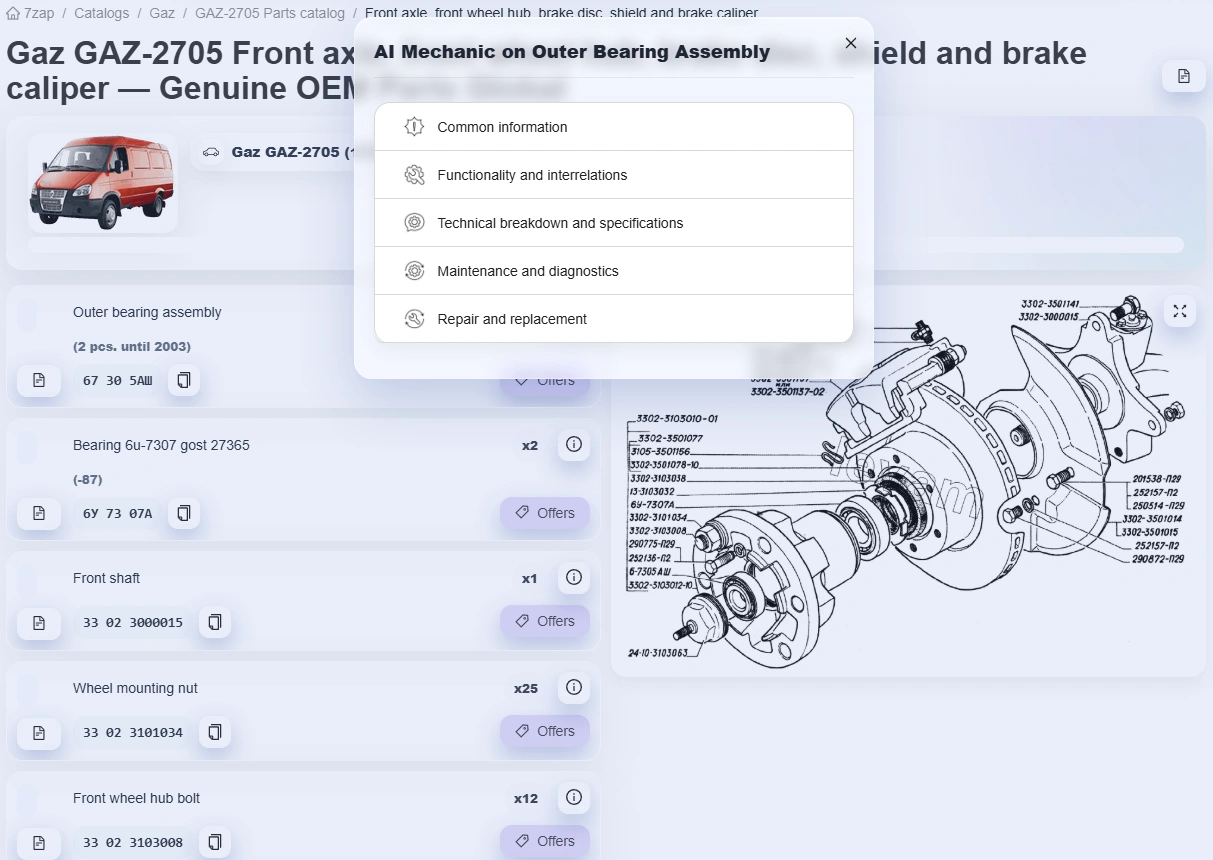
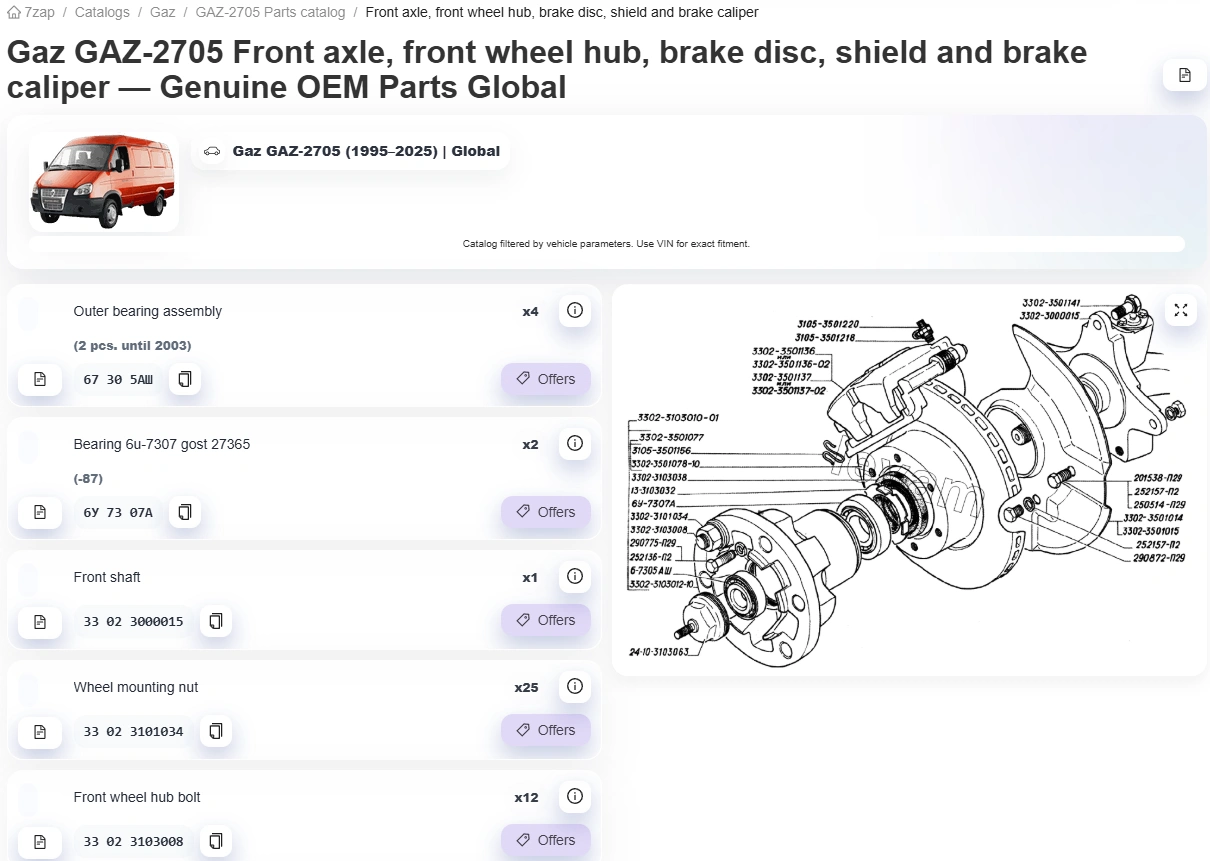
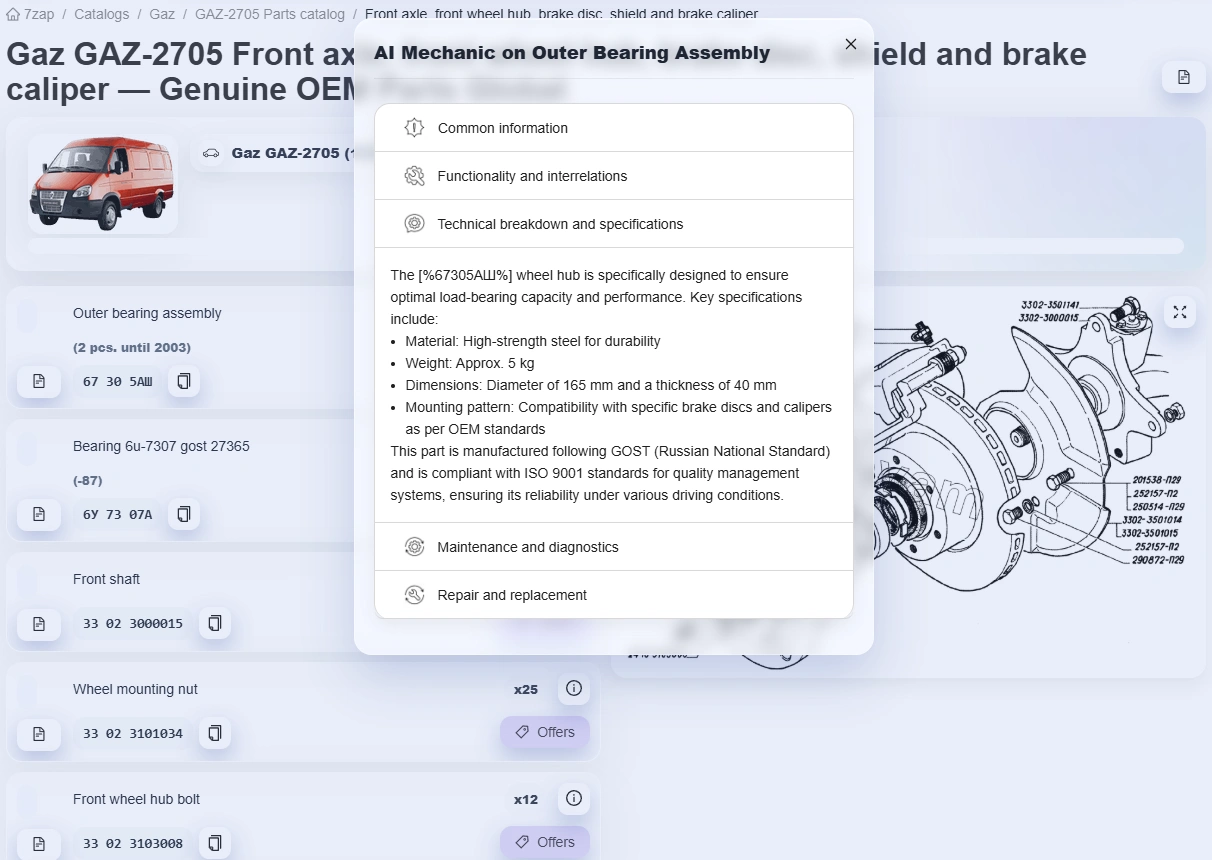
GAZ catalog preview
Screenshot
Screenshot
Screenshot
Support

FAQ

Quick answers to common questions about GAZ VIN decoding and VIN lookups.

VIN decoders for other brands

Decode VINs for other manufacturers with the same level of accuracy and OEM-based data.