
Decode your Nissan VIN to find factory specifications, build options, and exact OEM part compatibility.




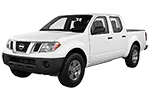

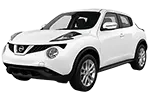

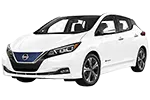

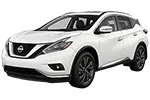

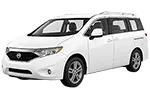

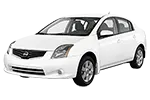
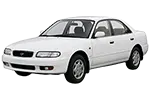
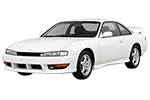

The Nissan parts catalog on 7zap is a reference resource for identifying passenger-car components, assembly relationships, and OEM part numbers. It supports research by vehicle generation and factory configuration, helping users move from a familiar model name to the diagrams and parts-list entries associated with the displayed catalog selection.
Nissan’s passenger-car catalog spans vehicles with different layouts, purposes, and production periods. Relevant examples on this page include Sentra B13 (1990–1994), Altima L33 (2012–2018), Skyline R34 (1998–2002), Leaf ZE1 (2017–2019), X-Trail T31 (2007–2014), and Serena C25 (2005–2010). Selecting the appropriate generation is important because a shared model name does not establish that components are interchangeable.
After choosing a displayed Nissan generation and configuration, catalog navigation can help narrow the search from a broad vehicle selection to a relevant assembly. Depending on the available catalog structure, users may browse through universal categories or manufacturer categories. These are two different ways to approach the same research task: beginning with a familiar component type or following the organization presented for the selected Nissan vehicle.
Assembly groups may lead to diagrams and lists covering areas such as the engine, transmission, electrical equipment, suspension, steering, braking, body fittings, interior trim, heating, or cooling. The groups shown depend on the chosen catalog entry, so their presence should not be treated as a statement of exhaustive coverage.
This structured approach is useful across contrasting catalog selections. Someone researching a Micra K12 (2002–2010) may start from a familiar service-related component group, while a user working with a Patrol Y61 (1997–2010), Frontier D40 (2004–2019), or GT-R R35 1st Facelift (2010–2015) may need to trace a component within a more specific assembly. In each case, the selected vehicle context matters more than the model name alone.
A Nissan parts diagram presents components in an exploded view so that their positions and relationships can be understood visually. Numbered callouts connect the illustration to rows in the accompanying parts list. This can help distinguish adjacent brackets, fasteners, seals, covers, housings, clips, and related pieces that may have similar descriptions.
A callout is only a pointer to a parts-list row. It is not necessarily an orderable number and should not be copied as though it were an OEM part number. The corresponding row may contain a part description, a Nissan number, quantity information, or applicability notes, depending on what is shown for that assembly.
The OEM number is the most useful reference to carry into further research, but it does not by itself guarantee compatibility. Similar-looking parts may differ according to the vehicle’s production details or factory equipment. References commonly associated with Nissan genuine parts should therefore be checked against the selected generation, configuration, diagram context, and the number physically marked on an existing component when accessible.
Begin with the generation displayed on the catalog page rather than relying only on a registration year or a familiar badge. For example, the catalog distinguishes entries such as Maxima A36 (2015–2019), 350Z Z33 Facelift (2006–2009), and X-Trail T31 (2007–2014). The generation label and date range are useful starting points, but they do not replace a review of the available factory configurations.
Where configuration choices are displayed, compare the available production details with the vehicle being researched. Relevant distinctions may include engine, transmission, drive arrangement, steering position, body specification, or installed equipment. Use only the characteristics actually presented by the catalog and supported by the vehicle’s documentation.
VIN lookup is an independent, vehicle-specific way to research a Nissan. It is separate from manually choosing a generation and factory configuration in the browsed catalog. A VIN should not be treated as another configuration option or as a selector within the manual navigation path.
When VIN-based information is available, compare its results with the vehicle, the relevant diagram, and any identifiers on the removed part. VIN research can narrow the vehicle context, but the resulting OEM reference still requires practical verification before it is used for replacement decisions.
Record the full number as displayed, including prefixes, suffixes, letters, and separators. Then check the surrounding parts-list description and diagram position. A number copied without its assembly context can be misleading, particularly when visually similar components appear on opposite sides of a vehicle or alongside alternative equipment.
Compare the catalog reference with the existing component, vehicle identification documents, and information from a qualified parts specialist or repair professional. Account for visible connector shapes, mounting points, dimensions, and markings where relevant. 7zap is an independent reference catalog and is not affiliated with Nissan; its diagrams and numbers are research aids rather than promises of fitment, availability, or installation suitability.
Select the appropriate displayed generation and configuration, open the relevant assembly, locate the component callout, and read the connected parts-list row. Verify the listed number against the vehicle and existing part.
Not necessarily. A number printed on an exploded diagram is usually a callout directing you to a parts-list row. The OEM number, when provided, appears in the associated list information.
No. A shared or similar model name does not establish compatibility. Check the generation, factory configuration, assembly context, and vehicle-specific evidence before relying on a number.
Use the path that matches the information available. Manual browsing starts with a displayed generation and configuration, while VIN lookup is a separate vehicle-specific route. Results from either path should be verified before a component decision.
The exploded view shows the component’s location and relationship to nearby pieces, while the parts list provides the corresponding description and reference data. Reading them together reduces the risk of confusing adjacent or similarly named parts.