

Decode your Gaz VIN to find factory specifications, build options, and exact OEM part compatibility.


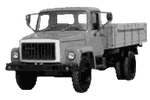
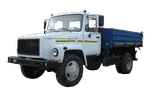
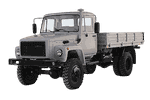
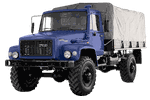
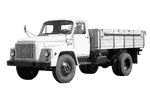
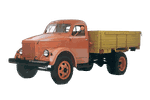
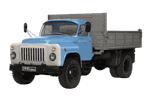
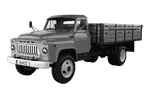
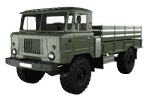
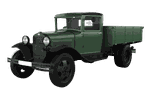
The GAZ truck parts catalog on 7zap provides a structured reference for identifying assemblies, diagram positions, and OEM part numbers. It is intended for research across the truck families displayed on this page, keeping truck catalog navigation separate from passenger-car, van, and special-purpose sections.
The available generation list covers distinct GAZ truck lines and configurations. Examples include the GAZ-51, GAZ-52, GAZ-53 A, GAZ-66, and later families such as the GAZ-3307, GAZ-3308, and GAZ-3309. Because similarly named vehicles may differ by generation or factory configuration, begin with the specific entry shown in the catalog rather than relying on the model family alone.
After selecting a displayed vehicle, catalog navigation can help narrow the search from a broad truck system to a relevant assembly. Depending on the selected entry, the structure may lead to component groups associated with the chassis, powertrain, controls, electrical equipment, cab, or other represented truck systems. Coverage varies between catalog entries, so the visible sections should define the scope of the research.
Navigation may use universal categories or manufacturer categories. Universal categories provide a consistent way to approach common component types, while manufacturer categories preserve the organization presented for a particular GAZ catalog entry. Both paths are reference tools leading toward diagrams and parts lists.
A GAZ truck parts diagram presents components in an exploded view so their position within an assembly can be understood. Numbered callouts connect illustrated items to rows in the accompanying parts list. A callout is only a pointer to that row; it is not necessarily an orderable part number.
The corresponding row may show an OEM number, description, quantity note, or applicability detail available in that catalog context. GAZ truck part numbers are useful research references for comparing records and discussing a component with a parts specialist. An OEM number by itself does not guarantee that the component applies to a particular vehicle.
Check the full generation and configuration wording before opening an assembly. For example, GAZ-52-01 and GAZ-52-02 are separate displayed entries, while GAZ-3306, GAZ-3307, and GAZ-3308 are distinct truck families. Historical entries such as GAZ-MM and GAZ-51 should likewise be approached through their own catalog selections.
VIN lookup is an independent, vehicle-specific research path. It is not a configuration and does not select one of the manually browsed GAZ truck configurations. Users may either navigate through the displayed generation list or use the separate VIN route where supported, then verify the resulting references against the vehicle and catalog context.
Start with the appropriate truck generation, then open the represented chassis or related assembly group. The diagram and parts list can help identify candidate references.
Not on its own. The diagram number points to a parts-list row, which should be read for the associated description and OEM reference.
No. It is a research reference. Generation, factory configuration, assembly context, and vehicle-specific evidence still need to be checked.
Use the full displayed designation and generation details. Do not assume that parts interchange merely because model names or illustrated components appear similar.