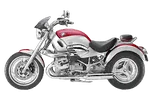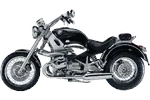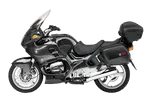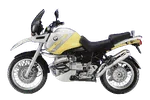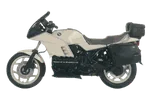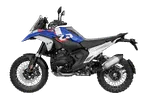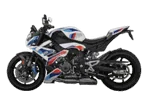

Decode your BMW VIN to find factory specifications, build options, and exact OEM part compatibility.


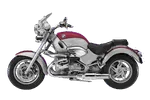


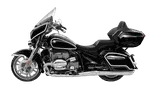


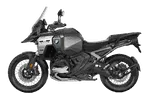
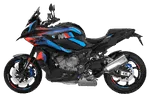
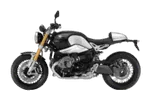


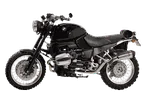
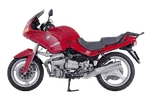
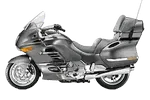
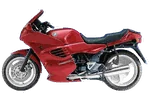
The BMW motorcycle parts catalog on 7zap is an independent reference for identifying assemblies, diagram positions, and OEM part numbers. It supports research across varied BMW Motorrad series, from earlier machines such as R50/5–R90S 69–76 and K589 models to later families including the K46 S 1000 RR, K21 R nineT, K34 R 18, and KA1 R 1300 GS.
Begin with the generation list displayed above and choose the entry that matches the motorcycle being researched. Catalog sections may organize components through universal categories or manufacturer categories. Depending on the selected generation, these can help locate relevant groups for the engine, transmission, frame, suspension, wheels, brakes, electrical equipment, controls, body components, and related motorcycle assemblies.
A BMW motorcycle parts diagram presents an assembly as an exploded view. Numbered callouts connect illustrated components to rows in the accompanying parts list. A callout is only a pointer to that row; it should not be treated automatically as an orderable part number.
The parts-list row may show an OEM number, description, quantity context, or other identifying information available for the chosen catalog entry. Record the number together with the assembly name and diagram position. This is particularly useful when comparing visually similar components or discussing a part with a repairer or parts specialist.
An OEM number is a research reference rather than proof of applicability. Differences within a model family can affect the relevant component, so the number should be checked against the motorcycle’s identity and factory configuration before it is relied upon.
BMW Motorrad catalog entries can distinguish closely related series by model designation, generation code, and production period. For example, the displayed list separates K25 R 1200 GS from 259 R 850 GS and R 1100 GS, while K80 covers the listed F 750 GS and F 800 GS generation. Choose the generation shown on the page carefully rather than relying on a familiar model name alone.
After entering a generation, review the displayed configurations and compare their labels with reliable motorcycle records. Production period, model designation, and factory configuration should be considered together. Do not assume that a component illustrated for one configuration also applies to another motorcycle with a similar appearance.
VIN lookup provides an independent, vehicle-specific path into the catalog. It is separate from manually choosing a generation and displayed factory configuration, and it is not itself a configuration option. When a VIN route is used, confirm the returned vehicle details before continuing to diagrams and parts lists.
It is an illustrated assembly view linked by numbered callouts to a parts list. It helps connect a component’s position in the diagram with its description and available OEM reference.
Yes. Navigate through the relevant generation and assembly, then inspect the parts-list row associated with the diagram callout. Verify the resulting number for the specific motorcycle.
No. The illustration provides assembly context, but applicability can depend on the selected generation and factory configuration.
They are separate research paths. Manual browsing is useful when the correct generation and configuration are known; VIN lookup is vehicle-specific. Details reached through either route should still be reviewed carefully.