

Decode your Opel VIN to find factory specifications, build options, and exact OEM part compatibility.




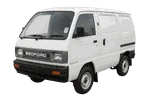
The Opel van parts catalog provides a structured reference for identifying commercial vehicle assemblies and researching OEM part numbers. Begin with the displayed van family and generation, then move through the available assembly groups to narrow the search. This approach is useful when a component name is uncertain, when several related items appear in the same area, or when a visible diagram is more helpful than a text-only search.
The catalog is intended for Opel commercial vehicles rather than passenger-car applications. Examples from the displayed range include Combo D (2012–2018), Movano A (1999–2010), Movano B (2010–2021), and Rascal (1986–1993). These generation distinctions matter because similarly named vehicles can use different assemblies, mounting arrangements, or numbered references.
After choosing a displayed generation, catalog navigation can lead to relevant mechanical, electrical, body, interior, and service-related assembly groups where provided. Universal categories can help when starting from a broad component type, while manufacturer categories preserve the organization associated with the selected Opel commercial vehicle entry. The available branches may differ between generations.
An Opel van parts diagram presents related components in an exploded view. Numbered callouts connect the illustration to rows in the accompanying parts list, making it easier to distinguish adjacent fasteners, brackets, housings, seals, and larger assemblies. A callout is only a pointer to a parts-list row; it is not necessarily an orderable OEM part number.
The parts-list row may include an OEM number, description, quantity context, or qualifying notes. Treat an Opel van part number as a research reference. Its presence does not by itself confirm that the component applies to a particular vehicle or factory configuration.
Start by confirming the model family and generation shown on the page. For example, Movano A and Movano B should be treated as separate catalog choices rather than interchangeable versions. Continue by comparing the displayed factory configuration information with the vehicle being researched. Engine, transmission, equipment, production timing, and other recorded distinctions can affect which parts-list row is relevant when such details are presented.
Keep the diagram context with the number you record. Saving the assembly heading, item description, callout, and any notes makes later verification more reliable than copying an isolated number.
VIN lookup is an independent, vehicle-specific path. It is not a factory configuration and does not select one of the manually browsed configurations. Use manual browsing when working from a known Opel van generation and displayed configuration details; use the VIN route separately when vehicle-specific catalog identification is needed.
Compare the OEM number and description with the removed component, visible markings, connector or mounting details, and the vehicle’s documentation. Pay attention to catalog notes and quantity context. If uncertainty remains, confirm the reference with a knowledgeable parts specialist before making a sourcing or repair decision. 7zap is an independent reference catalog and does not guarantee compatibility or fitment.
Yes. Choose the relevant generation and assembly, locate the component in the illustration, and follow its callout to the corresponding parts-list row.
No. The callout identifies a row in that diagram’s parts list. The row must be checked for the associated number, description, and notes.
They are separate displayed generations with different catalog contexts. Selecting the appropriate entry reduces the risk of researching a number from an unrelated assembly.
No. It is a useful reference, but applicability still depends on the vehicle, factory configuration, catalog notes, and supporting physical or documentary checks.