

Decode your Ford VIN to find factory specifications, build options, and exact OEM part compatibility.


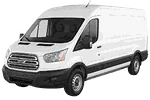
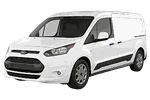
This Ford commercial vehicle parts catalog is a reference resource for identifying components used across the displayed van generations. It supports research by assembly, diagram position and OEM part number without mixing commercial vehicles with Ford passenger-car catalog content.
The generation list above includes several Transit and Transit Connect catalog paths. Examples range from Transit 2nd Generation entries and their displayed facelifts to Transit V184/185 3rd Generation and Transit V363 4th Generation. Transit Connect is represented by its 1st Generation and 2nd Generation entries. Select the generation shown for the vehicle being researched rather than assuming that similarly named vans share the same parts.
Catalog navigation can help narrow a search from a vehicle generation to relevant component groups and assemblies. Depending on the available path, parts may be organized through universal categories or manufacturer categories. These views provide different ways to reach useful diagrams and parts lists; they should not be treated as additional vehicle configurations.
A Ford van parts diagram typically presents an exploded view of related components. Numbered callouts connect illustration positions to rows in the accompanying list, where an OEM reference, description or other catalog detail may appear. A callout is only a pointer to a parts-list row and is not necessarily an orderable part number.
OEM numbers are useful for comparing labels, repair records and existing components. However, a number alone does not guarantee applicability to a particular van. Similar-looking components can differ according to the displayed generation and factory configuration.
Begin with the correct model family and displayed generation. For example, do not treat Transit V184/185 3rd Generation Facelift as interchangeable with Transit V363 4th Generation, or assume that Transit Connect uses the same catalog structure as Transit. Continue through the available factory configuration details, then open the relevant assembly and compare the diagram with the component being investigated.
VIN lookup is an independent, vehicle-specific research path. It is not a configuration and does not select one of the manually browsed configurations. Manual catalog navigation starts with the model and generation shown on this page, while VIN-based lookup begins with the vehicle identifier. Results from either route should still be checked against the vehicle and the relevant assembly context.
Yes, the displayed catalog includes the supplied Transit generation paths. Choose the relevant generation first, then review its available assemblies and parts lists.
It is usually a diagram callout that points to a row in the associated parts list. The row may contain an OEM number, but the callout itself should not be interpreted as that number.
No. Ford commercial OEM parts references help with identification, but applicability depends on the vehicle generation, factory configuration and assembly context.
The catalog can display manufacturer-style OEM references for research. 7zap is an independent reference catalog and does not claim manufacturer or dealer affiliation.
Check the selected generation, diagram position, parts-list description and any number visible on the existing component. Where ambiguity remains, confirm the reference with a qualified parts specialist before relying on it.