

Decode your Citroen VIN to find factory specifications, build options, and exact OEM part compatibility.



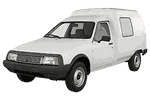

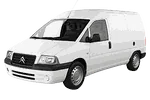

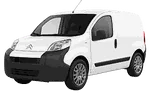
The Citroen van parts catalog on 7zap provides a structured reference for identifying components used in selected Citroën commercial vehicle generations. It is intended for owners, workshops, parts specialists, and fleet operators researching an assembly or checking an OEM number before further verification.
This page is dedicated to vans and related commercial vehicles rather than Citroën passenger cars. The displayed catalog includes generation choices for families such as the Berlingo, C15, Jumper, Jumpy, Jumpy Combi, and Nemo. Because differences between generations can affect the diagrams and references shown, the vehicle choice should be reviewed carefully before consulting a parts group.
Catalog navigation organizes available material into vehicle systems and assemblies. Depending on the selected vehicle, users can move through universal categories or manufacturer categories to locate a relevant diagram and parts list. These routes provide different ways to approach the same research task without implying that every component or factory variation is represented.
The generation list helps separate vehicles with long production histories. For example, the catalog distinguishes Berlingo M59 (2002–2008) from Berlingo B9 (2008–2018). It also separates the Jumper 1st Generation (1981–1993), Jumper 2nd Generation (1993–2006), and Jumper 3rd Generation (2006–2024). Other displayed choices include Jumpy 1st/2nd Generation G9 (1994–2016), Jumpy Combi K0 (2006–2016), C15 (1984–2007), and Nemo 3rd Generation (2007–2017).
A Citroen van parts diagram shows how components are arranged within a selected assembly. Numbered callouts connect illustrated items to rows in an accompanying parts list, helping users distinguish nearby brackets, fasteners, housings, seals, or larger components where these are shown.
A callout is a pointer to a parts-list row and is not necessarily an orderable part number. The row may provide an OEM reference, description, quantity note, or configuration-related detail. A Citroën van OEM parts number is useful for research and comparison, but the number alone does not guarantee applicability to a particular vehicle.
Begin with the displayed model family and generation that correspond to the vehicle being researched. Then review any available factory configuration choices and diagram notes. Similar-looking vans may use different components because of production timing, equipment, drivetrain, or other factory-defined variations.
Record the OEM number together with the component description, diagram context, and any relevant notes. Before relying on it, compare those details with the removed component, vehicle documentation, manufacturer information, or a knowledgeable parts specialist. This process reduces the risk of treating a visually similar item as interchangeable.
VIN lookup is an independent, vehicle-specific research path. It is not a configuration and does not select one of the manually browsed configurations. When VIN-based catalog information is available, use it separately and still verify the resulting references against the vehicle and component context.
Where a parts-list row includes an OEM reference, the diagram callout can guide you to it. Confirm that the row applies to the selected generation and factory configuration.
No. An exploded view explains component location and relationships. Compatibility requires additional checks using vehicle details, notes, and reliable supporting documentation.
Each displayed generation has its own catalog context. Selecting the appropriate Jumper generation helps avoid researching diagrams associated with a different production period.
No. 7zap is an independent reference catalog. It helps users navigate diagrams and OEM number information but does not represent or claim affiliation with Citroën.