
Decode your Subaru VIN to find factory specifications, build options, and exact OEM part compatibility.

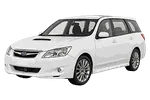


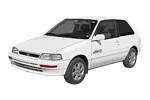
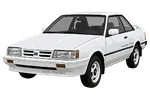

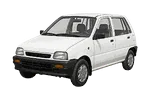
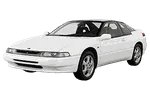



The Subaru parts catalog on 7zap is a reference resource for identifying assemblies, diagram positions, and OEM part numbers. It is designed for owners, repair professionals, restorers, and parts researchers who need to move from a known Subaru generation to the relevant component group. Instead of treating a model name as sufficient evidence, the catalog encourages careful selection of the displayed generation and factory configuration before a part number is recorded.
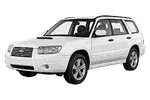
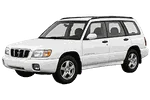
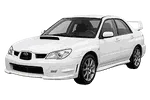
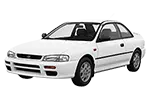
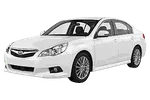
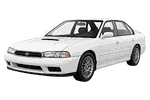
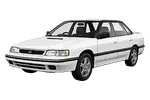
The passenger-car catalog spans distinct periods and model families represented in the generation list above. Examples include Forester SF (1997–2002) and Forester SK (2018–2021), Impreza GM/GC/GF (1992–2002) and Impreza GK/GT (2016–2023), as well as Legacy BC/BF/BJ (1989–1994) and Legacy BW/BT (2020–2022). These examples illustrate why generation codes matter: vehicles sharing a familiar model name may lead to different diagrams, assemblies, and parts-list entries.
Other displayed choices, such as BRZ ZC6 (2011–2016), WRX/Levorg VM (2013–2018), XV GT (2017–2020), and SVX (1992–1994), should likewise be approached through their own generation paths. 7zap is an independent reference catalog and is not affiliated with Subaru.
After choosing the appropriate vehicle entry, catalog navigation can help narrow the search from a broad system to a relevant assembly. Depending on the selected catalog path, component groups may cover areas such as the engine, transmission, suspension, steering, braking system, electrical equipment, body fittings, interior equipment, or related hardware. The available structure depends on the vehicle and configuration shown.
Navigation may be presented through universal categories or manufacturer categories. Universal categories provide a consistent way to approach common vehicle systems, while manufacturer categories retain the organization associated with the displayed catalog material. Either route is a starting point for research rather than proof that a component applies to a particular vehicle.
A useful approach is to begin with the function or physical location of the component. Open the closest assembly, compare the illustration with the vehicle, and then inspect the corresponding parts-list rows. If an item appears in more than one assembly, review the surrounding components and notes rather than selecting a number from the first matching description.
A Subaru parts diagram presents components in an exploded view so their relationship within an assembly can be understood. Reference callouts placed beside illustrated components point to rows in an accompanying parts list. A callout is therefore an index pointer; it is not necessarily an orderable OEM part number.
The parts-list row may contain an OEM number, component description, quantity context, or qualifying information. Similar-looking parts can have separate rows because of factory configuration differences or production distinctions represented by the selected catalog entry. Conversely, one illustration may be reused to explain an assembly even when not every pictured item applies to the chosen configuration.
Subaru part numbers should be treated as research references. A number found in the catalog can support comparison with markings, service records, invoices, or information from a knowledgeable parts source. It does not by itself guarantee compatibility, fitment, availability, or interchangeability. Punctuation and spacing may also vary when a number is reproduced elsewhere, so compare the core reference carefully and retain any notes shown with it.
Start with the exact generation displayed in the catalog rather than relying only on the badge attached to the vehicle. For example, the supplied Forester and Legacy entries represent widely separated generation paths, while the Leone AA/AL/AG (1985–1994) and Tribeca Facelift (2006–2014) have their own catalog contexts. Selecting the wrong path can produce a plausible diagram while still leading to an unsuitable parts-list entry.
Where several rows appear similar, compare the listed qualifications and the physical part already fitted to the vehicle. Labels, stamped references, connector layouts, mounting points, and dimensions can provide additional evidence, but a visual resemblance alone is not sufficient for a fitment decision.
VIN lookup is independent from manual catalog browsing. It is a vehicle-specific route that begins with the vehicle identification number; it is not a configuration, trim choice, or method for selecting one of the manually browsed generation configurations. When VIN lookup is used, review the returned information on its own terms and compare useful references with documentation or the component being replaced.
If you browse manually, continue to select the displayed Subaru generation and factory configuration yourself. Results obtained through either path should still be verified before a part is sourced or installed.
Keep a record of how the number was found: vehicle path, assembly name, diagram position, row description, and any qualifying note. This context is especially useful when the same general component description appears several times. Compare the catalog reference with the number on the removed part when that marking is readable, and check whether attached brackets, seals, fasteners, or electrical pieces are listed separately.
For safety-related systems or uncertain applications, consult a qualified repair professional or a parts specialist with access to vehicle-specific evidence. The catalog supports identification research, but it does not replace inspection, fitment validation, or professional installation guidance.
A model name is a useful starting point, but the displayed generation and configuration should also be checked. Different generations can use different assemblies and OEM references.
Not necessarily. The visible callout usually points to a parts-list row. Read that row to find the associated description and any OEM number or qualification provided.
No. An OEM number is a reference for further verification. Confirm it against the selected vehicle path, catalog notes, physical component, and reliable vehicle-specific information.
They are separate research methods. VIN lookup starts with a specific vehicle identifier, while manual browsing requires you to choose from the displayed generation and configuration options.
Save the OEM number, description, diagram callout, assembly context, selected generation, and relevant notes. Keeping these details together makes later comparison more reliable.