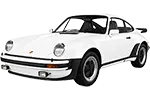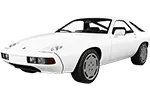

Decode your Porsche VIN to find factory specifications, build options, and exact OEM part compatibility.



















The Porsche parts catalog on 7zap is an independent reference for identifying assemblies, diagram positions, and OEM part numbers. It supports research across the Porsche passenger-car generations displayed above, helping owners, workshops, restorers, and parts specialists move from a vehicle choice to relevant component groups and parts-list entries.
Porsche model names can cover vehicles produced in substantially different periods and configurations. Selecting the appropriate displayed generation is therefore an important first step. For example, the catalog distinguishes the 911 (930) from the much later 911 Carrera (992.1). It also separates generations such as Boxster (986), 718 Cayman (982), Cayenne I (955/9PA), Macan I (95B.1), Panamera G2 (971), and Taycan (J1).
After choosing a Porsche generation and a displayed factory configuration, catalog navigation can lead to relevant assembly groups. Depending on the route shown, components may be organized through universal categories or manufacturer categories. These paths help narrow a broad vehicle catalog to the area being researched without requiring the user to know a part number in advance.
Available groups may cover areas such as the engine, transmission, suspension, steering, braking system, electrical equipment, body fittings, interior components, heating and cooling, or related hardware. The assemblies shown depend on the selected vehicle and catalog data. Their purpose is to provide a structured reference rather than installation instructions or a statement that a component fits any vehicle sharing the same model name.
The displayed Porsche catalog spans markedly different generations. Research for a 356/356A from 1950–1959 begins in a different vehicle entry from work involving a 944 Series II or 928 S4/GT 2nd Facelift. The same principle applies to a Carrera GT (980) and to later model families represented by Panamera G2 or Taycan (J1).
Generation codes are especially useful when similar names appear across multiple catalog entries. Use the label and code presented in the generation list together rather than relying only on a familiar model name. Production-year ranges can help distinguish entries, but a year alone may not resolve the vehicle’s factory configuration or the applicability of an individual component.
A Porsche parts diagram presents related components in an exploded view so their position within an assembly can be understood. Numbered callouts connect illustrated items to rows in the accompanying parts list. A callout is only a pointer to a list row; it is not necessarily an orderable OEM part number.
The corresponding row may provide a part description, an OEM number, quantity context, positioning information, or qualifying notes where such data is present. Closely related fasteners, seals, brackets, covers, and other supporting pieces may appear alongside a principal component. Reviewing the illustration and list together reduces the risk of confusing a major assembly with one of its adjacent parts.
Porsche part numbers found in an electronic parts catalog are valuable research references. However, a displayed number does not by itself guarantee applicability. Numbers can depend on the generation, factory configuration, equipment, production timing, component position, or other distinctions stated in the catalog.
Begin with the model family and then choose the displayed generation that corresponds to the vehicle being researched. Confirm the generation code and production period before opening a configuration. Within the available choices, compare the shown factory details carefully, including any engine, transmission, equipment, or production distinctions provided by the interface.
Do not transfer a number from one generation simply because the component description appears similar. A part identified for Boxster (986), for example, should not be assumed applicable to 718 Cayman (982). Likewise, information from Cayenne I (955/9PA) should be evaluated only in the context of the selected Cayenne entry and its displayed configuration.
VIN lookup is an independent, vehicle-specific route. It is not a configuration, modification, trim level, or method for selecting one of the manually browsed configurations. Manual browsing starts with the generation list and proceeds through the configuration choices shown on the page, while VIN lookup begins with a vehicle identifier.
When VIN-derived information is available, it can provide another basis for parts research. The resulting references should still be checked against the vehicle, the illustrated assembly, and any notes associated with the parts-list entry.
This process is useful when researching Porsche genuine parts references or comparing an existing component with catalog information. 7zap provides an independent reference catalog and does not make a displayed number a guarantee of compatibility.
Yes. Start with the displayed model generation and factory configuration, then browse the relevant assembly. Exploded diagrams and descriptive parts-list rows can help identify a likely reference number.
No. The callout identifies a row in the parts list. Open or read that row to find the associated description and any OEM number shown.
They distinguish catalog entries that may share a model-family name. Codes such as 930, 992.1, 986, 982, 95B.1, and J1 help users choose the intended displayed generation.
No. It is a research reference. Applicability may depend on configuration, equipment, production timing, component position, and catalog notes, so independent verification remains necessary.
Use the path suited to the information available. VIN lookup follows a vehicle-specific route, while manual browsing requires selecting a displayed generation and configuration. The two paths are separate.