

Decode your Oldsmobile VIN to find factory specifications, build options, and exact OEM part compatibility.


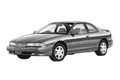
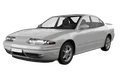
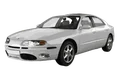
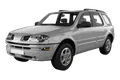
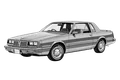

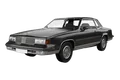
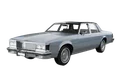
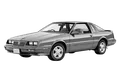
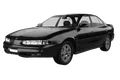
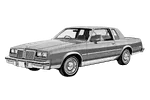
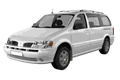

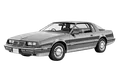
The Oldsmobile parts catalog is a reference resource for identifying components and legacy OEM part numbers for the passenger-car generations displayed above. It supports research by connecting vehicle choices, assembly diagrams, numbered callouts, and corresponding parts-list entries. This is particularly useful when an old label, invoice, or removed component provides only limited information.
Begin with the displayed Oldsmobile model family and generation that matches the vehicle being researched. Catalog navigation may organize components through universal categories or manufacturer categories, depending on the available record. Assembly groups can help narrow a search from a broad vehicle system to the relevant diagram and parts list without relying on a component name alone.
The available generation choices include vehicles from different periods of Oldsmobile production. Examples include the Delta 88 4th Generation (1976–1981), Cutlass Ciera/Cruiser 5th Generation (1982–1994), Toronado 4th Generation (1986–1992), Aurora 1st Generation (1995–1999), and Alero (1999–2004). These examples should not be treated as interchangeable: each displayed generation is a separate starting point for catalog research.
An Oldsmobile parts diagram presents components in an exploded view so their placement and relationship within an assembly can be understood. A numbered callout points to a row in the associated parts list. The row may provide an OEM number, description, quantity note, or configuration-related remark where such information is shown.
The callout itself is not necessarily an orderable part number. Likewise, an OEM number is a research reference rather than proof that a component applies to a particular vehicle. Some diagrams can also show related hardware or adjacent pieces that must be distinguished from the main item under investigation.
Model names alone may not be sufficient for choosing a catalog path. Confirm the displayed generation and compare the vehicle’s known year and factory configuration with the available choices. For example, the Bravada 2nd Generation (1996–2001) and Silhouette APV 2nd Generation (1997–2004) have their own catalog contexts, while the 88 11th Generation (1992–1999) must be researched through its corresponding entry.
After reaching a likely part number, compare the description, assembly position, notes, and surrounding components. Retain punctuation, prefixes, suffixes, and spacing when recording older numbers, as small differences can identify separate references.
VIN lookup is an independent, vehicle-specific route. It is not a configuration within manual catalog browsing and does not select one of the displayed configurations on the user’s behalf. When VIN information is available, use that path separately and compare its results with the evidence gathered from diagrams and parts lists.
Check an identified number against the removed component, readable markings, connector or mounting details, and reliable vehicle documentation. Diagram position can clarify function, but appearance alone does not establish compatibility. 7zap is an independent reference catalog and does not guarantee fitment, availability, or manufacturer affiliation.
Select the appropriate displayed generation, open the relevant assembly, locate the component callout, and read the linked parts-list row. Verify the resulting number against vehicle-specific evidence.
The diagram number usually directs you to a parts-list row. It should not be assumed to be the OEM part number itself.
Yes. Displayed generations and factory configurations can lead to different catalog records. Start with the closest supported vehicle information and review any accompanying notes.
No. Oldsmobile part numbers are valuable research references, but applicability should be checked using the vehicle, component markings, documentation, and catalog context.