
Decode your Mitsubishi VIN to find factory specifications, build options, and exact OEM part compatibility.







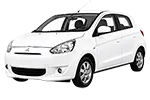




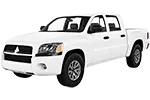
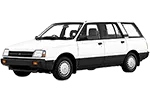
The Mitsubishi parts catalog on 7zap is an independent reference resource for examining vehicle assemblies and researching OEM part numbers. Start with the Mitsubishi generation displayed on the page, then follow the available catalog navigation to narrow the vehicle configuration and reach the relevant component group. This approach helps distinguish visually similar parts that may differ by production period, equipment, or factory specification.
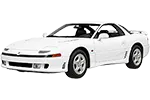
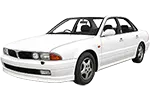
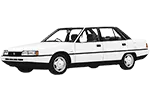
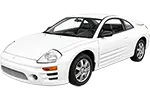
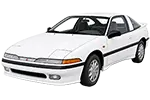
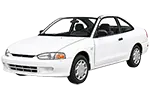
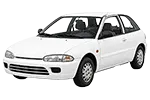
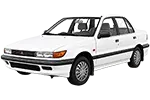
The catalog covers varied Mitsubishi passenger-vehicle families represented in the generation list above. Examples range from the Starion Facelift (1987–1990), 3000GT Series 2 (1994–1996), and Eclipse 2nd Generation Facelift (1997–1999) to later entries such as the Lancer X/CY-CZ (2006–2015), Outlander 4th Generation (2021–2026), and Mirage 6th Generation 2nd Facelift (2020–2025). These labels matter because a model name alone is often insufficient for reliable parts research.
Depending on the selected vehicle, navigation may lead through universal categories or manufacturer categories. The available groups can help locate areas such as engine components, cooling, fuel delivery, transmission, suspension, steering, brakes, electrical equipment, body panels, interior fittings, and related fasteners. The structure shown for a particular generation determines which assemblies can be explored.
This is especially useful when working with vehicle families that span distinct generations. A user researching the Pajero/Montero 4th Generation 2nd Facelift (2014–2018) should begin from that displayed entry rather than assuming information from another Pajero/Montero generation applies. The same principle is relevant to the L200/Triton/Strada 5th Generation Facelift (2019–2026), Delica D:5 Facelift (2019–2026), and Xpander 2nd Facelift (2021–2026).
A Mitsubishi parts diagram presents an exploded view of components within an assembly. Numbered callouts show where listed items sit in relation to nearby components and point to corresponding rows in the parts list. A callout is a diagram reference, not necessarily an orderable OEM part number. It may identify a component, subassembly, hardware item, or listing that requires further configuration checks.
After opening a relevant illustration, compare the callout with its parts-list row and review any visible descriptions, notes, quantities, and applicability distinctions. An OEM part number found in the catalog is valuable for cross-referencing documentation or discussing a component with a parts specialist. The number alone does not establish that the item applies to a particular vehicle.
Manual browsing begins with the displayed model and generation. Confirm that the chosen entry matches the vehicle being researched, including the generation wording and production period shown on the page. Then review available factory configuration choices carefully. Engine, drivetrain, equipment, and production distinctions can affect the parts listing where those details are presented.
For example, the Galant 8th Generation Facelift (1998–2003) and i-MiEV (2009–2018) are separate catalog entries with different navigation contexts. Do not transfer a diagram or number from one vehicle family to another based only on a similar component name or appearance.
VIN lookup is an independent, vehicle-specific route into parts research. It is not a factory configuration and does not select one of the manually browsed configurations. When VIN lookup is available, treat its results separately from generation-based navigation and continue to verify the resulting references against the vehicle and source documentation.
No. 7zap is an independent reference catalog and is not presented as an official Mitsubishi or dealer service.
The illustration can help locate a component and its callout. Use that callout to find the associated parts-list row, then review the listed details before relying on an OEM number.
No. An OEM number is a research reference. Applicability can depend on the selected generation, factory configuration, production details, and other vehicle-specific information.
Use manual browsing when you know the displayed Mitsubishi generation and relevant configuration details. VIN lookup, where available, is a separate vehicle-specific path. Results from either route still require practical verification.