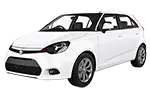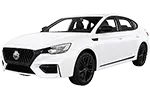

Decode your Mg VIN to find factory specifications, build options, and exact OEM part compatibility.
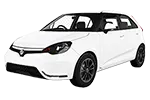
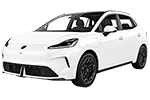
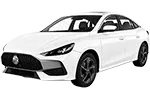
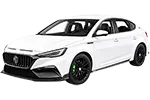

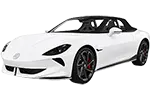




The MG car parts catalog on 7zap is an independent reference for researching vehicle assemblies, diagram positions, and OEM part numbers. The displayed catalog includes MG model families such as the Cyberster, HS, ZS, MG3, MG5, MG6, and MG7. Selecting the right generation is important because a familiar model name may appear in more than one catalog entry.
For example, the catalog distinguishes MG5 5 (AP12) from MG5 5 (AP32), as well as MG6 6 I from MG6 6 II. These entries should be treated as separate starting points rather than interchangeable versions. Other displayed choices include MG GS (2015–2018), MG GT (2014–2019), and MG Mulan (2022–2024). Use the generation labels and date ranges shown on the page to narrow your research before opening an assembly.
After choosing a displayed vehicle generation, catalog navigation can lead to relevant assembly groups and their illustrated parts lists. Depending on the selected entry, these may help locate components within body, electrical, powertrain, suspension, braking, cooling, or interior-related areas where such sections are shown.
Navigation may be presented through universal categories or manufacturer categories. Universal categories provide a consistent way to approach common component groups, while manufacturer categories preserve the organization associated with the selected catalog entry. Either route is a research aid; the available sections depend on the vehicle and configuration being viewed.
An MG parts diagram provides a visual map of components and their relationships within an assembly. Numbered callouts connect illustrated positions to rows in the accompanying parts list. A callout is only a pointer to a list row and is not necessarily an orderable OEM number.
The parts-list row may contain an OEM part number, description, quantity note, or applicability information. Record the number together with its surrounding assembly context. An OEM number is a useful research reference, but it does not by itself confirm that the component applies to a particular car.
Begin with the model family and generation printed on the vehicle’s catalog entry. Then compare the available factory configuration details with reliable information from the car. Pay attention to distinctions shown in the catalog, which may include production period, powertrain, equipment, or other factory-defined variants.
Do not choose solely from a shared model name or visual resemblance. The MG ZS (2017–2021), MG HS (2018–2022), and MG7 7 II (2023–2025), for example, are separate displayed catalog paths. If the available details do not establish a confident match, retain multiple candidate numbers for further verification rather than assuming compatibility.
VIN lookup is independent from manual model and configuration browsing. It uses a vehicle-specific identifier to support targeted catalog research; it is not a configuration, trim, or selector within a manually browsed entry. Results from either path should still be checked against the vehicle and the context of the listed component.
No. The illustration helps identify location and assembly context, but applicability depends on the selected vehicle and relevant factory details.
A repeated model family can represent distinct displayed catalog generations. Open the entry that best matches the vehicle information rather than treating similarly named entries as equivalent.
Not necessarily. The callout points to a parts-list row. Consult that row to find the associated description and any OEM reference provided.
It should be verified before being relied upon. Compare the number, assembly context, vehicle details, and available applicability notes; an OEM reference alone does not guarantee compatibility.