
Decode your Lexus VIN to find factory specifications, build options, and exact OEM part compatibility.



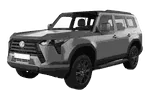

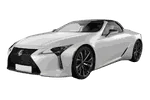



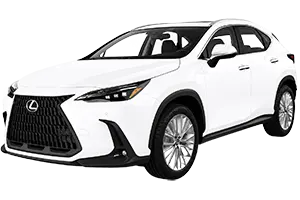
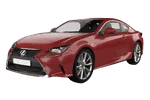

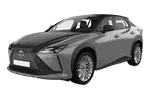



The Lexus parts catalog on 7zap is designed for identifying components through vehicle generations, assembly groups, exploded diagrams, and OEM part numbers. It provides a structured research path when a part must be traced from its location in a vehicle rather than identified from a description alone. This is useful for owners, repair professionals, restorers, and parts researchers comparing references before making a fitment decision.
7zap is an independent reference catalog and is not affiliated with Lexus. Catalog information should be treated as a starting point for research. A displayed OEM number can help distinguish related components, but the number alone does not establish that a part applies to a particular vehicle.
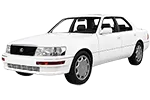
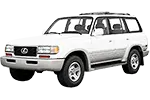
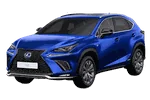
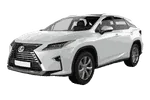
Manual catalog navigation begins with the vehicle family and the displayed generation. The available choices span different periods and types of Lexus passenger vehicles. Examples include the LS XF10, ES XV30, GS S160, and IS XE20. Other catalog paths cover vehicles such as the CT A10 and LC Z100, alongside utility-focused families represented by the RX XU10, NX AZ20, GX J150, and LX J300. The UX ZA10 and RZ EB10 provide further examples of why selecting the generation carefully matters.
A familiar model name is not enough to identify a component. Designs, assemblies, and part references may differ between generations bearing the same family name. Start from the generation shown in the catalog and then review the available factory configuration details. Compare the displayed information with reliable vehicle records, existing component markings, and the physical part whenever practical.
Once a vehicle path is open, navigation may be organized through universal categories or manufacturer categories. These two approaches can help locate relevant areas such as engine-related assemblies, transmission components, suspension, steering, brakes, body fittings, electrical equipment, heating and ventilation, or interior trim. The categories presented for a vehicle depend on the catalog data available for that selection.
A Lexus parts diagram shows how components are arranged within an assembly. Exploded views can be especially useful when several small fasteners, brackets, seals, covers, or adjacent pieces appear in the same area. Instead of relying only on a component name, the user can compare its shape and relative position with the illustration.
Numbers placed beside components are diagram callouts. A callout points to a corresponding row in the parts list; it is not necessarily an orderable part number. The associated row may contain an OEM reference, description, quantity note, position detail, or qualifying information. Read the illustration and its parts list together, because a visually similar item can have more than one listed variation.
The catalog can support research into Lexus part numbers for larger assemblies as well as related hardware. For example, a diagram may help separate a housing from its cover, mounting pieces, seals, or connectors. This context reduces the risk of confusing a main component with an attached or serviced-separately item. It does not replace verification against the vehicle and the part being removed.
Descriptions in a Lexus OEM parts catalog may use technical naming that differs from everyday workshop terminology. Searching by assembly location and diagram context can therefore be more productive than relying on a single informal name. Left and right positions, related hardware, and configuration-dependent variants deserve particular attention.
VIN lookup provides an independent, vehicle-specific research route. It is separate from manually choosing a Lexus model, generation, and factory configuration in the browsed catalog. A VIN is not a manual configuration option and should not be described as selecting one of the configurations shown in generation navigation.
When VIN lookup data is available, use it as an additional way to investigate the vehicle. Even then, check the resulting diagram, description, OEM reference, and physical component before relying on a part number. Repairs, prior replacements, and differences between visually similar components can still require further confirmation.
An OEM part number is a valuable research identifier, not a fitment promise. Before using a reference, compare the full number rather than a shortened fragment. Review any notes attached to the parts-list entry and make sure the selected assembly corresponds to the vehicle area being examined. If the old component is accessible, compare labels, stamped numbers, connector layouts, mounting points, and visible dimensions.
The phrase Lexus genuine parts is often used while researching manufacturer-numbered components, but catalog terminology does not confirm the origin or condition of an item offered elsewhere. Use the catalog to identify and compare references, then confirm applicability and item details through an appropriate parts professional or other reliable source.
Select the appropriate displayed generation, open the relevant assembly, and locate the component in the exploded view. Follow its callout to the matching parts-list row, where an OEM reference may be shown.
No. The callout is an illustration pointer that connects a pictured component to a parts-list entry. The row, not the callout, may contain the OEM part number.
VIN lookup and manual generation browsing are independent paths. In manual navigation, choose the displayed model generation and configuration directly. VIN lookup is a separate vehicle-specific research method.
No. It is a reference for comparison and identification. Generation, configuration, position, notes, original component markings, and other vehicle details should be checked before a compatibility decision.
An assembly may include position-specific or configuration-dependent variations. Compare each callout, parts-list description, and qualifying note rather than selecting a reference only because the illustration looks similar.