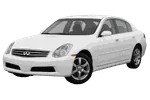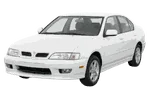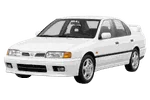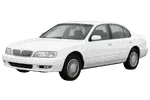

Decode your Infiniti VIN to find factory specifications, build options, and exact OEM part compatibility.












The Infiniti parts catalog is a reference resource for identifying vehicle assemblies, diagram positions, and associated OEM part numbers. Begin with the generation list displayed above, then narrow the catalog to the vehicle and factory configuration that most closely matches the car being researched. This approach helps distinguish similarly named Infiniti models and directs the search toward relevant assembly groups.
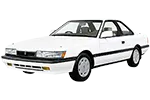
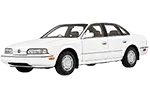
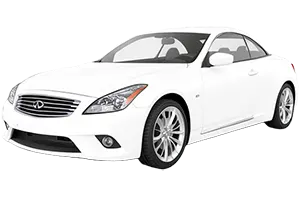
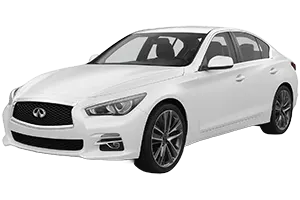
The catalog includes distinct generations from different periods of the Infiniti range. Examples include G20 P10 and Q45 G50, the later G35/37/25/Q40 V36, and Q50 V37. Utility-focused entries include QX4 JR50, QX60/JX L50, QX70/FX S51, and QX80/QX56 Z62. These names and codes are important catalog references; a shared badge or model family alone is not sufficient evidence that two parts apply in the same way.
After selecting a displayed generation and configuration, browse through either universal categories or manufacturer categories, where available. Category navigation can lead to relevant vehicle systems and assembly pages. Depending on the catalog record, these may cover areas such as engine-related components, transmission assemblies, suspension, steering, braking, electrical equipment, body fittings, interior parts, or climate-control components.
An Infiniti parts diagram presents components in their assembly context. Exploded views can clarify how brackets, fasteners, seals, covers, and larger components are positioned relative to one another. Numbered callouts connect the illustration to rows in the accompanying parts list. A callout is only a pointer to a list row; it is not necessarily an orderable OEM number.
A parts-list row may show an OEM reference along with a description or qualifying note. Use the illustration and list together: the image helps identify the component by location, while the row provides the reference needed for further research. Similar-looking pieces may have different numbers because of the selected generation or factory configuration.
An OEM part number is not, by itself, a guarantee of applicability. Formatting differences, component revisions, vehicle equipment, and catalog notes can affect interpretation. Treat each number as a research reference and retain punctuation or spacing when comparing it with labels, service documents, or information from a knowledgeable parts specialist.
Start with the Infiniti generation label rather than relying only on the model name. For example, Q60 V37 and Q50 V37 remain separate catalog entries, while Q70/M Y51 preserves more than one familiar badge within one displayed generation label. Other entries, such as QX30 H15 and QX50/FX J55, also require attention to the wording shown in the catalog.
VIN lookup is an independent, vehicle-specific route into catalog research. It is not a configuration and does not select one of the manually browsed configurations. When VIN functionality is used, review the resulting vehicle record and parts information on their own terms. When browsing manually, continue to verify the displayed generation and configuration directly.
Record the full Infiniti part number, its description, the assembly title, and the diagram position. Then compare those details with the component already fitted, including visible labels, connector layout, mounting points, and other relevant physical distinctions. Do not infer compatibility merely because a component appears under a related model name or looks similar in an exploded view.
7zap is an independent reference catalog and is not affiliated with Infiniti. The catalog supports identification and comparison, but final applicability should be checked against reliable vehicle-specific information or qualified technical guidance.
Select the displayed generation and appropriate factory configuration, open the relevant assembly, locate the component callout, and read the corresponding parts-list row. Verify any number against vehicle-specific details.
No. A callout identifies a row in the parts list. That row may contain an OEM number, a description, a note, or another type of catalog reference.
A model name is a useful starting point, but the displayed generation code and configuration provide necessary context. Infiniti families such as QX60/JX L50 and QX80/QX56 Z62 show why the full catalog label matters.
No. It is a valuable identification reference, but applicability can depend on the particular vehicle and configuration. Compare the catalog result with VIN-based information, physical evidence, and qualified parts guidance where appropriate.