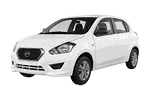

Decode your Datsun VIN to find factory specifications, build options, and exact OEM part compatibility.


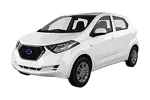
The Datsun parts catalog on 7zap is a reference resource for identifying vehicle assemblies, diagram positions, and associated OEM part numbers. It is designed for owners, repair professionals, and parts researchers who need to trace a component from its location in the vehicle to a corresponding catalog record.
The displayed catalog inventory includes entries such as Datsun mi-DO BD0 and on-DO BD0 configurations from 2014–2019 and 2016–2019. It also covers displayed GO GO, GO Cross, and redi-GO CD0 generations. Because similar model names may appear in more than one catalog row, begin with the generation and date range shown on the page rather than relying on the model name alone.
After selecting a displayed Datsun generation, catalog navigation can lead to relevant component groups and assemblies. Depending on the selected entry, navigation may be presented through universal categories or manufacturer categories. These structures help narrow a search from a broad vehicle system to a more focused assembly and its parts list.
A Datsun parts diagram presents components in their assembly context. Numbered callouts connect illustrated positions to rows in the accompanying list, where an OEM reference, description, quantity note, or other catalog detail may appear. A callout is only a pointer to a parts-list row; it should not automatically be treated as an orderable Datsun part number.
Exploded views are especially useful when a component name is uncertain or when several adjacent pieces form one assembly. Compare the illustration, callout, description, and listed number together. An OEM number is a valuable research reference, but it does not independently guarantee compatibility with a particular vehicle.
Choose the Datsun model and generation that correspond most closely to the vehicle being researched. Pay attention to the displayed generation code and production span. For example, mi-DO BD0 and on-DO BD0 each have separate 2014–2019 and 2016–2019 entries in the supplied catalog list, so the correct row should be established before interpreting diagrams.
Once inside a configuration, review any available factory distinctions and assembly notes. Do not assume that two vehicles sharing a model family use the same component. Production timing, equipment, and the assembly represented by the diagram may affect which reference is relevant.
VIN lookup is independent of manually browsing a model, generation, and factory configuration. When available, it provides a vehicle-specific route into catalog research; it is not another configuration choice and does not replace careful verification of the resulting references.
7zap is an independent reference catalog and is not affiliated with Datsun. Catalog information supports identification and comparison, but it should not be treated as a fitment guarantee or installation instruction.
Yes. Select a displayed generation, open the relevant assembly, and match the diagram callout to its parts-list row. Then use the listed OEM number as a research reference.
Catalog entries may distinguish displayed production spans or configurations. Use the row that best corresponds to the vehicle instead of assuming similarly named entries are interchangeable.
No. A number helps identify and cross-check a component, but applicability should also be verified against the vehicle, assembly context, and supporting documentation.
VIN lookup may provide a separate vehicle-specific path. Manual browsing remains useful for exploring generations and assemblies, while either route still requires careful reference checking.