

Decode your Buick VIN to find factory specifications, build options, and exact OEM part compatibility.
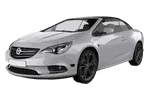
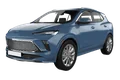

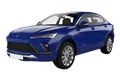
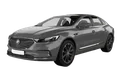
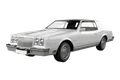
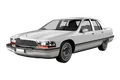
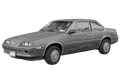
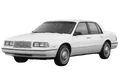

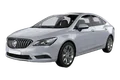
The Buick parts catalog on 7zap is designed for researching vehicle assemblies, diagram positions, and OEM part numbers. It provides a structured reference path for owners, repair professionals, restorers, and parts researchers who need to identify how a component is represented within a particular Buick catalog entry.
Buick passenger-car history includes vehicles from different periods and design families, so generation selection is an important first step. The displayed catalog may include entries such as the Century 7th Generation (1976–1981), LeSabre 9th Generation (1992–1999), Riviera 8th Generation (1995–1999), and LaCrosse 2nd Generation (2010–2016). More recent examples include the Encore 1st Generation (2013–2022), Enclave 2nd Generation (2018–2024), and Envista 1st Generation (2024–2025).
After choosing the relevant displayed vehicle generation, use the available catalog sections to narrow the search to the assembly being investigated. Depending on the selected catalog entry, navigation may organize references through universal categories or manufacturer categories. These paths are intended to make large groups of vehicle components easier to review without relying only on a typed part description.
A Buick parts diagram can show components in their assembly context. Exploded views help clarify relative position, attachment sequence, and the relationship between neighboring items. This is particularly useful when several parts have similar names or when a small bracket, fastener, seal, or trim piece is difficult to identify from wording alone.
Numbers placed beside diagram components are callouts. A callout directs the reader to a corresponding row in the parts list; it is not necessarily an orderable OEM number. The linked row may provide a part description, reference number, quantity notation, or qualifying information relevant to the illustrated assembly.
When a parts-list row supplies an OEM number, record it together with the vehicle generation, diagram section, description, and any notes shown. Buick part numbers are useful research references for comparing labels, repair records, and third-party listings, but a matching number by itself does not guarantee applicability to a particular vehicle.
Catalog context matters. Two vehicles within the same named generation can differ by factory configuration, production details, equipment, or the assembly installed. Review the available configuration choices closely and avoid selecting an entry solely because the model name appears familiar. For vehicles such as the Regal 5th Generation (2011–2017) or Cascada Convertible (2016–2019), the displayed generation and relevant configuration should be checked before interpreting a diagram or parts-list result.
VIN lookup provides an independent, vehicle-specific route into the catalog. It is separate from manually browsing a Buick model, generation, and factory configuration. A VIN should not be treated as another configuration option or as a method for selecting one of the manually displayed configurations.
When VIN-based information is available, compare its resulting catalog context with the physical vehicle and the component being researched. VIN lookup can help narrow the investigation, but the final reference should still be checked against visible markings, assembly details, and reliable vehicle documentation.
7zap is an independent reference catalog and is not affiliated with Buick or GM. Its catalog information supports parts research but does not replace inspection of the vehicle or confirmation through an appropriate parts specialist.
You can browse displayed Buick generations, open relevant assembly sections, examine exploded diagrams, and review parts-list rows that may contain OEM part numbers and descriptive notes.
No. A callout is a pointer connecting an illustrated component to a parts-list row. The row must be checked to determine whether an OEM number is provided.
Not necessarily. Factory configuration and assembly differences can affect applicability. Treat the number as a research reference and verify the specific vehicle details.
They are separate approaches. Manual browsing starts with the displayed model, generation, and configuration, while VIN lookup follows a vehicle-specific path. In either case, compare the result with the actual component and supporting documentation.