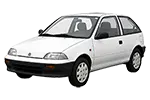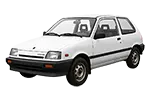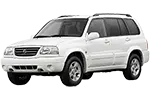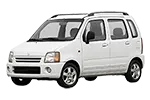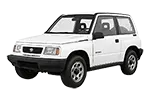



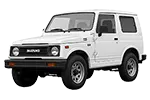

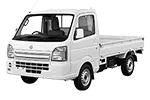





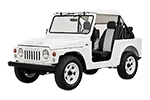







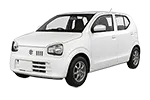

The Suzuki car parts catalog on 7zap provides a structured reference for identifying components and researching OEM part numbers. This page is dedicated to Suzuki cars, helping keep searches focused on the correct vehicle type. Start with the displayed model families and generations, then move through the available catalog sections to locate the relevant assembly, diagram, and parts list.
Catalog navigation can help with research across common vehicle systems, such as engine-related components, transmission assemblies, suspension, steering, brakes, electrical equipment, body fittings, and interior parts. The available sections depend on the chosen vehicle entry. Universal categories provide a broad component-based route, while manufacturer categories follow the organization presented for the selected Suzuki catalog entry.
Suzuki model families can span substantially different vehicle generations, so the generation shown in the catalog should be checked before interpreting a diagram. The available entries include earlier vehicles such as Alto SS30V/40V and Samurai SJ, as well as later examples including Swift RS, Kizashi, and Grand Vitara JT 2nd Facelift.
Other displayed choices illustrate why the full generation description matters. Vitara LY and SX4 S-Cross JY Facelift are separate catalog entries, while Jimny JB64 must not be confused with another vehicle carrying a familiar family name. The same care applies to Baleno WB1 Facelift, Ertiga NC, and Carry/Super Carry/Every 10th Generation.
After choosing a generation, review the displayed factory configuration carefully. Engine, transmission, equipment, production detail, or other catalog distinctions may affect which illustration and parts-list row is relevant. Use only information shown for the vehicle being researched, and avoid assuming that a component transfers between generations because its appearance or general function is similar.
A Suzuki car parts diagram presents related components in an exploded view so their position and relationship within an assembly can be understood. Numbered callouts connect the illustration to rows in the accompanying parts list. This is useful when the everyday name for a component differs from the description used in the catalog.
A callout is a visual pointer, not necessarily an orderable OEM part number. Read the corresponding row and any displayed notes before recording a reference. Where a Suzuki part number is shown, treat it as a research identifier. A matching number alone does not guarantee that the part applies to a particular vehicle or factory configuration.
The diagrams can also clarify whether the item being investigated is listed separately, grouped with another component, or represented as part of a larger assembly. This makes the Suzuki electronic parts catalog useful for comparing terminology with markings on an existing part, workshop documentation, or information supplied by a parts specialist.
VIN lookup is independent of manual model and configuration browsing. It is a vehicle-specific path and is not another configuration option within the generation list. If VIN-based information is available, use it separately and compare the resulting references with the vehicle and component details. Do not treat a VIN result by itself as a fitment promise.
The model family is a starting point, but the displayed generation and configuration should also be checked. Similar model names can lead to different diagrams and part-number references.
Not necessarily. The number beside a component usually points to a parts-list row. The row must be reviewed to find the associated description and any listed OEM reference.
No. An OEM number is valuable for comparison and research, but applicability still depends on the specific vehicle, generation, configuration, and component context.
No. 7zap is an independent reference catalog. Its diagrams and part-number information should be used as research aids and checked against reliable vehicle-specific evidence.