

Decode your Peugeot VIN to find factory specifications, build options, and exact OEM part compatibility.




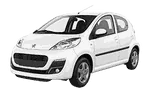

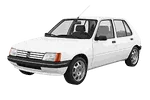



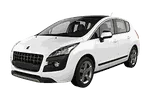

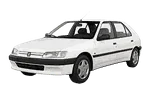















The Peugeot parts catalog on 7zap is a reference resource for identifying components, understanding their position within an assembly, and researching Peugeot part numbers. It is intended for owners, repair professionals, restorers, and parts specialists who need more context than a component name alone can provide. By selecting the relevant Peugeot car generation, users can move from broad assembly groups to detailed illustrations and associated parts lists.
This Peugeot parts catalogue online focuses on passenger cars in the displayed catalog. It can help with research into Peugeot OEM parts and genuine-parts references, but it is not a parts shop or a statement of availability. 7zap is an independent catalog service and is not affiliated with Peugeot.
Start with the model family and generation displayed above this guide. The catalog includes distinct entries such as the 106 Phase I (1991–1996), 205 (1983–1999), 206 (1998–2012), and 208 A9 (2011–2015). Later selections include the 308 T9 (2013–2017), 508 (2011–2016), 2008 A94 (2013–2016), and RCZ T75 (2009–2016). These labels and date ranges help distinguish catalog branches that may otherwise have similar model names.
After choosing a generation, follow the available assembly navigation. Depending on the selected catalog branch, groups may lead to areas associated with the powertrain, body, electrical equipment, suspension, steering, braking, interior fittings, or related systems. The purpose is to narrow the search from a vehicle-level choice to the illustration and parts list most relevant to the repair or identification task.
Where category navigation is shown, the two approaches are universal categories and manufacturer categories. Universal categories organise components under broadly recognisable subjects, while manufacturer categories preserve the grouping used for the displayed Peugeot catalog material. Either route may be useful when a familiar workshop term differs from the wording in a parts list.
A Peugeot parts diagram presents components in the context of an assembly. The exploded view can clarify where a bracket, fastener, seal, panel, housing, or related item sits relative to surrounding parts. Numbered callouts connect positions in the illustration to rows in the accompanying list, where descriptions and OEM number references may be shown.
A callout is a pointer to a parts-list row; it is not necessarily an orderable part number. Some rows can describe assemblies, alternatives, quantities, notes, or items whose applicability depends on the selected factory configuration. Likewise, a Peugeot OEM number is a valuable research reference, but the number by itself does not establish that a component suits a particular vehicle.
Read the illustration and list together. A visually similar component may occupy a different position, belong to another assembly, or be associated with different catalog conditions. Recording the callout, description, surrounding assembly, and displayed part number provides a stronger basis for further checking than copying the number alone.
Choose the Peugeot generation carefully before opening assembly diagrams. For example, the 3008 (2009–2013) is a separate catalog selection from the 308 T9 (2013–2017), while the iOn (2009–2014) and 807 (2001–2007) have their own displayed branches. The model name, generation label, and date range should be considered together rather than relying on a familiar badge alone.
Within a selected branch, review any factory configuration labels or catalog notes that are presented. Differences in the displayed vehicle configuration can change an illustration, a parts-list row, or the number associated with a component. A registration year may be helpful background, but it should not replace comparison with the vehicle itself and the configuration information available in the catalog.
VIN lookup is independent from manually browsing a Peugeot model and generation. It is a vehicle-specific path and should not be treated as another configuration, trim, or modification within the manual catalog choices. When VIN-based results are available, use them as their own route to vehicle information. When browsing manually, continue to select the displayed generation and factory configuration based on the catalog labels.
Yes. Select the relevant generation, open an assembly, and use the exploded diagram to locate the component. Follow its callout to the associated row, then review the description and any Peugeot part number shown.
No. An OEM number is a research identifier. Applicability can depend on the vehicle generation, factory configuration, catalog notes, and the characteristics of the component already fitted.
Similar-looking assemblies can contain alternatives linked to different configurations or catalog conditions. Compare the selected branch, illustration, callout position, parts-list text, and the vehicle’s existing component before relying on a reference.
No. 7zap is an independent reference catalog. It helps users examine Peugeot parts diagrams and OEM number information but does not represent the manufacturer or provide manufacturer approval of a component choice.