
VIN Decoder

Hyundai VIN Decoder - Free VIN Lookup

Free • 3 sec • No signup
Enter your 17-character Hyundai VIN to decode the exact model, trim, factory specs, and the right parts information for your vehicle.
✓ Identify exact Hyundai model, year, and trim
✓ Confirm engine, transmission, and equipment options
✓ Reduce mistakes when ordering parts or booking service
No registration required. Results in ~3 seconds.
A VIN is your vehicle’s unique 17-character ID. This Hyundai VIN decoder turns that code into usable details for maintenance, repairs, and parts selection. Use a Hyundai VIN lookup to verify the vehicle you have (not just what’s listed), and run a Hyundai VIN check when buying, selling, or confirming specs.
Overview

Decode Your Hyundai VIN in Seconds

Every modern Hyundai Vehicle Identification Number (VIN) follows global standards (ISO 3779/3780) and U.S. rules (49 CFR Part 565). A 17-character VIN is split into WMI (manufacturer and region), VDS (vehicle attributes like body/engine/restraint), and VIS (model year, plant, and serial number). Our Hyundai VIN decoder reads these blocks so you can confirm the exact vehicle configuration.

Use this Hyundai VIN lookup to pull practical details for service and parts—especially on trims where engines, transmissions, and options change by market. A Hyundai VIN check can also help spot mismatches in listings or paperwork. For deeper decoding beyond basic public tools, start with our free VIN decoder and then open the OEM catalog view to navigate parts by groups and diagrams. This is also useful for a Hyundai warranty check by VIN when you need the correct vehicle identity before contacting a dealer or comparing coverage details.

Help

Where is the VIN number on a Hyundai?

Common Hyundai VIN number locations include:
Dashboard (driver side, visible through the windshield)
Driver’s door jamb/door pillar label (often with tire and paint info)
Engine bay (stamped on the firewall or strut tower area on some models)
Front frame rail or radiator support (varies by model/market)
Vehicle registration document
Title/ownership documents
Insurance card or insurance policy declarations page
Dealer service invoice or maintenance record printout
Window sticker/Monroney label (for new or recently sold vehicles)
i
For an accurate Hyundai VIN lookup, enter all 17 characters exactly as shown (no spaces). VINs never use the letters I, O, or Q to prevent confusion with 1 and 0.
Capabilities

Hyundai VIN lookup: what you can learn

A Hyundai VIN lookup can help confirm:
Basic vehicle identity
- Manufacturer and build region (WMI) - Model family and body type (varies by market) - Model year (10th character) - Assembly plant code (11th character) - Serial/sequence number (last characters)
Factory specifications & configuration
- Engine family and displacement (when available) - Transmission type (AT/CVT/DCT, where supported) - Drivetrain (FWD/AWD/4WD, where supported) - Restraint system and safety equipment coding - Trim/grade clues based on VDS pattern
Service, parts & ownership checks
- Parts catalog filtering to your exact configuration - Better accuracy when ordering maintenance parts - Verification for recalls/campaigns (with official sources) - Support for documentation and resale listings - Prep work for a Hyundai warranty check by VIN
A Hyundai VIN decoder is most useful when paperwork or listings are incomplete. It helps confirm that the car’s stated year, trim, and drivetrain match the vehicle you’re servicing or buying. For parts, decoding first is the fastest way to reduce compatibility errors—especially when a model has multiple engines or mid-year updates.
VIN anatomy

How the Hyundai VIN number is structured

Every modern Hyundai VIN is split into three blocks (WMI, VDS, VIS), each with a specific purpose.
WMI (positions 1–3)
The WMI identifies the manufacturer and country/region where the vehicle was built or certified. Hyundai WMIs can indicate production in South Korea, the United States, India, Turkey, the Czech Republic, Brazil, China, or other markets. For example, KMH is commonly associated with Hyundai Motor Company in South Korea, while 5NM/5NP are associated with Hyundai production in the U.S. This is the first step of any Hyundai VIN lookup.
VDS (positions 4–9)
The VDS describes key vehicle attributes. Depending on model and market, it can encode the platform/model line, body type, engine family, restraint system, and other configuration details. Position 9 is the check digit on many North American VINs; it’s calculated from the other characters to detect typos. A Hyundai VIN decoder uses the VDS to narrow down the exact configuration before showing parts and specs.
VIS (positions 10–17)
The VIS includes the model year (position 10), the assembly plant code (position 11), and the vehicle’s production sequence number (positions 12–17). The model-year character follows standardized cycles (letters and numbers repeat every 30 years). For users running a Hyundai VIN check, the VIS is a quick way to confirm year/plant consistency and catch mismatched documents before ordering parts or requesting service history.
Manufacturing

Major Hyundai production plants

Hyundai manufactures globally. Depending on your VIN, the assembly plant may be in Asia, Europe, or the Americas.
Ulsan Plant
Ulsan, South Korea (1968–present)
Asan Plant
Asan, South Korea (1996–present)
Jeonju Plant
Jeonju, South Korea (1975–present)
Hyundai Motor Manufacturing Alabama (HMMA)
Montgomery, Alabama, USA (2005–present)
Hyundai Motor Manufacturing Czech (HMMC)
Nošovice, Czech Republic (2008–present)
Hyundai Motor Türkiye (formerly Hyundai Assan)
İzmit, Kocaeli, Turkey (1997–present)
Hyundai Motor India (HMIL) – Sriperumbudur Plant
Sriperumbudur (near Chennai), Tamil Nadu, India (1998–present)
Beijing Hyundai – Beijing Plants
Beijing, China (2002–present)
Beijing Hyundai – Cangzhou Plant
Cangzhou, Hebei, China (2014–present)
Hyundai Motor Manufacturing Indonesia (HMMI)
Cikarang (Bekasi), West Java, Indonesia (2021–present)
Hyundai Motor Brasil (HMB)
Piracicaba, São Paulo, Brazil (2012–present)
Hyundai Motor Manufacturing Russia (HMMR)
Saint Petersburg (Sestroretsk), Russia (2010–2023; operations later suspended/changed)
Hyundai Motor Group Metaplant America (HMGMA)
Ellabell, Georgia, USA (2024–present)
i
On most Hyundai VINs, the assembly plant is represented by the 11th character. The exact meaning of the plant code depends on the region and model line, so a Hyundai VIN decoder is the easiest way to translate it reliably.
Value

Benefits of Using a Hyundai VIN Decoder

Practical, shop-friendly details that help owners and professionals verify the exact vehicle configuration.
Accurate parts matching
Hyundai models often share a nameplate across multiple engines, drivetrains, and option packages. A Hyundai VIN decoder helps you filter the catalog to the exact configuration so you order compatible brakes, sensors, filters, and body parts the first time.
Smarter service planning
A fast Hyundai VIN lookup supports accurate labor quoting and correct fluid/maintenance planning. Confirming the year and configuration early prevents delays when there are mid-cycle changes, regional trims, or multiple transmissions for the same model.
Vehicle verification when buying or selling
A Hyundai VIN check helps you compare the VIN-derived identity with listings, documents, and vehicle labels. This reduces risk of buying the wrong trim level, misrepresented drivetrain, or a vehicle with mismatched paperwork.
Warranty and documentation readiness
Decoding is a useful first step for a Hyundai warranty check by VIN because it confirms the exact vehicle identity before you contact a dealer or compare coverage terms. It also helps keep service records, invoices, and parts notes consistent and professional.
Social proof

Trusted by Hyundai Owners & Professionals

Feedback from owners, technicians, and parts teams who use Hyundai VIN decoding to verify specs and avoid ordering errors.
Daniel
5
5.0
Auto Parts ManagerPhoenix
We see lots of Hyundai Tucson and Santa Fe variations, and trim differences can change brake and suspension part numbers. The Hyundai VIN decoder saves time by confirming year/engine and narrowing the catalog to the correct build. Fewer returns, fewer delays at the counter.
Sophie
5
5.0
Service AdvisorToronto
For used Hyundai Elantra and Sonata appointments, customers often don’t know their exact trim or engine family. A quick Hyundai VIN lookup helps us quote accurately and schedule the right service parts. It also helps when we’re validating a vehicle before a warranty conversation.
Mateo
5
5.0
Independent MechanicMiami
I use the Hyundai VIN check before ordering sensors, ignition parts, or drivetrain components. It’s especially helpful on models that changed mid-year. Decoding first reduces comebacks and keeps my customer updates clean and professional.
Hana
5
5.0
Car EnthusiastLos Angeles
When I was shopping for a Kona, listings didn’t always match the actual equipment. The Hyundai VIN decoder made it easy to confirm the model year and configuration before I spent time test driving. It gave me confidence that the car matched the ad.
Oliver
5
5.0
Garage OwnerBerlin
Hyundai vehicles imported from different regions can have different spec packages. With a Hyundai VIN lookup we can identify market-specific details and avoid wrong parts. It’s become part of our intake checklist for Hyundai repairs and inspections.
Why premium

Hyundai VIN Decoder vs Free Tools

Basic tools often return only year/make/model, while a deeper Hyundai VIN decoder can help identify configuration details that matter for parts, service, and verification. If you’re comparing trims or ordering components, deeper decoding reduces guesswork.

How to use the decoder to find Hyundai parts

Enter your 17-character VIN in the Hyundai VIN decoder search field
Review the decoded identity (year, model line, and key configuration details)
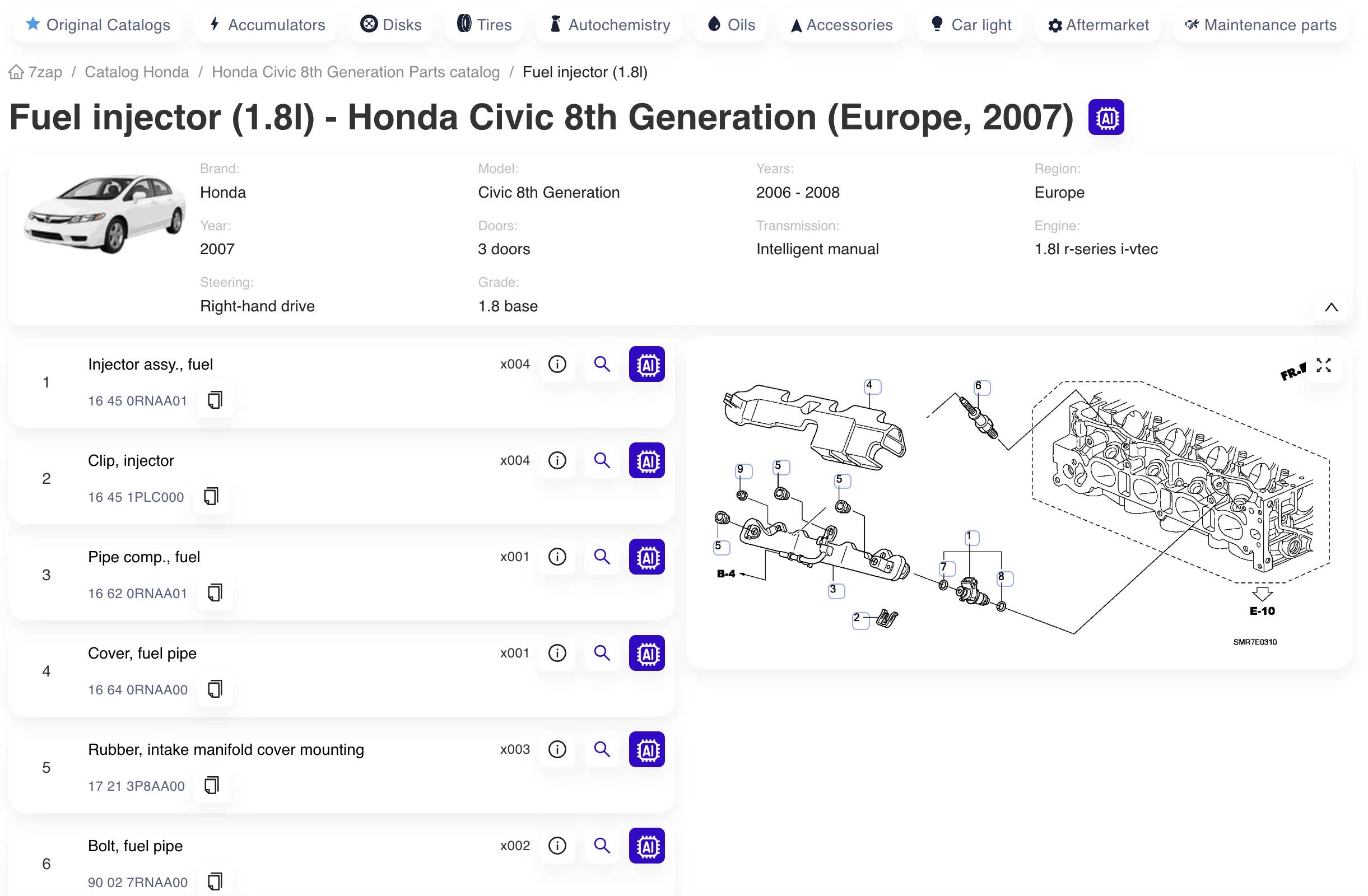
Open the OEM catalog view filtered to your VIN
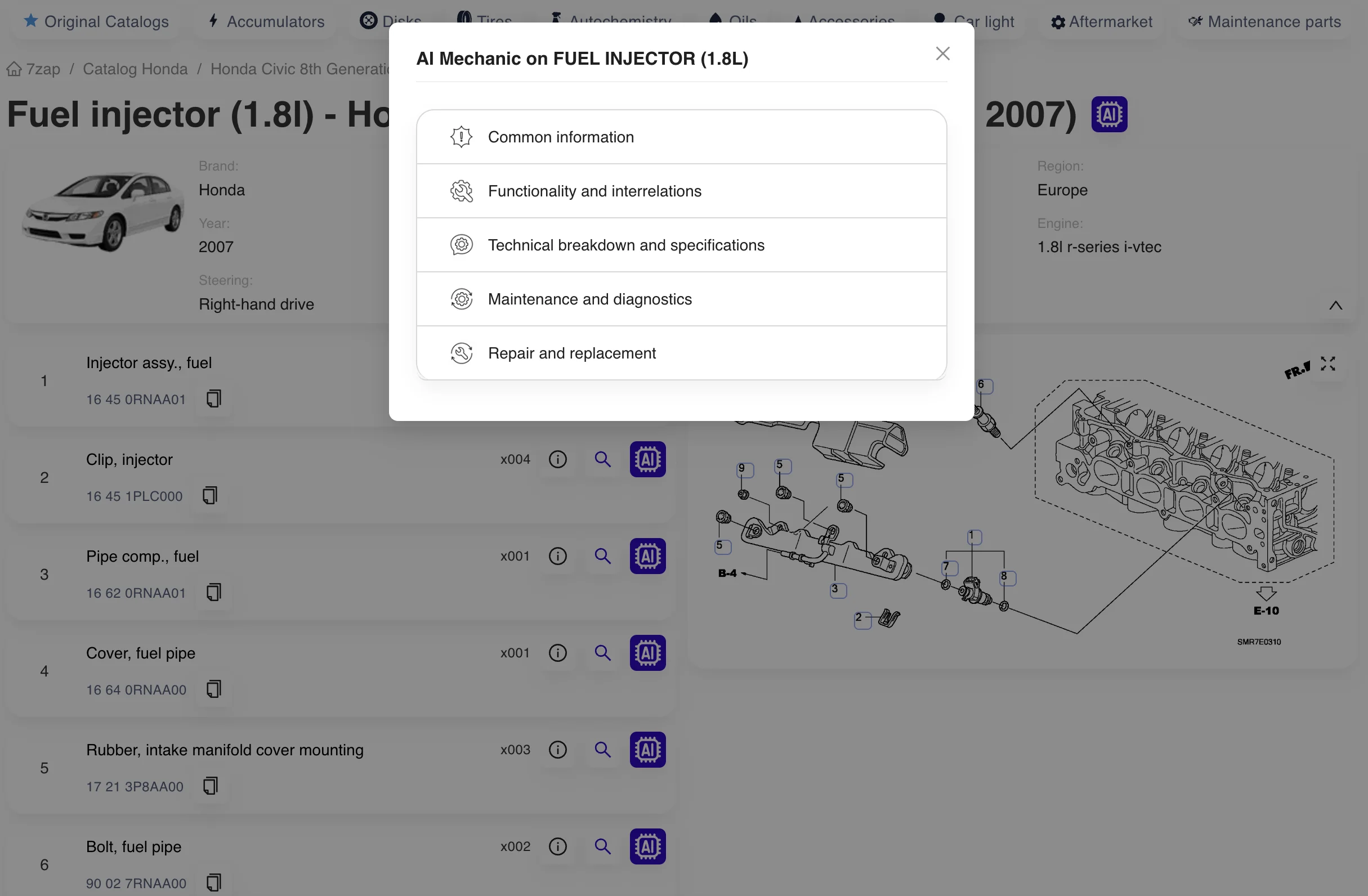
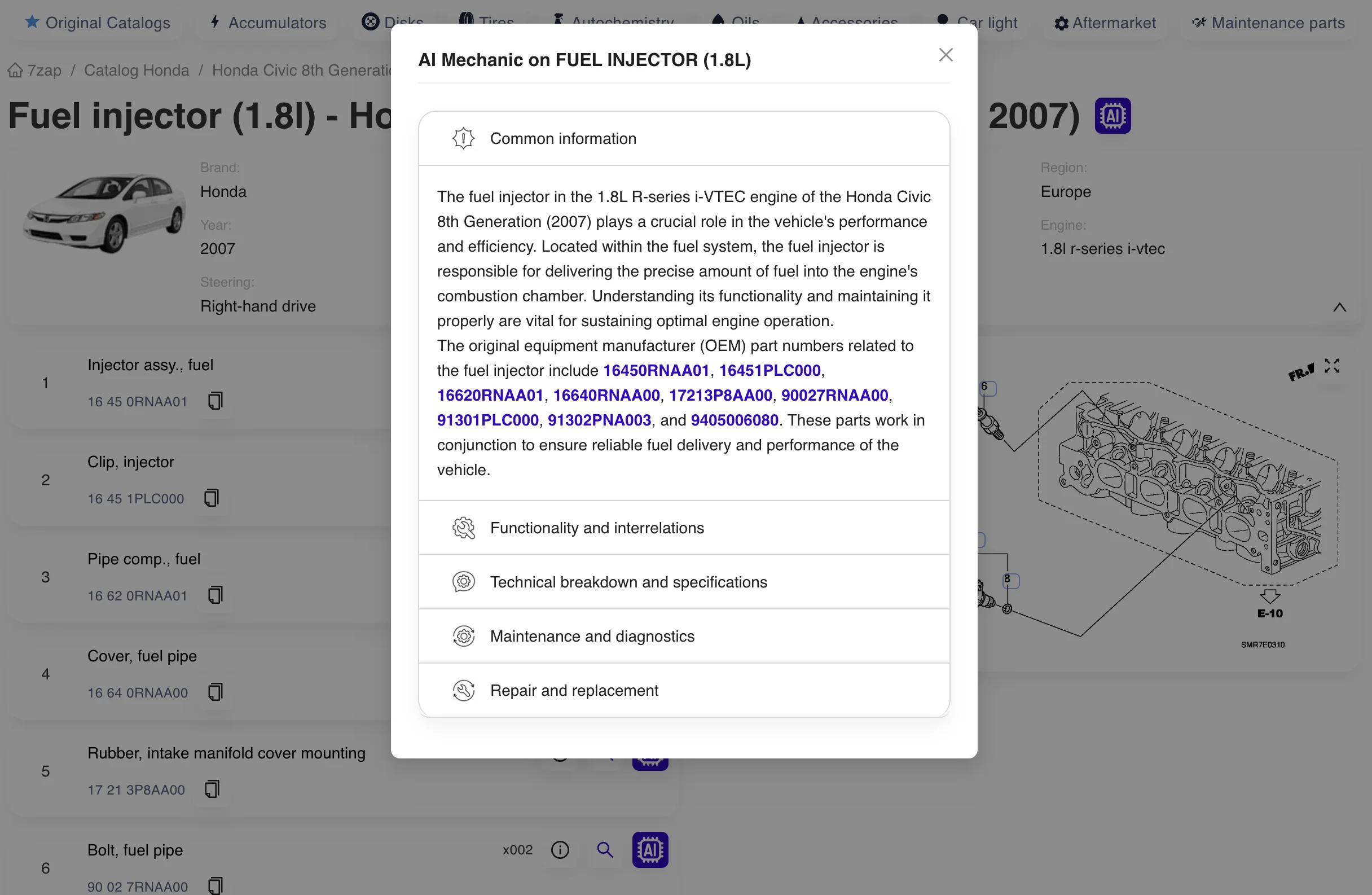
Browse parts by groups/diagrams to confirm fitment visually
Use the part number to source the correct replacement with confidence

Free vs Premium Hyundai VIN Decoder

Compare plans feature-by-feature to see what you get from a basic VIN decode versus expanded catalog-level details.
Free
View diagrams per day
View 1 diagrams per day
VIN identifications per month for month(s)
10 VIN identifications per month for 1 month(s)
Ad-free
Full part numbers in catalogs
Applicability Of Spare Parts
Maintenance Parts
Free
View diagrams per day
View 1 diagrams per day
VIN identifications per month for month(s)
10 VIN identifications per month for 1 month(s)
Ad-free
Full part numbers in catalogs
Applicability Of Spare Parts
Maintenance Parts
Reference

Hyundai WMI codes (real identifiers)

WMIs are the first three characters of the Hyundai VIN and identify the manufacturer and build region. Below are common Hyundai WMIs seen in global markets; availability varies by model and year.
Examples

Realistic Hyundai VIN examples

These examples show how a Hyundai VIN decoder reads the VIN for model year, region, and plant information across different markets.
MALAN51BLHM692929
i20 hatchback, 1.2L gasoline (varies), FWD, automatic/manual depending on trim
WMIMAL = Hyundai Motor India (India)
Check digitPosition 9: check digit (market-dependent validation rules)
Model year (position 10)H = 2017
Plant code (position 11)Position 11: M (decoded assembly plant for this WMI/model)
Market equipment and powertrain can vary significantly; a Hyundai VIN lookup helps confirm the exact configuration.

Hyundai VIN preview

See how decoded Hyundai VIN details appear, then open the catalog view to browse parts groups and diagrams filtered to your vehicle.
Hyundai VIN preview
Decoded preview
VIN
MALAN51BLHM692929
Hyundai catalog preview
Screenshot
Screenshot
Screenshot
Support

FAQ

Quick answers to common questions about Hyundai VIN decoding, VIN lookups, and verification.

VIN decoders for other brands

Decode VINs for other manufacturers with the same level of accuracy and OEM-based data.