
Decode your Volvo VIN to find factory specifications, build options, and exact OEM part compatibility.

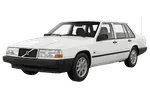
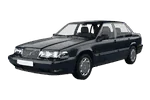




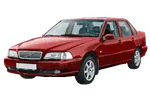

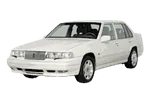






The Volvo parts catalog on 7zap provides a structured way to research components used across the displayed Volvo Car generations. It is intended for owners, repair professionals, restorers, and parts specialists who need to identify an assembly, interpret a diagram, or locate an OEM part number for further verification. This page concerns Volvo passenger cars and does not represent coverage for the brand’s separate truck or heavy-vehicle ranges.
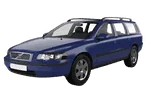
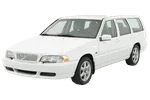
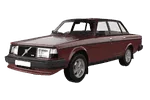
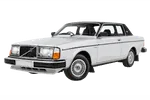
Begin by choosing the appropriate model and generation from the catalog list above. The available entries span established families such as the 240 (1975–1993), 740 (1984–1992), and 850 (1992–1997), as well as later vehicles including the C30 M (2007–2013), S60 P24 (2001–2009), V70 P26 (2000–2008), XC60 Y20 (2009–2015), and XC90 (2003–2015). These generation labels matter because vehicles with a familiar model name may still use different components, diagrams, or number references.
After selecting a displayed vehicle generation, catalog navigation helps narrow the research from a broad vehicle entry to a relevant assembly and then to an individual component listing. Depending on the selected catalog entry, the available sections may cover areas such as the engine, transmission, cooling system, electrical equipment, steering, suspension, brakes, body fittings, interior equipment, or other vehicle systems.
Navigation may be presented through universal categories or manufacturer categories. Universal categories organize parts under broadly recognizable vehicle systems, while manufacturer categories preserve the grouping used for the corresponding catalog material. The useful route depends on whether you already know the component’s function or need to follow the assembly structure shown for the selected Volvo.
A Volvo car parts diagram can be particularly helpful when a component is difficult to identify by name. Adjacent fasteners, brackets, seals, hoses, covers, and related pieces may appear together, providing visual context that a text search cannot offer on its own. Diagram placement should be treated as identification evidence rather than proof that the pictured item applies to a particular vehicle.
A Volvo exploded view separates an assembly into illustrated components and assigns callouts to the relevant positions. Each callout directs you to a corresponding row in the parts list. That row may contain an OEM number, a description, quantity information, or qualifying notes where such details are present in the catalog.
The callout itself is not necessarily an orderable part number. It is primarily a pointer connecting the illustration to the parts-list record. Likewise, a number found in the Volvo OEM parts catalog is a research reference, not an independent guarantee of applicability. Similar-looking components can vary because of factory configuration, production timing, equipment, engine-related distinctions, transmission-related distinctions, or other catalog conditions.
Record the Volvo part number exactly as displayed, including letters, spacing, or punctuation if present. Also retain the surrounding description and any notes attached to the row. A number without its diagram and configuration context can be misleading, especially when visually similar parts appear more than once within an assembly.
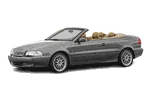
Manual browsing starts with the model and generation shown in the vehicle list. Choose carefully rather than relying only on the model badge. For example, the catalog distinguishes entries such as S40 M (2004–2012), S80 TS (1999–2006), V40 P1 (2013–2015), and C70 NC/NK Convertible (1998–2005). The generation designation and displayed date range provide important context for choosing the most plausible catalog route.
Once inside that entry, review any available configuration choices and qualifiers before opening the assembly diagram. Use known vehicle details from dependable records, and avoid selecting an option simply because its wording appears similar. If multiple rows or diagrams remain plausible, compare descriptions, illustrated surroundings, notes, and the component currently fitted to the car.
VIN lookup is an independent, vehicle-specific route and is separate from manual generation and configuration browsing. A VIN is not a catalog configuration and should not be treated as a way to select one of the manually displayed configurations. Where VIN-based information is available, use it as additional vehicle-specific evidence and still review the resulting descriptions, notes, and part references carefully.
No. An OEM number is valuable for identification and cross-checking, but applicability still depends on the vehicle, generation, factory configuration, and any conditions stated in the parts list.
A callout connects a position in an exploded diagram to a parts-list row. The row may provide an OEM part number, but the callout label is not necessarily that number.
A catalog illustration may represent variations within an assembly. Read the linked rows and qualifiers instead of choosing only by appearance or position in the drawing.
Yes. Select the appropriate Volvo model and generation, follow the relevant categories, and evaluate the displayed configuration details. Manual browsing and VIN lookup remain separate methods.
No. 7zap is an independent reference catalog. Its diagrams and OEM number records can support parts research, but identification should be checked against dependable vehicle information before a repair or replacement decision.