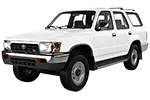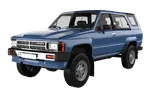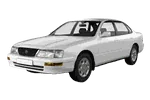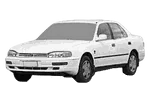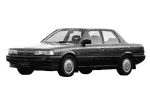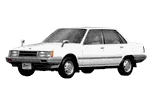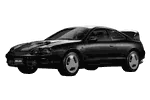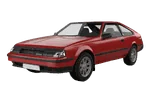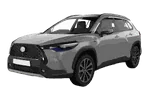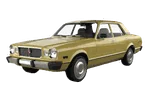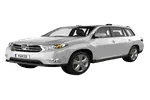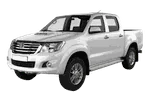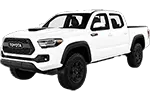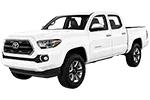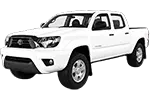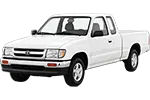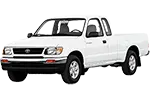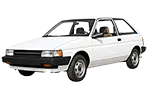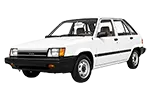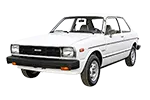

Decode your Toyota VIN to find factory specifications, build options, and exact OEM part compatibility.









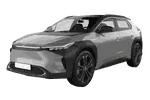









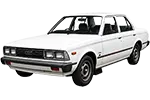
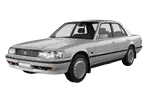
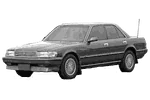

























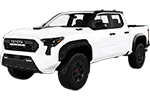

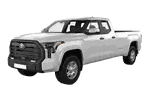
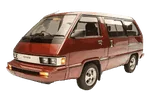



The Toyota parts catalog on 7zap is a reference resource for identifying components, understanding assembly relationships, and researching Toyota part numbers. It is intended for owners, workshops, restorers, and parts specialists who need to move from a known vehicle to a relevant diagram or parts-list entry. Rather than presenting a shopping page, the catalog organizes vehicle information so that users can compare visual callouts with OEM-number references.
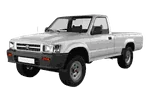
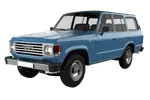
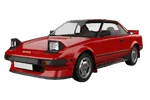
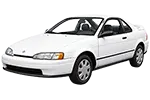
Toyota model families span many generations, and similar-looking components may differ according to production period or factory configuration. Careful vehicle selection is therefore an important first step. The generation list displayed above this guide provides the available starting points for manual catalog browsing.
After selecting a displayed Toyota generation, catalog navigation can lead through relevant component and assembly groups. Depending on the available catalog data, these may cover areas such as engine-related assemblies, transmission components, steering, suspension, braking systems, electrical equipment, body hardware, interior fittings, cooling components, fuel-related parts, and other vehicle systems.
Navigation may use universal categories or manufacturer categories. Universal categories provide a familiar component-oriented route, while manufacturer categories preserve the organization associated with the underlying Toyota catalog information. Either path can help narrow a broad search to a diagram and its corresponding parts list, but the displayed records should still be checked against the vehicle being researched.
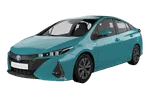
This Toyota online parts catalog includes generation contexts as varied as the Land Cruiser J40 (1969–1986), Supra A80 (1993–2002), Corolla E120 (2000–2006), and Camry XV40 (2006–2011). More recent examples include the RAV4 XA50 (2018–2025), Yaris XP210 (2020–2025), and bZ4X EA10 (2022–2025). These examples illustrate why the model name alone is rarely enough: the generation and its available factory details matter when interpreting a catalog result.
A Toyota parts diagram shows how components are arranged within an assembly. Individual items are usually marked with callouts that connect the illustration to rows in an accompanying parts list. This visual relationship can help distinguish nearby brackets, fasteners, covers, seals, housings, or other pieces that may be difficult to identify from a description alone.
A callout is a pointer to a parts-list row; it is not necessarily an orderable Toyota part number. A row may describe a component, quantity, note, or grouping associated with the illustration. The listed OEM number, when present, should be treated as a research reference rather than proof that the component applies to a particular vehicle.
The exploded view is especially useful when researching assemblies with several adjacent pieces. It can reveal where a component sits, which illustrated items surround it, and whether the list separates hardware from a larger assembly. Diagram positions are schematic, however, and should not be read as installation instructions or technical specifications.
Begin with the vehicle family and then compare the generation designation and production range shown in the catalog. For example, the Prius XW30 (2009–2021) should be approached as a different catalog context from the Sienna XL40 (2020–2025). Likewise, the Hilux AN110/AN120/AN130 (2015–2025) and 4Runner N210 (2002–2009) have their own displayed generation paths.
Once inside a generation, review any available factory configuration details before relying on a diagram or number. Relevant distinctions may include production timing, engine or drivetrain information, transmission, equipment, and other catalog notes. Not every distinction is necessarily exposed in the same way, so use the information shown rather than assuming that a familiar model name or visual resemblance establishes applicability.
VIN lookup is independent from manually choosing a Toyota model, generation, and factory configuration. It is a vehicle-specific route that may help narrow catalog information using the identifier entered. A VIN is not a configuration option and does not select one of the manually browsed configurations.
If VIN-based results are available, compare them with the vehicle’s documentation and the relevant diagram context. If you browse manually, continue to validate the selected generation and configuration on their own terms. The two methods should not be treated as interchangeable evidence.
Before using a number for sourcing or repair planning, compare it with the number visible on the removed component where practical, the vehicle identification details, and reliable service documentation. Pay attention to suffixes, prefixes, production notes, quantities, and left- or right-side descriptions. Small differences in an OEM reference can indicate a different component or application.
7zap is an independent reference catalog and is not affiliated with Toyota. Catalog diagrams and Toyota part numbers support identification research, but they do not by themselves confirm fitment. Final verification should be made with a knowledgeable parts specialist or another authoritative source using the vehicle-specific information.
Where number search is supported, an OEM reference can help locate related catalog records. Check the resulting description, diagram, callout, generation, and configuration rather than relying on the number in isolation.
Catalog references may vary with generation, production timing, factory configuration, component position, or other notes shown in the record. Appearance alone is not sufficient evidence of interchangeability.
No. A Toyota exploded view explains assembly context and connects callouts to parts-list rows. Applicability still requires comparison with the selected vehicle information and other reliable references.
Use the path that matches the information available. Manual browsing is useful when the model generation and configuration are known. VIN lookup is a separate vehicle-specific route. In either case, review the resulting catalog details carefully.