
Decode your Skoda VIN to find factory specifications, build options, and exact OEM part compatibility.

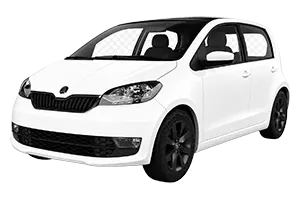


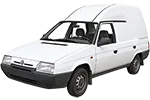
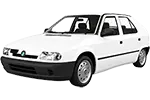












The 7zap Skoda parts catalog is an independent reference resource for identifying components shown in selected Škoda passenger-car generations. It brings together illustrated assemblies, diagram callouts, parts-list descriptions and OEM part numbers so that users can investigate how a component is cataloged before consulting a parts specialist or another technical source.
Manual browsing begins with the vehicle generations displayed above. Choosing the appropriate generation matters because visually similar cars can have different assemblies, component revisions or catalog references. The catalog can then be explored through universal categories or manufacturer categories, depending on the navigation available for the selected vehicle. These routes organize parts information differently but lead toward assembly diagrams and their associated lists.
The generation list spans distinct periods of Škoda passenger-car production. Earlier catalog context includes Type 742/743 (1976–1989) and Felicia (1995–1997). Later entries include Fabia (Type 6Y) (2000–2004), Octavia I (Typ 1U) (1997–2000), Citigo (2012–2016) and Yeti (5L) (2010–2013).
More recent examples include Superb B8 (Typ 3V) (2014–2018), Octavia A8 (Typ NX) (2020–2023) and Fabia (Type PJ) (2022–2025). The displayed choices also cover Karoq (2018–2020), Kodiaq ll (2024–2027) and Enyaq/Elroq (2021–2027). These names and periods should be treated as separate catalog selections rather than interchangeable versions of the same vehicle.
Use the model name, type designation and displayed production period together. A familiar badge alone may not provide enough information to select the relevant catalog branch, particularly where a model family appears in more than one generation.
A Skoda parts diagram presents an assembly as an exploded view. The illustration shows the relative position of components, while numbered callouts connect those illustrated items to rows in a corresponding parts list. This can help distinguish a housing from its fasteners, brackets, seals or nearby components without relying only on a text description.
A callout is a pointer to a parts-list row; it is not necessarily an orderable OEM part number. One callout may relate to several rows where the catalog distinguishes between factory configurations, production conditions or component variants. Conversely, some illustrated items may be represented as part of a larger assembly rather than as a separately referenced component.
The parts list may provide a description and a Škoda OEM number suitable for further research. When investigating Škoda genuine parts, copy the number carefully and preserve letters, spacing, suffixes and revision characters. A similar-looking number can refer to a different version. An OEM identifier is a reference from the catalog and does not by itself establish applicability to a particular car.
After choosing the displayed generation, review any available configuration details before relying on a diagram. Useful checks can include the cataloged model designation, production period and other vehicle-specific choices presented by the catalog. Do not choose solely because an illustration resembles the component fitted to the car.
Within an assembly, compare the callout, row description, stated conditions and OEM number as a group. Notes attached to a row can be as important as the main part name. If several rows appear plausible, record each candidate and resolve the difference using reliable vehicle documentation or inspection of the removed component.
VIN lookup is independent from manual generation and configuration browsing. It uses a vehicle identification number to begin a vehicle-specific search path; it is not another configuration, trim choice or selector inside a manually browsed generation.
Manual catalog navigation remains useful when a VIN is unavailable, when comparing assembly layouts or when researching a known model generation. Results from either route should still be checked against the vehicle and supporting documentation before a part number is used.
These steps reduce confusion, but catalog research is not a substitute for vehicle-level verification. Production changes, prior repairs and component revisions can affect which reference is appropriate.
No. 7zap is an independent reference catalog and does not represent or claim affiliation with Škoda. It provides structured access to diagrams and parts information for research.
Often, the diagram callout leads to a parts-list row where an OEM number may be shown. Check that row’s description and conditions because the callout itself is not necessarily the part number.
The position may have different cataloged variants or conditions. Compare the available details with the selected generation and the vehicle rather than choosing the first listed reference.
Use manual browsing to research a known generation or compare assemblies. Use VIN lookup as a separate vehicle-specific route when the identification number is available. Neither path removes the need to verify the resulting reference.
No. A Skoda part number is a valuable research identifier, but applicability should be checked against the vehicle, catalog notes and other dependable evidence.