

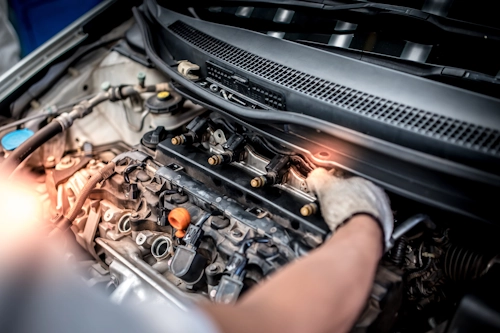
Listen closely to any modern engine at idle, and beneath the mechanical symphony lies a rhythmic click-click-click – the heartbeat of your fuel injectors. These unsung heroes replaced temperamental carburetors decades ago, transforming engines from gas-guzzling roughnecks into precision instruments. After three decades elbow-deep in engine bays, I’ve seen firsthand how understanding injectors separates casual drivers from true gearheads. Let’s dissect these marvels of mechanical atomization.
The Great Carburetor Coup
Remember the days of choke plates and accelerator pumps? Carburetors relied on vacuum pressure and mechanical trickery, struggling with altitude changes and uneven fuel distribution. Fuel injection’s victory wasn’t just about efficiency – it was about precision warfare. By delivering atomized fuel directly into the airstream under computer control, injectors brought us:
- 15-20% better fuel economy overnight
- One-turn starts in freezing temperatures
- Emissions reductions that saved the performance car
- Power curves smoother than a German autobahn
Inside the Firehose: Injector Anatomy
Deconstruct any fuel injector, and you’ll find ballet in miniature:
The Nerve Center: Solenoid coil (receives ECU’s millisecond-precise commands)The Gatekeeper: Pintle valve (spring-loaded needle sealing the nozzle)
The Artist’s Nozzle: Laser-drilled orifice plate (creates fuel mist pattern)
The Filter: Micro-mesh basket (traps contaminants smaller than human hair)
When current hits the solenoid, it yanks the pintle open against spring pressure. High-pressure fuel (up to 3,000 PSI in direct-injection systems) explodes through the nozzle, shattered into vapor by the orifice plate’s microscopic holes. Cutoff is equally brutal – spring pressure slams the pintle shut, ending the spray instantly.
Evolution of Spray: Injection Generations
1. Throttle Body Injection (TBI)
The "training wheels" phase. One or two injectors mounted above the throttle body, spraying down into the intake manifold. Simple but suffered from "wall wetting" – fuel condensing in runners.
2. Port Injection (MPI)
The golden standard for decades. Individual injectors per cylinder mounted near intake valves. Allows sequential timing and precise air-fuel tuning. Hear that satisfying injector tick? That’s MPI at work.
3. Direct Injection (GDI/DI)
The current performance king. Injectors fire fuel straight into the combustion chamber at astronomical pressures. Enables higher compression ratios and cleaner burns but demands surgical cleanliness.
4. Dual Injection
Toyota and BMW’s genius compromise. Combines port and direct injectors – port for cleanliness at low RPM, direct for power at high RPM. Best of both worlds, double the maintenance.
The ECU’s Orchestra Conductor
Injectors don’t spray blindly. Your Engine Control Unit (ECU) calculates pulse width (spray duration) up to 100 times per second using:
- Mass Airflow (MAF) or Manifold Absolute Pressure (MAP) sensors
- Throttle Position Sensor (TPS)
- Coolant temperature readings
- Knock sensor feedback
- Exhaust oxygen sensors
Modern systems even adjust spray patterns for cold starts versus WOT (wide-open throttle) – a ballet of data and mechanical response.
When Injectors Go Rogue: Failure Symptoms
Ignoring injector health is like ignoring a toothache – small pain today, catastrophic failure tomorrow. Watch for:
- The "Dead Cylinder Shuffle": Misfires at idle from clogged/dripping injectors
- Fuel Stench: Raw gasoline smell from leaky O-rings or bodies
- Hydrolock Horror: Severe injector leaks filling cylinders with fuel (engine won’t crank)
- MPG Massacre: 10-15% unexplained fuel economy drop
- Cold Start Cough: Extended cranking as injectors struggle to flow
Injector Lifespan: Beyond the 100k Myth
While many survive 150,000+ miles, neglect guarantees premature death. The killers? Dirty fuel and heat cycles. Modern ethanol-blended fuels attract moisture, creating varnish. Protect your injectors with:
Pro Maintenance Tips:• Run premium detergent gasoline (Top Tier certified) quarterly
• Replace fuel filters religiously – every 30k miles or sooner
• Every 50k miles: professional ultrasonic cleaning on the bench
• For DI engines: walnut blasting intake valves every 75k miles
• Use fuel stabilizer for stored vehicles
The Future: Electrified Precision
Even as EVs rise, injector tech advances. Piezoelectric injectors (using crystalline voltage reactions) achieve five times faster response than solenoids. Hydrogen combustion prototypes use injectors capable of handling -253°C cryogenic fuels. The mechanical heartbeat isn’t fading – it’s evolving.
Final Thought: Your injectors are the translators between digital commands and explosive power. Treat them as precision instruments, not disposable parts. That rhythmic ticking isn’t just noise – it’s the sound of engineering perfection.