

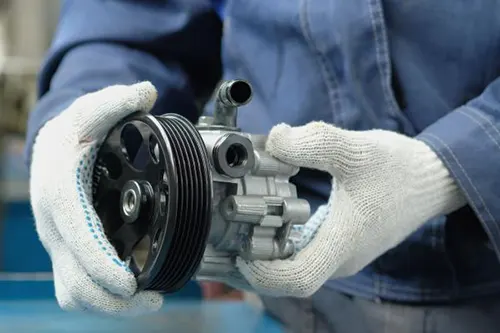
Few things are more unsettling behind the wheel than a steering wheel that suddenly fights you—heavy, unresponsive, then back to normal as if nothing happened. Intermittent power steering assist loss is maddening because the fault often disappears the moment you pop the hood. But it’s also a safety hazard: a sudden loss of assist in a parking lot or on a winding road can lead to near-misses. Whether your car uses hydraulic (belt‑driven pump), electric (EPS), or electro‑hydraulic power steering, this guide will help you isolate the culprit—pump, steering rack, or electrical supply—in under an hour using basic tools and smart observation.
First, Know Your Power Steering Type
Before you touch anything, identify which system your vehicle has. The diagnostic path differs completely.
- Hydraulic (HPS): Belt‑driven pump, reservoir, hoses, and a hydraulic rack. Assist loss is usually mechanical (pump, belt, fluid) or sometimes valve‑related inside the rack.
- Electric (EPS): No pump, no fluid. An electric motor attached to the steering column or rack provides assist. Intermittent loss almost always points to electrical issues—sensors, torque motor, module, or power supply.
- Electro‑hydraulic (EHPS): An electric motor drives the hydraulic pump. Combines both worlds: electrical gremlins and hydraulic failures are possible.
Check your owner’s manual or look under the hood: no power steering fluid reservoir = EPS. A reservoir with an electric motor bolted to the pump = EHPS. A belt‑driven pump = HPS.
The Three Suspects: A Quick Overview
| Component | Typical Failure Mode (Intermittent) | Key Diagnostic Clue |
|---|---|---|
| Hydraulic Pump | Internal vane wear, pressure relief valve sticking, belt slip | Noise (groan/whine) during failure, fluid level drops, belt chirp |
| Steering Rack (Hydraulic or EPS) | Sticking rotary valve (hydraulic), torque sensor or internal bushing wear (EPS) | Assist loss only when turning one direction, or only at specific steering angles |
| Electrical Supply (EPS/EHPS) | Loose battery/ground connections, failing alternator, CAN bus glitch, overheating EPS motor | Assist loss accompanied by warning light, flickering dash lights, or happens after driving 20+ minutes |
Step 1: Safety & Quick Checks (5 Minutes)
Do these before any disassembly—they often reveal the root cause instantly.
- Check battery terminals and main grounds. Loose or corroded connections are the #1 cause of intermittent EPS and EHPS failures. Wiggle the battery cables while the engine idles. If lights flicker or steering feels odd, clean and tighten.
- Inspect the serpentine belt (HPS). A glazed or loose belt slips under load, causing assist to come and go. Push the belt with your thumb—should deflect no more than ½ inch. Look for cracks or missing ribs.
- Scan for trouble codes. Even without a check engine light, many EPS modules store codes (e.g., C1511, U0126). Use an OBD2 scanner that reads ABS/SAS/EPS modules. Write down any codes before clearing.
- Monitor the power steering fluid (HPS/EHPS). Low fluid due to a slow leak (rack seals, hoses) causes intermittent cavitation. Fluid should be clear or amber; dark/black fluid means internal pump wear.
Step 2: Recreate the Failure Pattern
Intermittent problems need a reproducible trigger. Drive safely and note:
- When does it happen? Parking lot maneuvers (high load, low RPM) → suspect pump/belt. Highway driving then sudden loss → EPS overheating or electrical.
- Any warning lights? EPS light, battery light, or power steering warning. If the light comes on when assist drops, it’s electrical/electronic 90% of the time.
- Noise during loss? Whining from the pump (HPS) indicates low fluid or worn pump. Clicking or grinding from the rack suggests mechanical rack issue. No noise at all (EPS) points to electronics.
- Does steering return to normal after restarting the engine? Many EPS modules go into “fail‑safe” mode due to a voltage drop or sensor glitch and reset with key cycle. That’s a strong electrical clue.
Step 3: Isolation Tests – Hydraulic System (HPS & EHPS)
Pump vs. Rack vs. Electrical (for EHPS)
Test 1 – Load the pump at a standstill. With the engine running, turn the steering wheel fully left and right (but don’t hold at lock for more than 5 seconds). If assist fails or the wheel becomes very heavy only under full lock, the pump’s flow control valve is sticking. If it fails only while turning gently in a parking lot, the pump may be worn internally.
Test 2 – The “bounce” test (rack valve). On a quiet road, steer slowly left and right. If you feel a sudden notch or the wheel seems to “catch” at a certain angle, the rotary valve inside the hydraulic rack is sticking. Also, if assist loss occurs only when turning right but not left, suspect the rack’s valve spool.
Test 3 – EHPS specific: When assist fails, listen for the electric pump running. If the pump is silent, it’s an electrical supply or relay problem. If the pump runs but no assist, suspect internal pump failure or air in the system.
Fluid contamination test: Dip a white paper towel into the reservoir. Metallic particles point to pump wear. Black rubbery debris points to hose breakdown. Gray paste often means rack seal failure.
Step 4: Isolation Tests – Electric Power Steering (EPS)
EPS has no pump, no fluid—so forget leaks and belts. Focus on voltage, torque sensor, and the EPS motor.
- Voltage drop test. With engine running, turn on headlights, A/C, and rear defrost. Measure voltage at the battery: should be 13.5–14.5V. Below 12.8V under load = alternator failing. Then measure voltage at the EPS module power feed (consult wiring diagram). A drop of more than 0.5V from battery indicates a bad connection.
- Torque sensor test (using a scan tool). Many DIY scan tools now read EPS data. Watch the steering torque sensor voltage while turning the wheel smoothly. It should change linearly. Any erratic jumps or dropouts will cause intermittent assist loss. Replace the steering column torque sensor (often part of the column or rack).
- Overheating pattern. If assist fails after 20+ minutes of driving, returns after cooling down for 10 minutes, the EPS motor or control module is overheating. Common on Nissan, Chevrolet, and Ford EPS systems. Check for debris blocking cooling fins on the rack-mounted motor.
- Torque angle sensor (steering angle sensor) mismatch. If the power steering works but feels “numb” then suddenly boosts, the steering angle sensor might need recalibration. Some vehicles require a centering procedure after battery disconnect.
Step 5: Electrical Supply Deep Dive – Common to EPS, EHPS, and Even HPS (Clutch‑Type Pumps)
Intermittent electrical issues are the most misdiagnosed. Use this checklist before replacing expensive parts.
- Battery age and condition. A battery with a weak cell can cause voltage sags during high electrical load (e.g., turning the wheel while braking). Load test the battery. Replace if more than 5 years old.
- Main ground cable. Disconnect the negative battery terminal and follow the main ground to the chassis/engine. Remove, wire brush, and reattach. Many intermittent EPS issues vanish after cleaning a corroded ground.
- EPS relay (if equipped). Some systems have a dedicated power steering relay. Swap it with an identical relay (e.g., horn relay) and see if the problem moves.
- CAN bus integrity. Loss of vehicle speed signal (from ABS/wheel speed sensors) can cause EPS to reduce assist as a safety feature. If your speedometer also acts erratically when assist fails, suspect a bad wheel speed sensor or wiring.
Step 6: Quick Decision Matrix – Where to Start Repairing
Based on your findings, here’s a straightforward action plan:
| Symptom | Most Likely Cause | First Repair Action |
|---|---|---|
| Assist loss only at idle or low RPM (hydraulic) | Worn pump or loose belt | Tighten/replace belt; if persists, replace pump |
| Assist loss only while turning one direction | Internal rack valve (hydraulic) or torque sensor (EPS) | Replace steering rack (hydraulic) or recalibrate/replace EPS torque sensor |
| Assist loss accompanied by battery/charging warning light | Alternator or battery voltage issue | Test charging system, clean grounds, replace alternator if low voltage |
| EPS works fine cold, fails after 30 min driving | EPS motor/module overheating | Check cooling fans/ducts; replace EPS motor assembly if no obstruction |
| Intermittent loss with no noise, resets after key cycle | Loose connector or module software glitch | Check EPS module connector pins for corrosion; perform steering angle recalibration |
Common Mistakes That Waste Time and Money
- Replacing the pump before checking the belt tension. A $15 belt solves what seems like a $300 pump failure.
- Bleeding the system without finding the leak. Air gets in where fluid leaks out. Find and fix the leak first.
- Ignoring the simple “power supply” on EPS. A corroded ground wire or weak battery causes 40% of EPS intermittent faults. Always start with electrical supply.
- Replacing the rack for a sticking torque sensor. On many EPS columns, the torque sensor is replaceable separately (e.g., Toyota, Honda). Do your research.
When the Isolation Plan Points to Multiple Failures
Sometimes you have two overlapping issues: a weak alternator that causes voltage drops, plus an old pump that needs higher voltage to run its electric assist (EHPS). In those cases, fix the electrical supply first. A steady 14V often restores full function to a marginal pump or EPS module. Only after confirming clean power should you move to mechanical or hydraulic components.
If your vehicle has over 150,000 miles and the power steering has never been serviced, consider a proactive fluid flush (for HPS/EHPS) or inspecting the EPS rack bushings. Worn rubber rack bushings can cause misalignment that intermittently binds the steering, mimicking assist loss.
Final Thoughts: Drive Confident Again
Intermittent power steering assist loss is rarely a ghost in the machine—it follows patterns. By systematically isolating the pump, rack, or electrical supply using the tests above, you’ll pinpoint the cause without throwing parts at the problem. Always start with the simplest checks: fluid level, belt condition, battery terminals, and ground connections. Then move to load testing and scan data. Whether you end up replacing a $10 relay, a $100 belt and tensioner, or a $400 rack, you’ll know exactly why—and your steering will reward you with smooth, reliable assistance every time you turn the wheel.
Pro tip: After any repair that involves disconnecting the battery or replacing an EPS component, perform a steering angle sensor recalibration. Many vehicles do this automatically by turning the wheel lock‑to‑lock with the engine running. Check your service manual—it takes two minutes and prevents future intermittent issues.
Stay safe, and never ignore a steering fault. Your life—and the lives of others—depend on a predictable steering feel, especially in evasive maneuvers.