

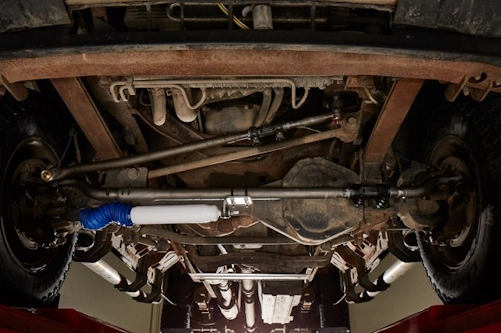
Steering play, often called steering looseness or excessive free play, is one of the most common complaints among car owners and a frequent point of inspection for mechanics. A loose steering wheel not only reduces driving comfort but also poses a serious safety risk. This guide provides a detailed look at how to diagnose steering play — step by step — beginning with the simplest components like bushings and ending with the steering rack.
Why Steering Play Matters
When the steering system is not tight and responsive, the driver needs to turn the wheel more than usual to achieve the desired maneuver. This delay can increase stopping distances in emergency situations and make the vehicle harder to control. For professional mechanics, accurate diagnosis saves both time and money, while for car owners it ensures peace of mind and reduced repair costs.
Step 1: Checking the Steering Column and Wheel
Before crawling under the car, start with the obvious. Sit in the driver’s seat and gently move the steering wheel left and right. Note how much the wheel turns before the road wheels respond. If there is more than 30–40 mm of free play at the rim, the steering system requires attention.
- Inspect the steering column: Look for looseness at the universal joints or collapsible section.
- Check mounting bolts: Ensure that the steering column is securely attached to the dashboard and chassis.
Step 2: Tie Rod Ends and Ball Joints
Tie rod ends are among the most common sources of steering play. They connect the steering rack to the wheels, and any looseness here is immediately translated into vague steering feedback.
- Raise the front of the car safely using a jack and stands.
- Grip the wheel at the 3 and 9 o’clock positions and rock it side to side.
- If you hear knocking or see movement between the tie rod and wheel knuckle, the tie rod end may be worn.
Similarly, ball joints should be checked by moving the wheel at the 12 and 6 o’clock positions. Any excessive vertical movement indicates wear.
Step 3: Bushings and Suspension Components
Bushings, also called suspension silent blocks, are rubber or polyurethane components that isolate vibrations and secure arms and rods in place. When bushings deteriorate, they allow unwanted movement, which can mimic steering play.
- Control arm bushings: Inspect for cracks, deformation, or excessive softness.
- Stabilizer bar bushings: Worn stabilizer bushings can cause side-to-side looseness.
- Visual inspection: Look for rubber pieces falling apart or gaps around the bushing housing.
Step 4: Steering Rack Condition
The steering rack is the heart of the system. If earlier checks do not reveal the issue, focus here. A failing rack can cause uneven steering resistance, leaks of power steering fluid, or audible knocks when turning.
- Hydraulic racks: Check for leaks at the seals and boots.
- Play in the pinion: Excessive movement between the input shaft and rack bar indicates wear.
- Rack mounting: Ensure the rack is firmly bolted to the subframe.
Step 5: Steering Shaft and Universal Joints
Universal joints between the steering column and rack can wear out or seize. When this happens, the driver may feel uneven resistance or a “dead spot” in steering response. Check by rotating the wheel while observing the shaft — any delay in motion transfer is a sign of trouble.
Step 6: Power Steering System
For vehicles with hydraulic or electric power steering, additional checks are necessary:
- Hydraulic pumps: A weak or noisy pump can make the steering feel inconsistent.
- Fluid level: Low fluid may cause erratic behavior and increase play.
- EPS modules: For electric power steering, diagnostic tools may be required to check sensors and assist motors.
Practical How-To: Quick Diagnostic Workflow
Conclusion
Diagnosing steering play requires a methodical approach, starting from simple checks like tie rod ends and bushings and moving toward more complex components such as the steering rack or power steering system. By following these steps, car owners and mechanics can accurately locate the source of the problem and ensure the vehicle remains safe, responsive, and enjoyable to drive.