

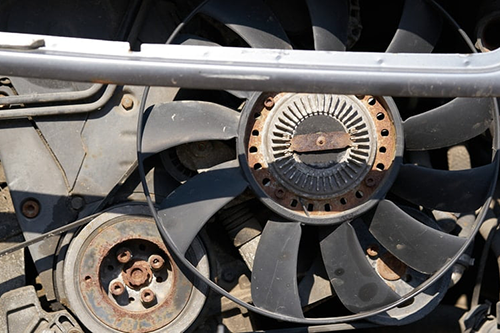
Seeing the temperature gauge creep up in traffic is nerve‑wracking. The good news: if the car cools fine on the highway, you can usually fix the problem with fans, pressure and radiator health—without tearing into the engine. This guide gives you a street‑level process to stabilize temps and know when deeper diagnosis is really needed.
1. Confirm the pattern before you wrench
- Gauge rises in slow traffic and drops at speed → airflow or fan control issue.
- Gauge rises on long grades even with airflow → radiator flow or combustion leak.
- Spikes right after cold start, then normal → thermostat sticking or air in system.
2. Fan operation—on or not, and how strong
- Use a scan tool to command fans on, or turn on A/C on many cars to force low‑speed fan.
- If the ECU commands the fan but the motor is still, check fuses, relays and the motor feed/ground.
- Weak airflow feels like a hairdryer instead of a leaf blower—restricted shrouds or tired motors.
3. Cap and pressure testing
- Old caps lose spring tension; boiling point drops and the system “overheats” early.
- Use a pressure tester on the system and cap; replace anything that won’t hold rated pressure.
4. Radiator capacity with an IR gun
With the engine at temp and fan running, measure inlet and outlet tanks:
- Small temperature drop and rising gauge → clogged core or poor airflow.
- Healthy drop and stable gauge → radiator and fan are doing their job.
5. Fix sequence that solves most traffic overheating
- Restore fan operation and full shroud coverage; clean debris from the condenser/radiator stack.
- Install a new cap if pressure tests show weakness; retest under load.
- Back‑flush or replace a clogged radiator when delta‑T stays low despite good airflow.
6. When to suspect deeper engine issues
- Persistent bubbles in the expansion tank with the cap off and engine running.
- Sweet smell in exhaust, milky oil or unexplained coolant loss.
- Block test (CO₂) turns positive—time for a compression and leak‑down plan.
Takeaway: stabilize airflow and pressure first. Only when those are proven good and temps still climb should you invest in head‑gasket‑level diagnostics.
Three traffic‑overheat case examples
- Fan never runs: fan relay stuck open; quick jumper test proved the motor; relay fix ended the spikes.
- Fan runs, still hot: condenser and radiator packed with debris; cleaning fins and gap restored delta‑T.
- Random boil‑over: weak cap let pressure bleed off early; new cap plus bleed fixed it.
DIY vs shop
- DIY: fan relay/motor checks, cap replacement, visual inspection and IR measurements.
- Shop: when you suspect internal blockages, head‑gasket gas in coolant, or need A/C evacuate/recharge for condenser removal.
Simple logging habit
Keep a note in your phone: ambient temp, A/C on/off, gauge behavior, and any coolant smell. Patterns over a week often point straight at airflow vs internal issues.
Long‑term habits that protect the cooling system
- Rinse the condenser/radiator stack gently from the engine side once or twice a year in dusty areas.
- Watch coolant color: sudden darkening or "mud" points to mixing chemistries or internal corrosion.
- Listen after shutdown: gurgling in the dash can mean air in the heater core or low coolant.
Three quick “don’t do this” rules
- Don’t open a hot cap—wait, or use a rag and extreme care; steam burns are nasty.
- Don’t top up with random tap water; minerals stay when coolant boils away.
- Don’t ignore a small leak just because the gauge is "mostly" normal—small leaks become big ones at the worst time.
Practical section
- Is a low coolant light always a leak? Not always—air pockets after a recent service can burp out and drop the level once. If it repeats, treat it as a leak.
- Can a bad radiator cap really cause overheating? Yes. Without full pressure, coolant boils earlier, making bubbles where liquid should carry heat.