

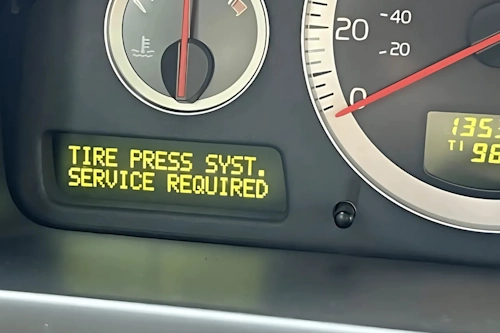
As a gearhead with three decades of tire smoke in my rearview mirror, I've seen dashboard warning lights terrify more drivers than a horror movie marathon. But that little exclamation mark inside a tire-shaped icon? That's the Tire Pressure Monitoring System (TPMS) waving a red flag. Forget the panic – consider this your masterclass in understanding, troubleshooting, and respecting this critical safety feature.
What Exactly is TPMS and Why Should You Care?
Born from the Firestone tire debacle of the late 90s, TPMS became mandatory in the U.S. on all vehicles after 2007. This isn't some bureaucratic nanny feature – it's a lifesaver. Underinflated tires are silent killers:
- 🔥 Blowout bait: 25% underinflation increases sidewall flex and heat buildup exponentially
- 🛣️ Grip robbery: Wet stopping distances balloon by 20+ feet at just 6 PSI low
- ⛽ Fuel economy drain: Every 1 PSI drop = 0.2% mpg loss (that's real money)
Your TPMS is the guardian angel watching for these invisible dangers.
The Two Types of TPMS: Direct vs. Indirect
Direct TPMS (The Premium Setup)
Used in 80%+ modern vehicles. Each wheel houses a sensor inside the valve stem assembly that:
- 📡 Continuously measures actual air pressure (and often temperature)
- 🔋 Contains a battery (5-10 year lifespan)
- 📻 Transmits data wirelessly to your car's computer
Pro Tip: These sensors survive tire changes but MUST be reinstalled correctly. I've seen more cracked sensor housings from ham-fisted mechanics than I can count.
Indirect TPMS (The Software Wizard)
Common in European models. Uses your existing ABS wheel speed sensors to detect:
- 🔄 Rotation differences between wheels (underinflated tires rotate faster)
- 📏 Circumference changes from pressure loss
Warning: This system needs recalibration after tire rotations or inflation adjustments. Forget to reset it? You'll get false alarms.
Why Your TPMS Light is Yelling at You (And What to Do)
That glowing icon isn't just decoration. Here's the decoder ring for its messages:
Scenario 1: Steady Illumination
Translation: "One or more tires are 25% below recommended pressure!"
Action Plan:
- Pull over safely within 10 miles
- Check all tires with a quality gauge (glovebox stick gauges lie)
- Inflate to door jamb specs (NOT the tire sidewall max!)
- Drive 10+ minutes above 15 MPH to reset
Scenario 2: Flashing Light (Then Steady)
Translation: "System malfunction! Probably a dead sensor battery."
Action Plan:
- Confirm tire pressures are correct first
- Note which wheel isn't reporting (requires TPMS scan tool)
- Plan sensor replacement soon – ignoring this risks missing real pressure issues
Scenario 3: Light On After Inflation
Translation: "I need a reboot!" (Common after seasonal tire swaps)
Reset Magic:
- Many cars: Drive 10+ minutes at 50+ MPH
- Some models: Use hidden reset button (check owner's manual)
- Others: Requires dealership/professional reset tool
Pro-Level TPMS Maintenance Secrets
After 30 years of wrenching, here's what most owners miss:
- 💡 Seasonal Pressure Swings: For every 10°F temp drop, tires lose 1 PSI. That October light? Probably not a leak.
- 🔋 Sensor Graveyards: Sensor batteries die predictably around 7 years. Budget replacements when buying new tires.
- 🛞 Rotation Roulette: Direct TPMS needs reprogramming after rotations if positions change. Skip this? Your dashboard will show wrong tire locations.
- 🧲 Aftermarket Wheel Woes: Non-TPMS-compatible wheels block sensor signals. Always verify compatibility.
When DIY Isn't Enough: Calling in the Cavalry
Grab your keys and head to a pro if:
- ⚠️ Light stays on after proper inflation and 20 miles of driving
- 🔧 You find damaged valve stems or sensor housings
- 💧 One tire constantly loses pressure (likely bead leak or puncture)
Critical: Never disable TPMS warnings. 600+ fatal crashes annually stem from tire issues. That light isn't crying wolf – it's sounding the alarm.
The Final Lap: Respect the Light
That tire-shaped icon isn't government overreach – it's hard-won automotive wisdom. Treat TPMS warnings like a check-engine light for your shoes. Respond promptly, understand its language, and invest in sensor maintenance. Your tires are the only thing connecting two tons of metal to the asphalt. Trust me, after seeing countless blowouts and near-misses over 30 years, that little light deserves your attention.