

Power steering systems are critical for effortless vehicle control, but they develop issues over time. Recognizing early symptoms can prevent costly repairs and dangerous driving conditions. This guide details the most common power steering failures, their root causes, and proven solutions.
Recognizing Power Steering Failure Symptoms
⚠️ Key warning signs include:
- ●Stiff steering wheel requiring excessive force, especially at low speeds
- ●Whining or growling noises that rise with RPM when turning
- ●Jerky or inconsistent steering resistance ("sticking" sensation mid-turn)
- ●Excessive free play in the steering wheel (over 1-2 inches of movement without response)
- ●Fluid puddles under the front of the vehicle (typically clear, red, or pink)
- ●Squealing belts during turns
Top 5 Power Steering Problems & Solutions
1. Low or Contaminated Power Steering Fluid
Causes: Fluid leaks, infrequent maintenance, or moisture contamination over time. Fluid turns dark when degraded.
Solutions:
- Check fluid level monthly using the dipstick or reservoir markings
- Top up with manufacturer-recommended fluid (never use transmission fluid unless specified)
- Flush system every 50,000-80,000 miles to remove sludge and air bubbles
2. Power Steering Fluid Leaks
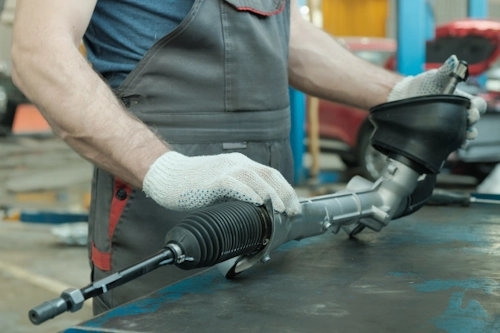
Causes: Cracked hoses, worn pump seals, loose connections, or damaged rack bellows.
Critical Checkpoints:
- Pressure lines and return hoses near the pump
- Rack-and-pinion input shaft seals
- Internal rack leaks (check inside rubber bellows for fluid accumulation)
Solutions: Replace damaged hoses or seals immediately. Temporary stop-leak additives may help minor seal wear but aren't permanent fixes.
3. Failing Power Steering Pump
Causes: Running the system low on fluid causes pump burnout. Contaminated fluid accelerates bearing wear.
Symptoms: Screeching during turns, stiffness in both directions, metallic grinding noises.
Solutions: Pump replacement is typically required ($500-$700 parts and labor). Always flush the system when replacing the pump.
4. Worn Belts or Tensioners
Causes: Serpentine belt cracking, glazing, or looseness prevents proper pump operation.
Symptoms: Squealing during turns, intermittent stiffness, visible belt damage.
Solutions: Replace belts every 60,000-100,000 miles. Adjust tensioners to manufacturer specifications.
5. Steering Rack or Component Failure
Causes: Worn rack mounts, inner tie rods, or bushings due to potholes, age, or impacts.
Symptoms: Clunking over bumps, uneven tire wear, steering "wander," or stiffness in one direction only.
Solutions: Requires professional diagnosis. Mechanics perform "dry park tests" to isolate worn components. Bushings or tie rods may be replaced separately.
Symptom Diagnosis Table
| Symptom | Likely Cause | Urgency Level |
|---|---|---|
| Whining during turns | Low fluid or air in system | Medium - Check within 48 hours |
| Stiff steering in one direction | Internal rack failure | High - Immediate inspection |
| Knocking over bumps | Worn tie rods or rack bushings | High - Risk of component separation |
| Fluid puddles under engine | Hose or seal leak | Medium-High - Check fluid level immediately |
| Squealing during turns | Loose or glazed drive belt | Medium - Adjust/replace belt |
Preventative Maintenance Tips
✅ Extend your system's lifespan with these practices:
- Check fluid monthly: Ensure levels are between "Min" and "Max" when cold
- Inspect hoses and belts annually: Look for cracks, bulges, or seepage
- Avoid holding the wheel at full lock: This strains the pump and seals
- Address leaks immediately: Small leaks become major failures quickly
- Flush fluid per manufacturer schedule: Typically every 50,000 miles
When to See a Professional Mechanic
While fluid top-ups and belt inspections are DIY-friendly, these situations require professional diagnosis:
- Steering stiffness accompanied by clunking or knocking sounds
- Visible fluid leaks from rack bellows or steering gear
- Excessive free play (>2 inches) in the steering wheel
- Persistent whining after fluid replacement
- Uneven tire wear indicating alignment or suspension issues
Mechanics use specialized equipment like pressure gauges and hydraulic leak detectors to pinpoint failures. Rack replacements or internal seal repairs are complex jobs best left to experts.