

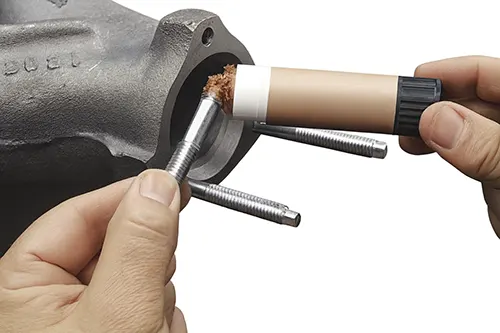
Few debates in the automotive world generate as much passionate discussion among mechanics and enthusiasts as the choice between threadlocker and anti‑seize compounds. Both products live in the toolbox of anyone who has ever turned a wrench, yet using the wrong one on a critical fastener can turn a routine repair into a nightmare of stripped threads, snapped bolts, or parts that vibrate loose on the highway. Understanding exactly where, when, and why to reach for the blue bottle versus the silver can is the mark of a builder who respects both torque and time.
The Core Conflict: Locking vs. Lubricating
At their simplest, threadlockers and anti‑seize serve opposite purposes. Threadlocker is an anaerobic adhesive that fills the microscopic gaps between mating threads, cures in the absence of air, and locks the fastener against vibration‑induced loosening. Anti‑seize is a lubricant compound—typically suspended in a grease or paste carrier—that prevents galling, seizing, and corrosion, making future disassembly possible even after years of heat cycling and exposure to the elements. The critical mistake is assuming these products are interchangeable. They are not. And using anti‑seize where threadlocker is required can lead to under‑torqued, loosening bolts. Conversely, applying threadlocker to a fastener that will see extreme heat or frequent servicing can turn a simple bolt into a permanent fixture.
How Threadlocker Works – And When It Fails
Threadlocker is a methacrylate‑based resin that remains liquid until confined between metal threads in the absence of oxygen. Once activated, it hardens into a thermoset plastic that fills voids and increases breakaway torque dramatically. The most common grades are Loctite 242 (blue, medium strength) – removable with hand tools – and Loctite 271 (red, high strength) – requiring heat to break the bond. Threadlocker thrives on clean, dry, oil‑free surfaces. It fails when contaminated, when applied to plated or coated fasteners without proper cleaning, or when exposed to temperatures above 300°F (150°C) for extended periods. Above that threshold, most anaerobic threadlockers degrade into a brittle, ineffective crust.
Where does threadlocker shine? Any fastener subject to vibration, cyclic loading, or safety‑critical applications: brake caliper bolts, flywheel bolts, driveshaft flange bolts, engine mount brackets, and even small screws on carburetors or throttle bodies. If a bolt has rattled loose on you before, threadlocker is your answer. But never use it on exhaust manifold studs, oxygen sensors, or anything near the turbocharger – the heat will destroy the bond and leave you with a mess to clean out of the threads.
The Anti‑Seize Advantage – And Its Hidden Danger
Anti‑seize compounds are blends of metallic or ceramic powders (nickel, copper, aluminum, graphite) mixed with a high‑temperature grease. They work by creating a sacrificial barrier that prevents metal‑to‑metal contact, reducing friction and preventing galvanic corrosion. The most common automotive formulation is nickel anti‑seize (good to 2400°F / 1300°C) for stainless steel, titanium, and high‑temperature exhaust components. Copper anti‑seize (1800°F / 980°C) is popular for brake hardware, spark plug threads, and suspension bolts. Plain white or aluminum anti‑seize (1600°F / 870°C) is suitable for general purpose.
The hidden danger? Anti‑seize acts as a lubricant. A bolt torqued to a dry specification will see significantly higher preload (clamping force) when the threads are lubricated, because friction is reduced. Without compensating the torque value, you risk stretching or snapping the bolt. Many factory torque specifications assume clean, dry threads. If you apply anti‑seize, you must reduce the applied torque by 15‑25% (or follow the lubricated spec if available). Ignoring this rule has snapped more cylinder head bolts and main cap fasteners than any other mistake.
Anti‑seize is indispensable for: spark plugs in aluminum heads, exhaust manifold studs and nuts, oxygen sensors, brake caliper slide pins (use a dedicated high‑temp brake grease instead), wheel lug nuts (controversial – many manufacturers warn against it, but if used, torque compensation is mandatory), and any fastener that will be removed regularly for maintenance.
The Decisive Factors: Location, Heat, and Service Interval
To make the right choice for every bolt on your car, ask three questions:
- Where is it? Engine interior (oil, fuel, coolant) or exterior? Rotating assembly or static bracket?
- How hot does it get? Under‑hood ambient (200°F), engine block (250°F), exhaust (800‑1400°F)?
- How often will I need to remove it? Every oil change? Once every five years? Never?
By Location:
Engine internals (rods, mains, flywheel bolts) – Use threadlocker (typically red, high‑strength) because these fasteners are bathed in oil, never see extreme heat (oil keeps them below 300°F), and must never loosen. Anti‑seize would contaminate the oil and alter bearing clearances – never use it here.
Brake caliper mounting bolts – Medium‑strength blue threadlocker. Vibration is the enemy, and caliper bolts see moderate heat (300‑400°F), which is within the threadlocker's range. Anti‑seize on these bolts can lead to loosening over time – a serious safety hazard.
Wheel lug nuts – This is a grey area. Many experts recommend a tiny dab of anti‑seize (especially in rust‑belt states) to prevent corrosion‑welding, but you must reduce torque by 20%. Others say dry threads only. My advice: if you service your own wheels frequently, use a high‑quality copper anti‑seize sparingly and torque to 80‑85% of the dry spec. For race cars or track days, use dry torque or a very light oil. Never use threadlocker on lug nuts – you'll curse yourself at the next tire rotation.
Exhaust manifold studs and nuts – Absolutely use high‑temperature nickel anti‑seize. These fasteners see 1000°F+ cycles, which will cook any threadlocker into useless carbon. Without anti‑seize, the studs will seize, snap off, and turn a gasket replacement into a machining nightmare.
Spark plugs in aluminum cylinder heads – Anti‑seize (copper or nickel) on the threads, sparingly. This prevents galling and cold‑welding. Never use threadlocker – the heat will destroy it, and you risk pulling threads when removing. Note: some modern spark plug manufacturers (NGK) say their plugs have a coating that eliminates the need for anti‑seize – check your plug's documentation. But for older engines or reused plugs, a light film is still wise.
By Heat Zone:
| Temperature Range | Recommended Compound | Examples |
|---|---|---|
| Up to 200°F (93°C) | Blue threadlocker or anti‑seize (depends on vibration) | Interior trim, alternator brackets, thermostat housing |
| 200°F – 300°F (93‑150°C) | Blue threadlocker still OK; anti‑seize for corrosion protection | Water pump bolts, valve cover bolts, oil pan |
| 300°F – 500°F (150‑260°C) | Anti‑seize only (threadlocker degrades) | Turbo heat shield, brake caliper bolts, exhaust hangers |
| 500°F+ (260°C+) | High‑temp nickel anti‑seize (never threadlocker) | Exhaust manifolds, EGR tube fittings, oxygen sensors |
By Service Interval:
Frequent service (every oil change or less) – Use anti‑seize on threads that you remove regularly: drain plugs (though many use a crush washer instead), oil filter adapter bolts, access covers. Threadlocker would force you to reapply every time and could make removal difficult.
Infrequent service (once every few years) – Medium threadlocker is ideal for things like suspension arm bolts, subframe mounts, and transmission crossmembers. You want them to stay tight, but you don't want to fight them when the time comes.
Never intended to remove (or very rarely) – High‑strength red threadlocker or even permanent retaining compounds. Examples: crankshaft pulley bolts (with keyway), some flywheel bolts, and internal engine balance shaft fasteners. But be careful – if you ever need to remove them, you'll need heat and a breaker bar.
Common Mistakes and Myths
Myth: "Anti‑seize is always safe on any fastener." False. On critical rotating assemblies like connecting rod bolts, the lubricating effect of anti‑seize can cause over‑torquing and bolt stretch, leading to catastrophic failure. Many rod bolts are torqued to yield (stretch) with a dry or oiled spec – anti‑seize changes the friction factor dramatically.
Myth: "Red threadlocker is better than blue, so I'll just use red everywhere." Terrible idea. Red threadlocker on a small M6 bolt inside a tight engine bay can turn a five‑minute job into a drill‑out nightmare. Use the lowest strength that does the job.
Mistake: Not cleaning threads before applying either compound. Threadlocker requires clean, dry, oil‑free threads to cure properly. Anti‑seize won't stick to oily or greasy surfaces effectively. Use brake cleaner or acetone and a wire brush. Let dry completely.
Mistake: Applying anti‑seize to blind holes without compensating for hydraulic lock. If you pack anti‑seize into a blind hole, the incompressible paste can hydraulically lock, preventing proper torque and potentially cracking the housing. Apply only to the bolt threads, not into the hole.
Quick Reference Decision Guide
| Fastener / Location | Recommendation | Special Notes |
|---|---|---|
| Brake caliper bracket bolts | Blue threadlocker | Clean threads, torque to spec, moderate heat. |
| Exhaust manifold studs | Nickel anti‑seize | High heat, prevent seizing. Do NOT use threadlocker. |
| Spark plugs (aluminum head) | Copper anti‑seize (sparingly) or dry | Follow plug manufacturer advice; over‑application fouls threads. |
| Wheel lug nuts (steel wheels / alloy) | Light copper anti‑seize OR dry | Reduce torque by 15‑20% if lubricated. Never threadlocker. |
| Flywheel / flexplate bolts | Red high‑strength threadlocker | Clean oil from threads. Critical for rotating assembly. |
| Oil pan drain plug | None (use new crush washer) OR light anti‑seize | Many prefer dry; anti‑seize reduces risk of stripping, but retorque carefully. |
| Suspension control arm bolts | Blue threadlocker | Vibration resistance; replace self‑locking nuts if damaged. |
| Oxygen sensor threads | Nickel anti‑seize (sensor safe) | Do not contaminate the sensor element. Use specialized sensor‑safe compound. |
| Water pump bolts | Blue threadlocker or light anti‑seize | Depends on whether you want easy future removal or extra locking. I prefer anti‑seize on these. |
Application Tips from the Garage
- Less is more. For threadlocker, apply a few drops to the first three to five threads – the compound will distribute as you tighten. For anti‑seize, a thin film that covers the threads without oozing out is perfect. Excess anti‑seize attracts dirt and can cause electrical grounding issues on sensors.
- Check compatibility with plastics and electronics. Some aggressive threadlockers or anti‑seize compounds can damage plastic components or cause conductivity problems on grounding bolts. Use threadlocker specifically labeled "plastic safe" if needed.
- Allow cure time. Most anaerobic threadlockers reach handling strength in 10‑20 minutes but take 24 hours to fully cure. Avoid disturbing the fastener during that period. Anti‑seize works immediately – no cure time required.
- Store properly. Heat and air cause both products to degrade. Keep them sealed, at room temperature, and out of direct sunlight. Old threadlocker that has become thick or separated should be replaced.
The Verdict: When in Doubt, Think About the Next Guy (Including Yourself)
The golden rule of fastener chemistry is simple: threadlocker for vibration and safety, anti‑seize for heat and corrosion. If a bolt holds something that spins, shakes, or could kill you if it falls off, use threadlocker (blue for serviceable, red for permanent). If a bolt lives in the exhaust stream, touches aluminum, or will be removed annually for maintenance, use anti‑seize. And if you're working on a customer's car or your own project, always leave a note or mentally remember what you used – because five years later, that decision will determine whether the next repair is a joy or a battle.
Both products have earned their place in the automotive enthusiast's arsenal. The key is not to favor one over the other, but to respect their distinct purposes. Keep a bottle of blue 242 and a can of nickel anti‑seize in your box, clean your threads like your life depends on it, and torque with intelligence. Your future self – and anyone who ever works on that car after you – will thank you.
Final pro tip: Never mix the two on the same fastener. The result is a useless, goopy mess that neither locks nor lubricates properly. Choose one. Apply correctly. Drive confident.