

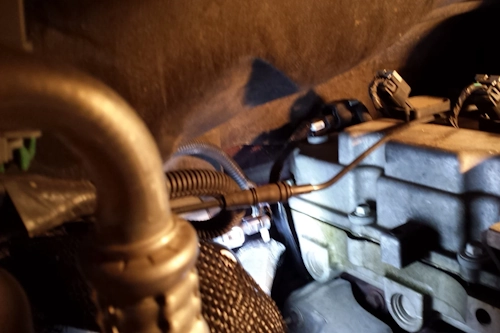
What Is an Engine Coolant Temperature Sensor?
The Engine Coolant Temperature (ECT) sensor is a critical component in your vehicle's engine management system. It monitors the coolant temperature and relays this data to the Engine Control Module (ECM), which adjusts fuel injection, ignition timing, cooling fan operation, and emissions controls. This ensures optimal engine performance, fuel efficiency, and emissions compliance.
How Does the ECT Sensor Work?
The ECT sensor uses a thermistor—a resistor whose resistance changes with temperature. Most modern vehicles use Negative Temperature Coefficient (NTC) sensors, where resistance decreases as temperature rises. For example, at 20°C, resistance ranges between 2,200–2,800Ω, dropping to 200–300Ω at 90°C. The ECM sends a 5V reference signal to the sensor and measures the voltage drop to determine temperature. This data influences:
- Fuel Injection: Enriches the air-fuel mixture during cold starts.
- Ignition Timing: Adjusts spark advance for smoother operation.
- Cooling Fan Activation: Triggers the fan at preset temperatures.
Common Symptoms of a Faulty ECT Sensor
A malfunctioning ECT sensor can lead to severe engine issues. Watch for these signs:
- Erratic Temperature Readings: The gauge may spike or show no reading despite overheating.
- Overheating Engine: Incorrect sensor data can disable cooling fans.
- Poor Fuel Economy: A rich fuel mixture caused by false "cold engine" signals.
- Check Engine Light: Often triggered by out-of-range sensor data.
- Hard Starts or Stalling: Miscalculated fuel delivery during cold starts.
How to Test an ECT Sensor
Using a Multimeter
- Disconnect the sensor and measure resistance at room temperature. Compare results with manufacturer specifications (e.g., 2,200–2,800Ω at 20°C).
- Heat the sensor tip with a hairdryer. Resistance should drop steadily as temperature rises.
Voltage Testing
Connect a voltmeter to the signal wire with the ignition on. A cold engine should show 2–3V, dropping to 0.5V when warm. A steady 5V or 0V indicates wiring issues.
Step-by-Step Replacement Guide
- Cool Down the Engine: Avoid burns by letting the engine cool completely.
- Drain Coolant: Remove enough coolant to access the sensor, typically located near the thermostat housing or cylinder head.
- Remove the Old Sensor: Unplug the connector and unscrew the sensor using a deep socket wrench.
- Install the New Sensor: Apply thread sealant (if needed) and tighten to 15–18 in-lbs to avoid thread damage.
- Refill Coolant: Use manufacturer-recommended coolant to prevent corrosion.
Common Replacement Mistakes
- Over-Tightening: Can strip threads in aluminum housings.
- Using Incorrect Coolant: Mixing types may cause chemical reactions.
- Ignoring Thermostat Replacement: Replace it if accessible, as it often fails alongside the ECT.