

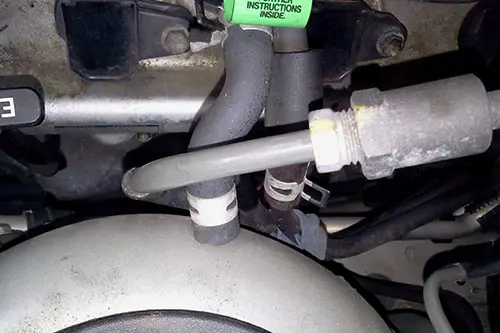
P0440, P0442, or P0455 on your Dodge RAM 1500/2500/3500 (1994–2002)? The EVAP system on these trucks is simple but prone to cracked hoses and stuck solenoids after 20+ years. This guide shows where components hide, how to smoke-test for leaks, and the replacement sequence that clears codes.
Owner's case
Bill's 1998 RAM 1500 5.9L threw P0442 (small leak); gas cap was new. Smoke test found a split hose at the canister. $8 hose fixed it—no expensive parts cannon.
EVAP system layout (RAM –)
- Charcoal canister: mounted near fuel tank or on frame rail (varies by year).
- Purge solenoid: on intake manifold or near throttle body; vacuum-controlled or electric.
- Vent valve: on canister; seals system for leak tests.
- Lines: rubber hoses from tank → canister → purge solenoid → intake.
Quick diagnosis path
- Gas cap test: replace cap; clear codes; drive 50 miles. If codes return, continue.
- Visual: inspect hoses for cracks, especially near heat sources or where they flex.
- Smoke test: pump smoke into purge line; watch for leaks at canister, tank filler neck, hose connections.
- Solenoid test: apply 12V to purge solenoid; should click and allow airflow. No click or stuck open = replace.
Replacement (common faults)
- Purge solenoid: unbolt from bracket, disconnect vacuum lines and connector; swap. ~$30–60 part.
- Canister: unbolt from mount, disconnect lines; install new canister with fresh hoses. ~$80–150.
- Hoses: cut out cracked sections; replace with EVAP-rated hose (not fuel hose). ~$2/ft.
Bill's fix in detail
- Smoke test pinpointed split hose at canister inlet.
- Cut 6 inches of old hose; installed new EVAP hose with clamps.
- Cleared P0442; drove 100 miles—no codes, passed inspection.
Tools
- Smoke machine (rent or DIY with cigar smoke method), scan tool
- Hose clamps, EVAP-rated hose, basic hand tools
For RAM EVAP system diagrams
Check Dodge 7zap: dodge.7zap.com.
Common mistakes
- Replacing canister without testing hoses first—leaks return.
- Using fuel hose for EVAP—wrong material, collapses under vacuum.
- Not performing a drive cycle after repair—readiness monitors don't set; inspection fails.
Drive cycle for EVAP monitors (RAM –)
- Start cold; idle 2 minutes.
- Drive 50+ mph for 10 minutes; coast down without braking.
- Idle 3 minutes; shut off.
- Scan for readiness—EVAP monitor should show "ready" after 1–2 cycles.
Takeaway: RAM EVAP systems are straightforward; smoke test finds leaks fast, and hoses/solenoids are cheap fixes—Bill passed inspection for $8.
Bill's smoke test setup (DIY method)
- Removed purge solenoid from intake; capped intake port.
- Attached a smoke machine (rental) to purge line.
- Sealed fuel cap; pumped smoke into system.
- Watched under truck with a flashlight—smoke poured from a split hose near the canister.
EVAP code frequency on older RAMs
1994–2002 trucks often have deteriorated hoses due to age and heat. The canister itself rarely fails; focus on hoses and purge solenoid first.
Parts cost breakdown
- EVAP hose (per foot): ~$2–5
- Purge solenoid: ~$30–60
- Charcoal canister: ~$80–150
- Gas cap (if suspect): ~$15–25