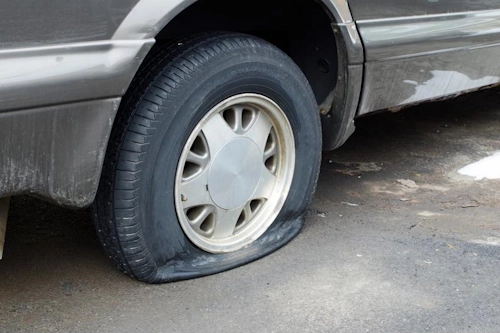
8 Critical Signs Your Tires Need Replacement: A Safety Expert's Guide
As the only point of contact between your vehicle and the road, tires are arguably your car's most crucial safety component. Statistics reveal approximately 10% of vehicles on U.S. roads have at least one tire needing immediate replacement. Understanding these warning signs isn't just about maintenance – it's about protecting lives. This comprehensive guide details the critical indicators that demand your attention.
Decoding the Language of Your Tires
The Critical Replacement Indicators
1. Compromised Road Grip
If your vehicle slides unexpectedly during acceleration, struggles to maintain traction during turns, or requires extended braking distances – particularly on wet surfaces – your tires have likely lost their grip capabilities. This occurs when the tread compound hardens over time or the tread pattern becomes too shallow to channel water effectively.
Safety Severity: Critical - Requires immediate attention 2. Unrepairable Puncture Damage
While tread-area punctures can often be professionally repaired, damage in these locations demands tire replacement:
- Shoulder/Sidewall punctures: Areas that flex significantly during driving
- Large punctures: Holes exceeding ¼-inch diameter
- Overlapping damage: Areas where multiple punctures are too close together
Important: Only combination plug-patch repairs performed from the inside are considered safe and durable by industry standards.
3. Tread Depth Below Safety Threshold
The legal minimum tread depth is 2/32", but many experts recommend replacement at 4/32" for better wet-weather performance. Use these assessment methods:
- Penny Test: Insert a penny into the tread groove with Lincoln's head facing down. If you see all of Lincoln's head, replace immediately
- Wear Bars: Modern tires feature built-in tread indicators that become flush with tread blocks at 2/32" depth
- Quarter Test: For 4/32" assessment, use a quarter with Washington's head facing down. If the top of his head is visible, consider replacement for optimal safety
4. Irregular Tread Wear Patterns
Uneven wear often signals mechanical issues but also necessitates tire replacement when severe. Key patterns include:
| Wear Pattern | Likely Cause | Tire Action Required |
| Excessive inner/outer shoulder wear | Alignment issues (camber/toe) | Replace if worn below 2/32" in any area |
| Center rib wear | Chronic overinflation | Measure center tread depth |
| Cupping/scalloping | Suspension problems or imbalance | Replace if vibration occurs |
| One-sided feathering | Excessive toe angle | Check tread depth across surface |
Note: After replacing unevenly worn tires, always correct the underlying mechanical problem.
5. Sidewall and Structural Damage
These visible defects require immediate replacement:
- Bulges/Bubbles: Indicate air has penetrated between inner layers from impact damage
- Deep Cuts/Gashes: Compromise structural integrity, particularly in sidewalls
- Cord Exposure: Visible steel or fabric material means the tire's structure has failed
Warning: Driving with these conditions significantly increases blowout risk, especially at highway speeds.
6. Advanced Dry Rot (Weather Checking)
As tires age, environmental exposure causes:
- Fine surface cracks (normal with age)
- Deep cracks penetrating beyond surface level
- Cracks wide enough to insert a pen tip
Dry rot compromises rubber integrity and is accelerated by UV exposure, ozone, and improper storage.
7. Age Expiration
Tires have a service life independent of tread depth:
- 6 years: Critical inspection point regardless of tread
- 10 years: Absolute maximum service life (including spares)
Locate the DOT code on your sidewall. The last four digits indicate week and year of manufacture (e.g., "2719" = 27th week of 2019).
Pro Tip: Tire age matters most in hot climates where heat accelerates rubber degradation.
8. Persistent Vibration Issues
While vibrations often stem from alignment or balance problems, they can indicate:
- Internal belt separation
- Irregular tread wear
- Structural damage
If vibration persists after professional balancing and alignment, tire replacement is likely necessary.
Essential Tire Maintenance Practices
Optimal Maintenance Schedule
- Monthly: Pressure checks (when cold) and visual inspections
- Every 5,000-7,000 miles: Tire rotation (unless vehicle has staggered fitment)
- Annually: Professional alignment check
- Every 6,000 miles: Balance check
- After impacts: Immediate inspection after hitting potholes or curbs
Proper Inflation Fundamentals
Maintaining correct pressure:
- Prevents irregular wear patterns
- Optimizes fuel efficiency
- Reduces blowout risk
Always use the vehicle manufacturer's recommended pressure (found on driver's door jamb sticker), not the maximum pressure on the tire sidewall.
Replacement Best Practices
- Replace in Axle Pairs: Always install two tires minimum, placing new tires on the rear axle
- Full Set Replacement: Optimal for balanced performance and handling
- Speed Rating Matching: Never mix speed ratings across axles
- Recall Checks: Verify tire recall status via NHTSA database
Critical Safety Notice: Never install used tires of unknown history. Previous damage, improper repairs, or internal deterioration may not be visible.
When to Consult a Tire Professional
Immediate professional inspection is recommended if you observe:
- Rapid air loss (more than 2-3 PSI weekly)
- Visible cord material
- Bulges larger than 1/2 inch
- Tread separation
- Damage near previous repairs
Modern tire technology enables sophisticated diagnostics through computerized wear pattern analysis and internal inspections - services beyond DIY capabilities.
Conclusion: Safety Before Savings
Tire replacement represents a significant investment, but nothing compares to the safety of you and your passengers. Regular inspections using these guidelines help identify issues before they become emergencies. As the foundation of your vehicle's safety systems, properly maintained tires provide not just mobility, but confidence in every driving condition. Prioritize professional consultations when in doubt - your vigilance could prevent accidents and save lives.
For specific technical specifications and detailed procedures for your vehicle, refer to the manufacturer's service manual or consult with a qualified automotive professional.