

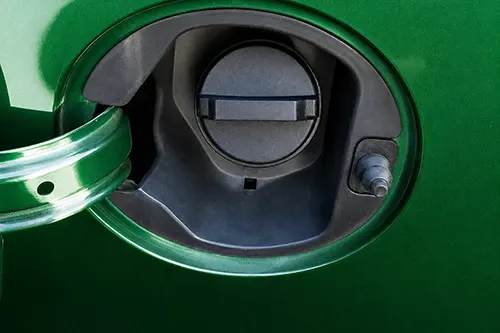
You lock your car, walk away — and later find the fuel filler door standing ajar. Annoying, yes, but not just that: an open fuel door can let in dust, moisture, or even trigger a warning light on modern capless systems. Most often, the culprit is one of three things: weakened spring tension, worn latch mechanism, or a misadjusted release cable. Let’s break down each cause and show you exactly how to pinpoint the issue.
Fuel doors are designed to stay flush against the body until you intentionally pull the interior release lever or push the door, on spring-loaded designs. When they start popping open by themselves — while driving, after hitting a bump, or even just sitting in the driveway — the problem is almost always mechanical and only rarely electrical, except for electronic actuators on premium cars. Below, we dissect the three prime suspects and give you a clear repair roadmap. Simple, but worth doing carefully.
🔍 1. Spring Tension – too much or too little?
⚡ The spring's job: push the door open when unlatched, but keep it stable when closed
Most fuel doors use a small torsion spring or a leaf spring near the hinge. If the spring is too weak, fatigued over years of use, the door may not fully seat into the latch and can start to drift open. On the other hand, an overly aggressive spring, whether aftermarket or simply misaligned, can literally push the door outward even when the latch is engaged. Typical symptoms include a door that seems to “float” away from the body after closing, or a clicking sound as the spring overpowers the latch after a speed bump.
🔧 Quick test: Push the fuel door fully closed by hand. If it instantly springs back 2-3 mm or pops fully open within seconds, your spring likely has excessive tension or the hinge is binding. If the door feels floppy and doesn’t snap into closed position, spring tension is too low. That little difference tells you a lot.
🔒 2. Latch Wear – the plastic enemy
🧩 Worn striker / latch hook: the silent failure
The fuel door latch is often a small plastic hook, mounted on the door or in the body, that engages a metal or plastic striker loop. Over thousands of open/close cycles, plastic wears down, cracks develop, or the hook loses its sharp edge. Once the latch can’t hold the striker firmly, road vibrations or even a gust of wind can break the weak engagement. Another clue, and it is worth noting this one, is a rattling noise from the fuel door area while driving; the door also won’t require a firm “pop” when you open it from inside — it practically falls open.
🔧 Quick test: With the fuel door closed, try to gently pry the edge outward with your fingertip. If it moves more than 2-3 mm without hearing a latch click, the latch is worn. Also inspect the latch hook for shiny, rounded edges or missing plastic. If it looks polished instead of sharp, that’s usually the giveaway.
📏 3. Misadjusted Release Cable – the hidden tension
🎛️ Cable that never fully releases / pre-loads the latch
The interior release cable, or push-rod mechanism, runs from the cabin lever to the fuel door latch. If the cable housing is kinked, routed badly, or the cable’s outer sheath has slipped out of its bracket, the inner wire stays under constant tension. That means the latch is always “half-unlatched,” so any bump or temperature change can make the fuel door fly open. Conversely, a cable that is too slack might prevent full engagement, though that’s less common. Misadjustment also shows up after interior panel work or trunk repairs.
🔧 Quick test: Open the fuel door and manually operate the latch release mechanism with a small screwdriver, or your finger. It should snap back firmly into locked position. Then pull the interior release lever and let it return; the latch should go back to full lock without resistance. If the latch stays slightly open or moves slowly, your cable needs adjustment. Feels minor. It usually isn’t.
📋 Step‑by‑step diagnosis (no tools required)
- 1. Visual & tactile inspection: Close the fuel door and press around its perimeter. Does it feel flush, or does the corner stick out? If it sits flush but pops open after a minute, look at cable tension.
- 2. Tape test (isolation): Apply a small strip of painter's tape over the door, holding it closed. Drive over a few bumps. If the tape holds but you feel resistance, the spring is pushing too hard. If the tape doesn’t hold and the door still tries to open, latch is failing.
- 3. Release cable check: With the fuel door closed, manually jiggle the interior release handle without pulling it. If you hear a faint click near the fuel door, the cable is pre-tensioned — you'll need to adjust the cable or replace the housing.
- 4. Bounce test: Gently bounce the rear corner of the car by pushing down on the quarter panel. If the fuel door pops open immediately, the latch clearance is too loose or the spring is overpowering the latch.
🛠️ How to fix each issue (DIY friendly)
For spring tension: On most cars, you can access the hinge spring by removing the fuel door trim. If the spring is too weak, gently bend the torsion spring legs outward to increase tension, or replace with OEM spring. If there’s too much tension, bend the legs slightly inward or swap in a weaker spring. Some fuel doors also have an adjustable spring seat, so check your service manual.
For latch wear: Replace the latch mechanism, often a $10–$30 part sold with the door actuator or the striker. You can also build up a worn plastic hook with epoxy and file it back to shape, but a new latch is more reliable. Also clean and lubricate the latch with silicone spray.
For misadjusted release cable: Locate the cable end near the fuel door, usually behind the trunk side panel. There is often a threaded adjuster or a plastic clip that holds the cable sheath. By moving the sheath 2–3 mm toward the latch, you remove unwanted slack or excess pull. What is important here is minimal free play and zero preload. On many Ford, Honda, and Toyota models, you can fix this in 5 minutes with pliers.
💡 Pro tip – don’t overlook the fuel door hinge binding: A bent hinge or misaligned door can create uneven pressure, which makes the latch seem faulty when it really isn’t. Also check for ice/snow buildup in winter; it can wedge the door open. Always start with the simplest fix: clean the latch and mating striker with WD-40 or brake cleaner, then apply thin grease. Sometimes the boring fix is the right one, isn’t it?
❓ When to seek professional help
If your car is equipped with a motorized pop‑out mechanism, common on many European cars and some hybrids, or an electronic release solenoid, the problem might be a faulty actuator or broken wiring. In cases like that, the door may open randomly because of a short circuit. Diagnosing it properly requires a multimeter and wiring diagrams. Also, if the fuel door is integrated with central locking, a failing door lock actuator could be the root cause. For those scenarios, an automotive technician can save you hours of guesswork.
Still, more than 80% of “fuel door pops open on its own” complaints are caused by the three mechanical issues above — spring, latch, or cable. With a little patience and the diagnostic tests we’ve covered, you can almost always resolve the problem in under an hour for less than $20 in parts. No more embarrassing open fuel doors. No more fuel-filler warning lights either.