

That dreaded moment when your car won't start - it's a universal driver's nightmare. Before you panic or call for expensive roadside assistance, let's diagnose whether you're dealing with a battery or alternator issue. These critical components work in tandem, and failure symptoms often overlap. This comprehensive guide will help you pinpoint the problem with confidence.
The Electrical Heartbeat of Your Vehicle
Your car's electrical system operates like a human circulatory system - the battery and alternator constantly interact to keep everything functioning:
The Battery: Your Vehicle's Power Reservoir
- Primary function: Delivers the massive jolt (400-2,000 amps) needed to start your engine
- Power source: Operates all electronics when engine is off (lights, radio, security systems)
- Lifespan: Typically 3-5 years before performance degrades
- Key vulnerability: Drains completely if not regularly recharged
The Alternator: Your Onboard Power Plant
- Core mission: Converts mechanical energy into electricity while driving
- Critical process: Recharges battery after engine start and during operation
- Durability: Generally lasts 7-10 years with proper maintenance
- Failure impact: Causes battery depletion even while driving
8 Warning Signs of Battery Failure
1. Sluggish Engine Crank
The classic "rur-rur-rur" sound when turning the key indicates insufficient power. Cold weather exacerbates this but isn't always the culprit.
2. Multiple Jump-Starts Needed
Requiring frequent jumps, especially within short timeframes, signals a battery that can't hold charge.
3. Electrical Gremlins
Dimming interior lights, flickering dashboards, or erratic power window operation when engine is OFF point to battery issues.
4. Terminal Corrosion
White/green crusty buildup on battery terminals creates resistance. Clean with baking soda solution, but severe corrosion often requires replacement.
5. Swollen Battery Case
Bulging sides indicate overheating damage - replace immediately as this poses explosion risks.
6. Rotten Egg Odor
Sulfuric acid leaks produce this distinctive smell - a clear replacement signal.
7. Advanced Age
If your battery is over 3 years old, it's living on borrowed time. Test quarterly after this threshold.
8. Warning Light Illumination
Many modern vehicles feature dedicated battery icons, though these may also indicate charging system issues.
7 Symptoms of Alternator Failure
1. Post-Jump-Start Death
If your car dies minutes after a successful jump, the alternator isn't sustaining the electrical load.
2. Headlight Brightness Fluctuations
Lights that dim at stoplights but brighten when accelerating indicate inconsistent power generation.
3. Unusual Noises
Grinding or whining sounds near the engine often mean failing alternator bearings.
4. Electrical Surges During Operation
Radio presets resetting, speedometer fluctuations, or erratic AC performance signal voltage spikes.
5. Persistent Dead Battery
New batteries draining quickly prove the alternator isn't replenishing power.
6. Burning Rubber Smell
Overheating alternator components or slipping drive belts create distinctive hot odors.
7. Battery Light Activation
This dashboard symbol (usually battery-shaped) actually monitors the charging system.
DIY Diagnostic Tests
Battery Health Check
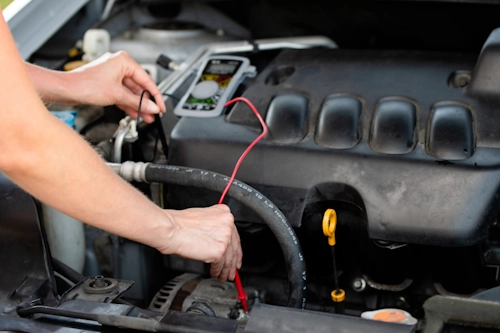
- Voltage test: Use multimeter on terminals (engine OFF) - 12.6V = healthy, below 12.4V = trouble
- Load test: Most auto shops perform free load testing to measure capacity under strain
- Visual inspection: Check for cracks, leaks, or terminal corrosion
Alternator Function Test
- Running voltage test: Engine ON, measure battery voltage - should read 13.5-14.5V
- Headlight test: With engine running, turn on all lights - significant dimming indicates problems
- Belt inspection: Check for cracks or looseness in serpentine belt driving alternator
Jump-Start Diagnosis
- If jump-started car runs normally: Battery was culprit
- If jump-started car dies within 20 minutes: Alternator failure
- If jump-start has no effect: Possible starter motor issues
Professional Repair Considerations
When to Call a Mechanic
- Swollen/leaking batteries (explosion hazard)
- Strong burning smells from engine bay
- Modern vehicles with complex electronics
- Hybrid/electric vehicles
- Inconclusive DIY test results
Repair Cost Estimates
| Component | DIY Parts Cost | Professional Repair | Complexity Level |
|---|---|---|---|
| Battery | $50-$200 | $100-$300 | Beginner (15-30 mins) |
| Alternator | $150-$400 | $500-$1,000+ | Intermediate (2-4 hours) |
Prevention Strategies
Battery Longevity Tips
- Drive 30+ minutes weekly to maintain charge
- Clean terminals annually with wire brush
- Avoid leaving electronics plugged in overnight
- Test voltage monthly in extreme climates
Alternator Preservation
- Replace serpentine belt every 60,000 miles
- Fix electrical shorts immediately
- Avoid deep water driving
- Minimize accessory use during idle
Critical Replacement Guidelines
Address these issues within specified timeframes to avoid breakdowns:
- Immediate action (within 24 hours): Swollen battery, burning smells, complete electrical failure
- Urgent (within 3 days): Multiple jump-starts needed, voltage below 12V, headlight fluctuations
- Monitor closely (next 2 weeks): Slow cranking, minor corrosion, age over 4 years
Final Diagnosis Protocol
- Perform visual inspection of battery and alternator area
- Conduct voltage tests (engine OFF and ON)
- Note all symptoms and recent changes
- Try jump-start procedure
- Consult professional if uncertain
Understanding these electrical fundamentals transforms you from stranded motorist to empowered troubleshooter. Most battery/alternator issues present clear warning signs if you know what to observe. Regular voltage checks and annual professional inspections prevent 90% of unexpected failures. When replacements become necessary, quality components and proper installation ensure years of reliable service.