

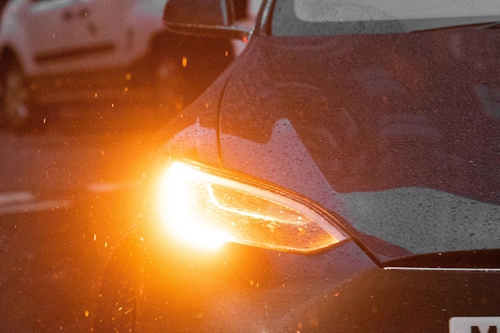
That sudden rapid-fire blinking from your dashboard isn't your car developing a nervous tic - it's a deliberate distress signal from your vehicle's communication system. Officially called hyper-flashing, this sped-up blinking rhythm typically clocks in at double the normal 60-120 blinks per minute, compromising your ability to communicate intentions to other drivers. While not outright illegal in most jurisdictions, it creates confusion on the road and often indicates underlying electrical issues needing attention.
Decoding the Blink: Top Causes of Hyper-Flashing
Your turn signal circuit operates on precise electrical resistance principles. When that balance gets disrupted, the system responds with this visual Morse code. Here's what could be triggering the frenzy:
1. The Usual Suspect: Burned-Out Bulb (Most Common)
A failed bulb interrupts the circuit's expected resistance, triggering the system's built-in alert mechanism. This accounts for over 70% of hyper-flashing cases. Bulbs can fail due to filament breakage, moisture intrusion, or simple age.
- Diagnostic tip: Activate your hazard lights and walk around the vehicle. Look for any non-functioning front, rear, or side marker lights (modern cars often have multiple bulbs per side).
2. The Modern Culprit: LED Bulb Upgrades
LED conversions draw significantly less power than incandescent bulbs - sometimes just 10-20% of the original load. Your vehicle's flasher module interprets this reduced current as a "burned-out bulb" scenario.
- Key symptom: Hyper-flashing starts immediately after installing LEDs
- Surprise factor: Hazard lights may work normally since they sometimes use a separate circuit
3. Silent Saboteurs: Corrosion and Connection Issues
Electrical gremlins hiding in sockets and wiring harnesses frequently cause intermittent hyper-flashing:
- Bulb sockets: Look for white/green corrosion deposits or black carbon tracking
- Ground connections: Poor grounding creates resistance, starving bulbs of power
- Wiring damage: Rodent-chewed wires or cracked insulation alter circuit resistance
4. The Rhythm Master: Failing Flasher Relay
This thermal-controlled component (often walnut-sized) uses a heated metal strip to create the blinking rhythm. When worn out, it loses timing control. Newer vehicles may integrate this function into the Body Control Module (BCM), requiring professional diagnostics.
5. System-Wide Issues: Power Supply Problems
In rare cases, underlying electrical system issues manifest as hyper-flashing:
- Weak battery or failing alternator causing voltage fluctuations
- Faulty combination switch in steering column
- Blown fuses protecting the circuit
The Hyper-Flash Fix: Step-by-Step Solutions
🛠️ Bulb Replacement Protocol
- Consult your owner's manual for correct bulb type (e.g., 1156, 7443, 3157)
- Access housing (often requires removing headlight/tail light assemblies)
- Remove electrical connector by depressing locking tab
- Twist bulb socket counterclockwise 1/4 turn
- Install new bulb without touching glass (skin oils cause hot spots)
- Reassemble and test
💡 LED Conversion Solutions
- Load resistors: Install 6-ohm 50-watt resistors parallel to LED bulbs to mimic incandescent load (~$15/pair)
- LED-compatible flasher: Replace thermal relay with electronic EP27 or CF13 flasher (vehicle-specific)
- Full conversion: Ensure all bulbs on circuit are LED - no mixing types
🔧 Advanced Electrical Repairs
| Issue | Solution | Complexity |
|---|---|---|
| Corroded sockets | Clean with contact cleaner & brass brush; apply dielectric grease | ★☆☆☆☆ |
| Bad ground | Locate ground point (often near lights), sand contact area, reattach securely | ★★☆☆☆ |
| Flasher relay | Replace with OE equivalent (check fuse box locations) | ★☆☆☆☆ |
| Wiring damage | Splice/heat-shrink damaged sections; use automotive-grade wire | ★★★☆☆ |
⚡ When to Call a Professional
Seek expert help if you encounter:
- Burnt wiring smells
- Intermittent operation after basic fixes
- BCM-controlled systems requiring programming
- Complex steering column wiring issues
Prevention: Keeping Your Signals Healthy
- Monthly light checks: Walk around vehicle with lights active (include brake tests)
- Weatherproofing: Apply dielectric grease to bulb bases and connectors
- Upgrade paths: When converting to LEDs, research compatible resistors/relays first
- Voltage checks: Ensure alternator outputs 13.5-14.8V to prevent electrical stress
Hyper-Flash FAQs
❓ Is hyper-flashing illegal?
While not directly prohibited, it often accompanies non-working lights which are illegal. Officers may stop you for safety concerns.
❓ Why do hazards work normally when turn signals hyper-flash?
Many vehicles use separate circuits or flasher units for hazard lights, explaining the discrepancy.
❓ Can a weak battery cause hyper-flashing?
Yes! Low system voltage (below 12V) disrupts flasher timing. Test battery voltage before electrical repairs.
❓ Why does hyper-flashing affect only one side?
Turn signals operate as left/right pairs. A bulb or wiring issue will typically affect only its designated circuit.
Final Illumination
That frantic blinking isn't just an annoyance - it's your vehicle's equivalent of shouting for attention. Whether solving a simple bulb replacement or navigating LED conversion complexities, addressing hyper-flashing promptly restores your critical communication link with other drivers. When in doubt, consult a professional technician; what begins as a minor lighting issue might reveal important insights about your vehicle's overall electrical health.